Tuesday, June 13, 2023

Las Cruces Man Sentenced to Five Years in Prison on Child Pornography Charges

EL PASO, Texas – A New Mexico man was sentenced in a federal court in El Paso on Thursday to 60 months in prison for receipt and distribution of a visual depiction involving the sexual exploitation of a minor.

According to court documents, Robey Lynn Humphrey, 58, of Las Cruces, received child sexual abuse material (CSAM) from other individuals on the internet in October 2022.  He was arrested on October 25, 2022, on a criminal complaint alleging Humphrey coerced and enticed a minor via a social messaging app.  FBI agents executed a search warrant of Humphrey’s residence on November 2, 2022, seizing four tablet computers, one of which revealed the illicit files.  Humphrey has remained in federal custody since his arrest.

“My office is committed to protecting our children and will continue to prosecute those who prey on them,” said U.S. Attorney Jaime Esparza of the Western District of Texas.  “I am grateful to the FBI for their diligent investigation, providing key evidence that contributed to this just decision and holding yet another child predator accountable.”

"The exploitation of innocent children is a heinous crime and demands our relentless focus on bringing these terrible subjects to justice," said Special Agent in Charge Jeffrey R. Downey for the FBI El Paso Field Office.  "Thanks to the hard work of the FBI El Paso’s Child Exploitation & Human Trafficking Task Force, this sentencing sends a message that these horrible crimes will not be tolerated in our community."

The FBI investigated the case.

Assistant U.S. Attorney Mallory Rasmussen prosecuted the case.

Monday, June 12, 2023

FBI San Diego Warns of a Grandparent Fraud Scheme Using Couriers

 Special agents with the FBI San Diego Field Office are investigating hundreds of reports of elder fraud involving social engineering and artificial intelligence. FBI San Diego wants to educate older adults and their family members about this nationwide scam to help them avoid becoming a victim of fraud. 

In this "Grandparent Fraud" scheme, senior San Diego residents are being contacted by scammers posing as family members who have been arrested and need bail money. The scammers are using social engineering and artificial intelligence to convince the older adult victim they are talking to a family member. A fake attorney is then introduced and will coordinate ride share services to pick up cash in-person for the purpose of bailing the loved one out of jail. 
  
"This scam is affecting our most vulnerable citizens," said FBI San Diego Field Office Special Agent in Charge Stacey Moy. "In many instances, someone has had their entire life savings stolen and they’re embarrassed to speak out about it. We want victims to know they are not alone, and they should report it to law enforcement, because we want to get these bad people off the street."
  
The FBI’s Internet Crime Complaint Center (IC3) data reports between January and May 2023, there were $22.5 million in losses and more than 450 victims in San Diego. Nationwide, from 2021 to 2022, dollar losses to elder financial exploitation increased 84%.   
  
FBI San Diego suggests older adult residents take the following action to avoid becoming a victim: 

  • Do not provide personal information or money to anyone you have only communicated with by telephone or online. 
    Be careful about what you post online. Scammers can use details shared on social media platforms and dating sites to legitimize their story. 
  • Be suspicious of telephone calls in which the caller requests bail money for a family member in distress and requires you to immediately act.  Contact the family member directly for confirmation. 
  • Document any identifying information from the caller, such as name, phone number and/or address. This can help law enforcement apprehend the scammers. 

Seniors who believe they have been a victim of fraud, or anyone who knows someone who may be a victim, should file a report on ic3.gov or call the FBI San Diego Field Office.  

Mercer Resident Pleads Guilty to Threatening FBI Agents

In a significant development, a resident of Mercer, Pennsylvania, has pleaded guilty in federal court to charges of interstate threats and influencing or retaliating against a federal officer by threat. Acting United States Attorney Troy Rivetti made the announcement today, highlighting the seriousness of the case.

Adam Bies, a 47-year-old individual, has admitted to fourteen counts before United States District Judge William S. Stickman IV. The court was informed that Bies made explicit threats to murder, injure, and assault agents of the Federal Bureau of Investigation (FBI) following the FBI's search of former President Donald Trump's home in Florida on August 8, 2022, conducted under a federal search warrant.

The sentencing for this matter is scheduled for October 4, 2023. If convicted, Bies could face up to 10 years in prison, a fine of $250,000, or both, as stipulated by the law. The actual sentence imposed will be determined based on the seriousness of the offenses committed and the defendant's prior criminal history.

As per the court's order, the defendant will remain detained pending sentencing. Assistant United States Attorney Jeffrey R. Bengel is prosecuting the case on behalf of the government, ensuring that justice is served.

The investigation leading to the prosecution of Adam Bies was conducted by the diligent efforts of the Federal Bureau of Investigation. Their commitment to ensuring the safety and security of the nation played a crucial role in bringing this case to light.

Sunday, June 11, 2023

Modern Day Tactical Riot Gear: Equipping Law Enforcement for Effective Crowd Control


In an era marked by social unrest and protests, law enforcement agencies face the challenge of maintaining public order while ensuring the safety of both officers and civilians. One critical aspect of managing such situations is the utilization of modern tactical riot gear. This article explores the key features and advancements in riot gear technology that enhance the capabilities of law enforcement in handling riots and civil disturbances.

  1. Protective Helmets: A cornerstone of riot gear, protective helmets offer essential head protection for law enforcement officers. Modern helmets are designed to withstand impact and provide ballistic resistance, safeguarding officers against projectiles, thrown objects, and blunt force trauma. Integrated face shields or visors offer additional protection against chemical irritants and projectiles while maintaining clear visibility.

  2. Riot Shields: Riot shields serve as a crucial defensive tool for officers, providing a barrier between them and potential threats. Advanced riot shields are made from durable materials, such as polycarbonate or ballistic-grade materials, which offer high impact resistance. Some shields feature transparent sections for improved visibility, allowing officers to assess the situation while staying protected.

  3. Body Armor: In riot situations, law enforcement officers require reliable body armor to shield them from potential attacks. Modern body armor systems incorporate lightweight yet robust materials, such as Kevlar or ballistic plates, to protect vital organs from projectiles and blunt force trauma. The armor is designed to be flexible, allowing officers to maintain mobility during confrontations.

  4. Protective Clothing: Law enforcement personnel involved in riot control often wear specialized protective clothing to shield themselves from various hazards. This includes flame-resistant and tear-resistant uniforms designed to withstand harsh conditions and protect against incendiary devices. Additionally, reinforced gloves and footwear provide added protection against physical assaults and environmental hazards.

  5. Non-Lethal Weapons: To maintain control during riots, law enforcement agencies rely on non-lethal weapons for crowd dispersal and control. These can include tear gas launchers, rubber bullet guns, pepper spray, and stun grenades. These tools help disperse crowds and deter individuals from engaging in violent behavior, minimizing the need for more aggressive force.

  6. Communication and Surveillance Systems: Effective communication and real-time situational awareness are critical in managing riots. Modern riot gear often incorporates advanced communication systems, such as integrated radios or earpiece systems, enabling seamless coordination among officers. Additionally, surveillance equipment, including body-worn cameras and drones, provides valuable video footage for investigations and accountability purposes.

  7. Training and Tactics: While having advanced riot gear is essential, proper training and tactical knowledge are equally crucial. Law enforcement agencies invest in comprehensive training programs that equip officers with the skills to effectively handle riots, de-escalate tense situations, and minimize the use of force when possible. Training emphasizes crowd management techniques, communication strategies, and the appropriate use of riot gear to ensure a balanced response.

Conclusion: As societal dynamics evolve, law enforcement agencies continuously adapt their strategies and equipment to maintain public safety and respond to civil disturbances effectively. Modern tactical riot gear plays a pivotal role in equipping officers with the necessary protection and tools to manage riots while minimizing risks to themselves and the public. By integrating cutting-edge technology, robust materials, and comprehensive training, law enforcement agencies can maintain order and protect communities during challenging times.

Friday, June 09, 2023

Hostage-Taking Co-Conspirators Sentenced to Prison: Justice Prevails

In a significant development, two individuals involved in a heinous hostage-taking incident have been sentenced to prison terms totaling 32 years. Olegario Lares-De La Rosa, aged 30 and a Mexican national, received a sentence of 18 years, while his co-conspirator, Ivan Heriberto Borboa-Ruiz, aged 28 and also from Mexico, was sentenced to 14 years. These verdicts were handed down by United States District Judge Jennifer G. Zipps, marking an important milestone in the pursuit of justice. The convictions were secured after a jury trial in February 2023.

The case began on April 6, 2022, when Homeland Security Investigations received a tip from an individual in New York, reporting that two of his cousins were being held captive. The captors demanded a $16,000 ransom for their release. The victims, who were undocumented non-citizens, were part of a group of six individuals abducted by three armed men after illegally crossing into the United States through the desert. One of the victims was subjected to physical violence when he refused to cooperate. The captors confiscated all cellphones and transported the six captives to a house, where they were held against their will for multiple days. Each night, the captors secured the room by screwing the door shut, effectively preventing any escape. The two cousins remained hostages until the ransom was paid.

During the investigation, it was revealed that Borboa-Ruiz had been making phone calls to arrange the ransom and hostage exchange. On April 8, 2022, he arrived at the designated location in Tucson, Arizona, where he met with two undercover agents. Armed with a loaded 9mm pistol, Borboa-Ruiz received and carefully counted the $16,000 in cash twice to ensure the ransom had been fully paid. He made a phone call stating "they were good," indicating that the victims could be released. Meanwhile, Lares-De La Rosa, who was parked nearby with the two victims, directed them to exit the car. The victims walked in single file towards the vehicle where the ransom had been delivered. Just as the two victims reached the undercover vehicle, law enforcement agents swiftly apprehended Borboa-Ruiz.

However, the ordeal was not yet over. Lares-De La Rosa chose to flee the scene, leading agents on a high-speed vehicle chase. During the pursuit, he threw a loaded 9mm pistol out of the window and eventually abandoned the vehicle. Desperate to evade capture, he sought refuge in several private backyards within a residential neighborhood. Nonetheless, Lares-De La Rosa's attempts to evade justice were short-lived, as law enforcement apprehended him.

The comprehensive investigation into this case was conducted by Homeland Security Investigations, with support from the Bureau of Alcohol, Tobacco, Firearms and Explosives, and the Marana Police Department. Assistant United States Attorney Serra M. Tsethlikai, from the District of Arizona, Tucson, skillfully prosecuted the case.

The sentencing of Lares-De La Rosa and Borboa-Ruiz reflects a significant victory for justice. It serves as a powerful reminder that the legal system will relentlessly pursue and hold accountable those who commit such egregious acts. The collaboration and dedication of law enforcement partners, combined with the unwavering commitment to protecting victims, have ultimately prevailed.

As this chapter comes to a close, the hope is that the victims can now begin their healing process. The successful resolution of this case stands as a testament to the tireless efforts of law enforcement agencies, working tirelessly to safeguard communities and protect the most vulnerable among us.

The Symbolic Power of Scales: Exploring Why They Represent Justice

Throughout history, the scales have emerged as a potent symbol representing the concept of justice. Found in courthouses, legal institutions, and even popular culture, the image of scales holds a deep meaning that resonates with the ideals of fairness, equality, and the rule of law. In this article, we delve into the reasons why scales have come to embody justice and the significance they hold in our collective understanding of the legal system.

Balance and Fairness: 

The scales' primary function is to maintain balance and ensure fairness. The iconic image of scales suspended in equilibrium symbolizes the quest for impartiality in the dispensation of justice. The scales remind us that all individuals, regardless of their status or background, should be treated equally under the law. The weighing of evidence and arguments on both sides reflects the pursuit of a fair and unbiased decision.

Weighing Evidence and Reasoning: 

Scales are instruments of measurement, and in the context of justice, they represent the weighing of evidence and reasoning. Just as objects are measured and balanced on scales, legal professionals weigh the facts, arguments, and testimonies presented in a case. This process aims to arrive at a balanced judgment based on rational analysis and logical reasoning, seeking truth and justice.

Symbolizing Judgment and Accountability: 

The scales also symbolize the concept of judgment and accountability. When a person's actions or decisions are under scrutiny, their deeds are weighed on the scales of justice to determine their innocence or guilt. This imagery reflects the idea that individuals should be held accountable for their actions and that justice should prevail in society. The scales serve as a reminder that no one is above the law and that everyone is subject to the consequences of their choices.

Historical and Cultural Significance: 

The use of scales as a symbol of justice can be traced back to ancient civilizations. The ancient Egyptian goddess Maat, often depicted with scales, represented truth, justice, and order. The Roman goddess Iustitia, commonly known as Lady Justice, carries scales to symbolize impartiality and objectivity in the legal system. These historical references highlight the enduring significance of scales in representing justice across different cultures and time periods.

Public Perception and Trust: 

The scales' visual representation of justice plays a crucial role in shaping public perception and trust in the legal system. When people see the scales, they associate it with a system that strives for fairness and equality. This symbolism reinforces the public's confidence in the judiciary, fostering trust and belief that their rights and interests will be safeguarded. The presence of scales in legal institutions is a powerful visual reminder of the commitment to upholding justice.

Conclusion: 

The scales' symbolic representation of justice goes beyond mere aesthetics. They encapsulate the principles of fairness, balance, and accountability that underpin our legal systems. As an enduring and universal symbol, the scales serve as a reminder of the ideals we aspire to achieve in our pursuit of justice. By understanding the significance of scales, we can appreciate the gravity of their presence in our courts, reinforcing our collective commitment to a just and equitable society.


Thursday, June 08, 2023

Oklahoma Man Sentenced to Life in Federal Prison for Child Sexual Abuse at U.S. Army Garrison

Dallas, TX - Derek Flaming, a 37-year-old Oklahoma man, has been handed a life sentence in federal prison after being found guilty of sexually abusing a child while he was a military dependent at the U.S. Army Garrison Yongsan in the Republic of Korea. The sentencing follows an extensive joint investigation led by Homeland Security Investigations (HSI) Tulsa.

Flaming was convicted by a jury on charges that included receipt and distribution of obscene visual representation of the sexual abuse of children, aggravated sexual abuse, and attempted sexual abuse.

HSI Dallas Special Agent in Charge Lester R. Hayes emphasized, "Children should never be subjected to abuse. They are our most precious assets, and we will do everything possible to protect them by removing predators from our communities. This defendant's life sentence serves as a testament to the dedication, collaboration, and resilience of all law enforcement partners involved in this investigation. Now, the healing process can begin."

Assistant U.S. Attorney Aaron Jolly from the Northern District of Oklahoma led the prosecution in the case.

As the primary investigative arm of the U.S. Department of Homeland Security (DHS), HSI is responsible for tackling transnational crime and threats, particularly those involving criminal organizations that exploit global infrastructures related to international trade, travel, and finance. With a workforce exceeding 8,700 employees, including over 6,000 special agents stationed in 237 cities across the United States and 93 overseas locations spanning 56 countries, HSI boasts one of the largest international footprints in U.S. law enforcement.

Wednesday, June 07, 2023

Florida Man Pleads Guilty to Murder-for-Hire and Obstruction of Justice Charges

Shocking revelations unfold in a fraud case as Alexander Leszczynski attempts to orchestrate a sinister plot from jail.

Tampa, Florida - Alexander Leszczynski, a 24-year-old resident of North Redington Beach, has pleaded guilty to charges of murder-for-hire and obstruction of justice, according to an announcement by United States Attorney Roger B. Handberg. Leszczynski, who controlled a fictitious corporate entity, faces a maximum sentence of 10 years in prison for each count. A sentencing date is yet to be determined.

Court documents reveal that on October 7, 2020, Leszczynski filed a warranty deed with the Pinellas County Clerk of Court, fraudulently attempting to transfer a property in Redington Shores, Florida, from its rightful owners (referred to as Victim 1 and Victim 2) to his fictitious company, Aura, Inc.

In April 2022, a grand jury in the Middle District of Florida indicted Leszczynski on multiple fraud charges, including those related to the property owned by Victim 1 and Victim 2, in the case of United States v. Alexander Leszczynski, 8:22-cr-155-MSS-SPF. Following his arraignment on May 17, 2022, Leszczynski was ordered to be detained, and his fraud trial was scheduled for October with United States District Judge Mary S. Scriven. Both Victim 1 and Victim 2 were set to testify against Leszczynski in the trial.

Startling developments unfolded in August 2022 when the FBI discovered that Leszczynski, while incarcerated at Pinellas County Jail, had been actively seeking a hitman to murder Victim 1 and Victim 2. During conversations with a confidential informant, Leszczynski disclosed that he had $45,000 hidden at his residence, which he intended to use as payment for the victims' deaths. Additionally, he stated that the charges against him would need to be dropped if the victims were eliminated. The confidential informant agreed to connect Leszczynski with a supposed hitman, who was an undercover agent.

On September 8 and 9, 2022, Leszczynski engaged in conversations with the undercover agent, divulging critical information such as the names, addresses, physical descriptions, and approximate ages of Victim 1 and Victim 2. He even provided details to help the undercover agent locate photographs of the victims online. During the discussions, Leszczynski negotiated a price and settled on paying $30,000, repeatedly affirming his desire for the victims' demise.

The investigation into this shocking case involved the Federal Bureau of Investigation (FBI) and the Pinellas County Sheriff's Office, with Assistant United States Attorneys Shauna S. Hale and Samantha J. Newman leading the prosecution.

The revelation of Leszczynski's murder-for-hire plot has sent shockwaves through the community and highlights the extent to which some individuals will go to evade justice. As the legal proceedings continue, authorities remain committed to ensuring that justice is served and the safety of the victims is protected.

Franklin Man Charged with Threatening to Kill U.S. Senator

Concord - Brian Landry, a 66-year-old man from Franklin, has been charged with making threats to kill a United States Senator, announced U.S. Attorney Jane E. Young. The charges stem from Landry's alleged threat to assault, kidnap, or murder the Senator in connection with their official duties. Landry is scheduled to appear in federal court in Concord today at 2:30 pm.

According to the charging documents, Landry placed a phone call to a district field office of the United States Senator on May 17, 2023, where he left a threatening voicemail. In the voicemail, Landry identified himself as a veteran sniper and made explicit threats towards the Senator, saying, "Hey stupid. I'm a veteran sniper. And unless you change your ways, I got my scope pointed in your direction and I'm coming to get you. You're a dead man walking, you piece of f*ing sh."

Investigators were able to trace the phone call back to Landry, and during the subsequent interview, he admitted to contacting the Senator's office. However, initially, Landry claimed not to remember the exact content of the voicemail.

The charge against Landry carries a maximum sentence of up to 10 years in prison, up to 3 years of supervised release, and a fine of up to $250,000. The actual sentence will be determined by a federal district court judge based on the U.S. Sentencing Guidelines and relevant statutes governing criminal cases.

The investigation into this matter was led by the Federal Bureau of Investigation (FBI) and the United States Capitol Police, with valuable assistance provided by the New Hampshire State Police, as well as the Franklin and Manchester Police Departments. Assistant U.S. Attorney Charles L. Rombeau is handling the prosecution of the case.

It is important to note that the details outlined in the charging documents are allegations, and the defendant is presumed innocent unless proven guilty beyond a reasonable doubt in a court of law.

Tuesday, June 06, 2023

Federal Correctional Officer Convicted of Sexual Abuse of Two Female Inmates

 In a significant development, a federal jury has found a federal correctional officer guilty on multiple counts of sexually abusive conduct against two female inmates who were serving prison sentences. The trial, presided over by U.S. District Judge Yvonne Gonzalez Rogers, concluded with a unanimous verdict.

The convicted officer, John Bellhouse, 40, formerly of Pleasanton, California, initially faced charges of sexual abuse of an inmate on February 17, 2022. Subsequently, a federal grand jury issued a superseding indictment on September 29, 2022, which included two counts of sexual abuse and three counts of abusive sexual contact. The charges pertain to incidents that allegedly occurred between December 2019 and December 2020, involving two female inmates. Following a comprehensive trial, Bellhouse was convicted on all counts.

Deputy Attorney General Lisa O. Monaco expressed her concerns, stating, "Correctional Officer Bellhouse committed an egregious breach of trust by using the cover of the BOP facility's Safety Office to sexually abuse individuals in his custody. This guilty verdict is yet another warning that any Bureau employee who abuses their authority will be held accountable." The Department of Justice remains committed to eradicating sexual assault within the Bureau of Prisons (BOP) and prioritizing cases related to the sexual abuse of individuals under BOP custody.

FBI Deputy Director Paul Abbate strongly condemned the acts, stating, "The heinous crimes in this case destroyed the sense of safety and security every human being is entitled to. Today's conviction demonstrates that the FBI remains unyielding in our protection of all people no matter where the crime occurs or who commits it." Abbate emphasized the FBI's unwavering commitment to safeguarding individuals from such violations.

Inspector General Michael E. Horowitz highlighted the ongoing investigation into sexual abuse at the Federal Correctional Institute in Dublin, California (FCI Dublin), where Bellhouse was employed. Horowitz stated, "Bellhouse violated vulnerable women under his custody and care, and a jury held him accountable for these despicable acts. Our investigation of sexual abuse at FCI Dublin remains ongoing, and we will continue to aggressively pursue justice for victims of sexual abuse at the hands of BOP employees."

U.S. Attorney Ismail J. Ramsey for the Northern District of California affirmed the justice system's commitment to combatting sexual abuse within correctional facilities. Ramsey stated, "The sexual abuse of inmates will not be tolerated, and Bellhouse will now face the consequences for committing his despicable crimes." Bellhouse's actions were an egregious violation of his duty to ensure the safety and well-being of those under his custodial authority.

During the trial, evidence revealed that Bellhouse engaged in sexual abuse and abusive sexual contact with a victim between December 2019 and October 2020. The victim, under Bellhouse's custody, experienced the abuse while serving a prison sentence at FCI Dublin. The trial evidence established that Bellhouse committed acts of oral sex and touched the victim's genitals and breasts in the prison's Safety Warehouse and Safety Office.

Furthermore, the trial evidence demonstrated Bellhouse's abusive sexual contact with a second victim between October and December 2020. These acts occurred in the Safety Office at the FCI Dublin Camp.

Bellhouse has been convicted on two counts of sexual abuse of a ward and three counts of abusive sexual conduct. Each sexual abuse count carries a maximum sentence of 15 years in prison, while each count of abusive sexual conduct carries a maximum sentence of two years in prison. The final sentence will be determined by a federal district court judge, considering the U.S. Sentencing Guidelines and other statutory factors.

Bellhouse's sentencing hearing is scheduled for August 30. In the meantime, he remains out of custody pending sentencing.

The case was investigated by the Department of Justice Office of the Inspector General (DOJ OIG) and the FBI.

Assistant U.S. Attorneys Molly Priedeman and Andrew Paulson, with the assistance of Madeline Wachs, Sara Slattery, and Leeya Kekona, are prosecuting the case on behalf of the Northern District of California.

Justice Department Recognizes Law Enforcement Officers in Annual Attorney General's Award for Distinguished Service in Community Policing

Washington, D.C. - Attorney General Merrick B. Garland announced today the recipients of the Sixth Annual Attorney General's Award for Distinguished Service in Community Policing, recognizing the outstanding work of 19 law enforcement officers and deputies from 15 jurisdictions across the country.

The prestigious Attorney General's Award commends individual officers, deputies, and troopers at the state, local, and Tribal levels for their exceptional efforts in community policing. These dedicated individuals have shown active engagement with their communities in criminal investigations, field operations, or innovative approaches to community policing. The Department received nearly 200 nominations for this year's awards from 49 states, covering various types of agencies including state, local, campus, sheriff, and others.

"Law enforcement officers face some of the toughest, most dangerous, and emotionally challenging situations in our communities every day," said Attorney General Garland. "Today's awardees exemplify the highest standards of the policing profession."

The recognized work this year covers a wide range of achievements, including the creation and implementation of innovative programs aimed at empowering marginalized youth and supporting senior citizens. Other honorees solved long-standing cold cases through their tireless dedication, while some demonstrated exceptional skills in de-escalating potentially harmful situations and ensuring the safety of others through their heroic actions.

The Attorney General's Award for Distinguished Service in Community Policing is made possible through the Department's collaboration with national law enforcement stakeholder groups, who play a vital role in the review process. The Department's various components also contribute significantly, providing invaluable knowledge and experience that enriches the review process. Together, these efforts culminate in the annual awards program, shining a spotlight on a group of officers whose unwavering commitment to their communities is evident through their exceptional achievements.

Monday, June 05, 2023

Addressing Mass Incarceration: A Call for Criminal Justice Reform

 Mass incarceration has become a deeply rooted issue plaguing our criminal justice system, with far-reaching consequences for individuals, families, and society as a whole. As the United States continues to have one of the highest incarceration rates in the world, it is imperative that we critically examine this phenomenon and advocate for meaningful reforms. This editorial aims to shed light on the detrimental effects of mass incarceration and highlight the urgent need for comprehensive criminal justice reform.

The Human Cost: 

At the heart of the mass incarceration crisis lies the human cost. The policy of incarcerating individuals at unprecedented rates has led to a vast number of lives disrupted and families torn apart. This approach fails to address the underlying causes of crime and often perpetuates a cycle of poverty and recidivism. Moreover, the overrepresentation of marginalized communities, particularly people of color and those from low-income backgrounds, raises concerns about racial and socioeconomic biases within the system.

Impact on Communities: 

Mass incarceration not only affects individuals but also has a profound impact on communities. The removal of a significant portion of the population from neighborhoods disrupts social cohesion, weakens family structures, and perpetuates a sense of distrust between law enforcement and the communities they serve. Furthermore, the allocation of resources toward incarceration rather than investing in education, healthcare, and social services hampers community development and perpetuates socioeconomic disparities.

The Economic Burden: 

Mass incarceration comes with a substantial economic burden that affects taxpayers and the overall economy. The costs associated with housing, feeding, and providing healthcare for a large prison population strain public budgets. These resources could be better utilized in investing in evidence-based alternatives to incarceration, such as community-based rehabilitation programs and mental health services. By diverting funds from prisons to prevention and reintegration initiatives, we can reduce the economic burden and promote long-term social and economic well-being.

Addressing the Root Causes: 

To effectively address mass incarceration, it is crucial to shift our focus from punitive measures to a more holistic and proactive approach. This involves investing in early intervention, education, and job training programs that empower individuals and equip them with the skills needed to reintegrate into society successfully. Reevaluating sentencing guidelines, promoting alternatives to incarceration for nonviolent offenses, and expanding access to mental health and substance abuse treatment are essential steps toward reducing the reliance on prisons as the default solution.

Promoting Restorative Justice: 

Restorative justice offers a promising alternative to the current punitive model. By emphasizing healing, accountability, and community involvement, restorative justice practices aim to repair the harm caused by crime while addressing the underlying causes. Encouraging dialogue between victims, offenders, and the community fosters empathy, understanding, and the potential for rehabilitation. By promoting restorative justice principles, we can move toward a more compassionate and effective criminal justice system.

Conclusion: 

Mass incarceration has become a pressing issue that demands immediate attention and action. It is imperative that we recognize the human, social, and economic costs associated with the current approach to criminal justice. By prioritizing rehabilitation, addressing systemic biases, and investing in preventive measures, we can create a system that focuses on healing, restoration, and reducing recidivism rates. It is time for comprehensive criminal justice reform that reflects our commitment to fairness, justice, and the well-being of our communities.


Sunday, June 04, 2023

Racial and Socioeconomic Bias: Unveiling the Persistent Challenges

 In the quest for justice and equality, it is crucial to confront and address the issue of racial and socioeconomic bias. Despite advancements in civil rights and increased awareness of social inequalities, these biases continue to pervade various aspects of our society, including the criminal justice system, education, employment, housing, and access to healthcare. This article delves into the deep-rooted nature of racial and socioeconomic bias, examining its impact on individuals and communities, and highlighting the urgent need for systemic change.

The Impact of Racial Bias

Racial bias refers to the preconceived notions, stereotypes, and discriminatory attitudes that individuals hold towards people of different racial and ethnic backgrounds. It manifests in numerous ways, leading to unequal treatment and opportunities for marginalized communities. Within the criminal justice system, racial bias can be observed in the disproportionate arrests, harsher sentencing, and higher incarceration rates experienced by individuals from minority groups.

Studies consistently reveal disparities in the criminal justice system, where people of color are more likely to be stopped, searched, and arrested compared to their white counterparts, even when factors such as crime rates and demographics are taken into account. The overrepresentation of racial minorities within the prison population is a stark reminder of the systemic biases that perpetuate injustice.

Socioeconomic Bias: The Intersection of Poverty and Discrimination

Socioeconomic bias refers to the unequal treatment and opportunities based on an individual's socioeconomic status. Poverty and economic disparities are often intertwined with race, exacerbating the challenges faced by marginalized communities. People from low-income backgrounds are more likely to experience discrimination in various domains, including education, employment, housing, and healthcare.

In education, students from disadvantaged socioeconomic backgrounds often lack access to quality schools, resources, and opportunities for advancement. This perpetuates a cycle of limited prospects and reinforces societal inequalities. Similarly, in the job market, individuals from lower socioeconomic backgrounds face barriers to employment, including discriminatory hiring practices and wage disparities.

Housing discrimination is another prevalent issue, with marginalized communities often experiencing limited access to safe and affordable housing. This contributes to the concentration of poverty in certain neighborhoods, creating a cycle of limited opportunities and perpetuating socioeconomic disparities.

Healthcare disparities are also deeply intertwined with socioeconomic bias. Individuals from low-income backgrounds often face barriers to accessing quality healthcare services, leading to poorer health outcomes and a lack of preventive care.

Addressing Bias: Towards a More Equitable Future

To combat racial and socioeconomic bias, concerted efforts are required at individual, institutional, and systemic levels. Education and awareness play a pivotal role in challenging stereotypes and fostering empathy and understanding. Individuals must confront their own biases and engage in meaningful dialogue to promote inclusivity and equality.

At the institutional level, policies and practices need to be reformed to ensure fairness and equity. This includes revisiting sentencing guidelines within the criminal justice system, implementing anti-discrimination laws and policies in various sectors, and promoting diversity and inclusion in hiring and educational practices.

Systemic change is crucial to dismantle the deeply rooted biases that perpetuate inequality. This entails addressing structural issues such as poverty, limited access to education and healthcare, and the perpetuation of segregated neighborhoods. It requires a comprehensive approach that involves collaboration among policymakers, community leaders, and advocacy groups.

Conclusion

Racial and socioeconomic bias continue to pose significant challenges to our society, perpetuating inequality and limiting opportunities for marginalized communities. Acknowledging the existence of bias and working towards systemic change are crucial steps in the pursuit of a more just and equitable society. By dismantling discriminatory practices, fostering inclusivity, and promoting equal access to opportunities, we can strive towards a future where every individual is treated with dignity and fairness, irrespective of their race or socioeconomic background.

Friday, June 02, 2023

Upcoming Webinar: Equity and Law Enforcement Data Collection, Use, and Transparency.

New Report on Equity and Law Enforcement Data Collection Launched

Date of Webinar: June 6th

Click here for Registration

Washington, D.C. - The Office of Science and Technology Policy (OSTP) and the Bureau of Justice Statistics have jointly announced the release of a groundbreaking report titled "Equity and Law Enforcement Data Collection, Use, and Transparency." This report, mandated by President Biden's Executive Order on Advancing Effective, Accountable Policing and Criminal Justice Practices, aims to foster fair and transparent practices within the criminal justice system.

The report was developed by the National Science and Technology Council's (NSTC) Criminal Justice Statistics Interagency Working Group, comprising representatives from various government bodies. It examines data collection, use, and transparency surrounding law enforcement activities at state, tribal, local, and territorial agencies. Key datasets covered in the report include calls for service, searches, stops, frisks, seizures, arrests, complaints, law enforcement demographics, and civil asset forfeiture.

To provide the public with an overview of the report's findings, a webinar will be held, marking the first public briefing on the topic. The webinar will feature Denice Ross and Dr. Alex Piquero, co-chairs of the working group, who will discuss the report's insights and offer essential recommendations for state and local leaders, law enforcement officials, researchers, and others involved in the police data ecosystem.

The webinar is free and open to the public, providing an opportunity for engagement and understanding of the report's significance in shaping equitable and accountable law enforcement practices. It serves as a crucial step in the ongoing efforts to enhance public trust and public safety within the criminal justice system.

As the nation strives for a more just and transparent criminal justice system, this report serves as a significant milestone in promoting equity, accountability, and fairness for all.

Exposing Betrayal: Former Sheriff's Office Employee Pleads Guilty to Embezzlement

In a shocking revelation, Mandy Nicole Miller, a former employee of the West Baton Rouge Parish Sheriff's Office, has recently pleaded guilty to Federal Program Theft. The case uncovers a web of deceit and betrayal as Miller stands accused of stealing funds and manipulating accounting records to conceal her fraudulent activities. Let's delve deeper into this unfortunate incident that has rocked the law enforcement community.

Miller's guilty plea shed light on her audacious embezzlement scheme, which spanned from July 2018 to September 2022. During her employment at the Sheriff's Office, she siphoned off cash payments made for traffic tickets. To mask her theft, Miller resorted to manipulating the accounting system, recording fraudulent journal entries that concealed her illicit activities. It is estimated that her calculated actions resulted in the misappropriation of over $150,000 in official funds.

This egregious breach of trust did not go unnoticed. The Federal Bureau of Investigation, in collaboration with the Louisiana Legislative Auditor's Investigative Audit Services, undertook a thorough investigation into Miller's actions. Working diligently alongside these federal agencies, the West Baton Rouge Sheriff's Office provided valuable assistance in uncovering the extent of the embezzlement.

Facing the mounting evidence against her, Mandy Nicole Miller chose to admit her guilt before U.S. Chief Judge Shelly D. Dick. Through her guilty plea, Miller acknowledged her role in the Federal Program Theft charges leveled against her. This plea marks a significant step towards accountability for her actions and serves as a stark reminder that justice will prevail even in the face of betrayal.

 Assistant United States Attorney Lyman E. Thornton III will lead the prosecution in this case. With the weight of the evidence against her, Miller will now face the legal consequences of her actions. The charges of embezzlement and theft carry serious penalties, underscoring the severity of her betrayal of public trust.

The repercussions of Miller's actions extend beyond the immediate financial loss suffered by the Sheriff's Office. This case serves as a sobering reminder of the importance of maintaining integrity and accountability within the law enforcement community. Instances like these erode public trust and tarnish the hard-earned reputation of those dedicated to upholding the law. It is crucial for agencies to implement robust checks and balances to prevent such misconduct and safeguard the public's trust.

The guilty plea of Mandy Nicole Miller exposes a distressing breach of trust within the West Baton Rouge Parish Sheriff's Office. As the legal process unfolds, it is essential to remember that this incident does not reflect the values and dedication of the countless honest law enforcement professionals who serve our communities with integrity. By holding individuals accountable for their actions, we can strive to restore faith in our justice system and ensure that those who betray the public's trust face the consequences they deserve.

Indianapolis Man Receives 30-Year Sentence for Murdering U.S. Postal Service Employee

 Justice Served as Court Sentences Tony Cushingberry for Fatal Shooting of Angela Summers

Indianapolis, IN - Tony Cushingberry, a 24-year-old resident of Indianapolis, Indiana, has been handed a 30-year federal prison sentence after pleading guilty to the murder of Angela Summers, a dedicated United States Postal Service (USPS) employee. The court also found him guilty of discharging a firearm during a crime of violence, intensifying the severity of his sentence.

The tragic incident unfolded on April 27, 2020, at around 3:57 p.m. when officers from the Indianapolis Metropolitan Police Department (IMPD) responded to a distress call on North Denny Street. They discovered Angela Summers, a devoted letter carrier, shot and gravely injured on the front porch of a residence along her mail delivery route.

Eyewitness accounts and court records revealed that Cushingberry, situated on his own porch, had observed Summers passing by his house on that fateful day. Acting aggressively, Cushingberry confronted Summers on a neighboring porch, repeatedly demanding his mail. Undeterred, he pursued Summers, brandishing a handgun and ultimately firing a fatal shot into her chest from a short distance away.

Fleeing the scene immediately, Cushingberry hid the firearm in a detached garage nearby. However, on April 27, 2020, diligent efforts by United States Postal Inspectors and IMPD Officers led to the discovery of a safe inside Cushingberry's residence. The safe contained multiple boxes of ammunition, including a fired cartridge casing matching the Glock pistol used in the crime.

Angela Summers was urgently transported to Eskenazi Hospital in critical condition but tragically succumbed to her injuries, with her life being cut short at 5:31 p.m. that evening. The loss of Summers, both a beloved family member and a dedicated public servant, sent shockwaves through the community.

Zachary A. Myers, the U.S. Attorney for the Southern District of Indiana, expressed deep sorrow over the untimely loss of Angela Summers and emphasized the significance of accountability in such cases. He stated, "Our communities should not have to live in fear of every conflict leading to gun violence. No term of imprisonment will bring Angela back, but the sentence imposed today demonstrates that those who kill will face judgment and accountability."

The successful collaboration between the U.S. Postal Inspection Service, the Bureau of Alcohol, Tobacco, Firearms and Explosives (ATF), IMPD, and federal prosecutors was commended by Myers for their relentless pursuit of justice in this case.

Detroit Division Inspector in Charge, Rodney Hopkins, highlighted the commitment of local and federal partners in seeking justice for Angela Summers, emphasizing that such violent acts against Postal Service employees would not be tolerated. Hopkins stated, "This sentence should serve as a warning to others who commit violent acts against Postal Service employees that Postal Inspectors will aggressively investigate and seek to have those individuals sentenced to the maximum extent possible."

Daryl S. McCormick, Special Agent in Charge of ATF's Columbus Field Division, extended heartfelt condolences to Summers' grieving family, friends, and colleagues. McCormick expressed hope that the imposed sentence would provide them with some measure of closure.

The investigation into this heinous crime involved the tireless efforts of the United States Postal Inspection Service, the Bureau of Alcohol, Tobacco, Firearms and Explosives, and the Indianapolis Metropolitan Police Department. U.S. District Court Judge Jane Magnus-Stinson presided over the case, imposing the 30-year prison sentence on Cushingberry. Additionally, Judge Stinson ordered that Cushingberry be under the supervision of the U.S. Probation Office for three years following his release from federal prison.

U.S. Attorney Myers expressed gratitude to Assistant United States Attorneys Jayson W. McGrath and Peter A. Blackett for their dedicated prosecution of this case, ensuring justice was served for the loss of Angela Summers.

As the community reflects on this tragic event, it serves as a stark reminder of the risks faced by postal workers in the line of duty. Their safety and security remain paramount, and concerted efforts must continue to protect those who selflessly serve our communities.

Wednesday, May 31, 2023

Former New Mexico House of Representatives Candidate Charged for Shooting Spree

 Albuquerque, New Mexico - Solomon Peña, a former candidate for the New Mexico House of Representatives, has been charged in an indictment unsealed today for a shooting spree targeting the homes of four elected officials. The charges were filed in the District of New Mexico.

According to court documents, Solomon Peña, 40, ran for District 14 of the New Mexico House of Representatives during the November 2022 mid-term elections. Allegedly, after his electoral defeat in November 2022, Peña organized a series of shootings targeting the homes of two Bernalillo County commissioners and two New Mexico state legislators. These shootings, one of which involved the use of a machine gun, took place between December 4, 2022, and January 3, with the assistance of co-conspirators Demetrio Trujillo, 41, Jose Trujillo, 22, and others.

Before the shootings occurred, Peña reportedly visited the homes of at least three Bernalillo County commissioners, urging them not to certify the election results and claiming that the election had been rigged against him. Following the certification of the vote by the Bernalillo County board of commissioners, Peña allegedly hired individuals to carry out the shootings, and he himself participated in at least one of them. Shockingly, at least three of the shootings took place while children and other family members of the targeted officials were present in their homes.

Assistant Attorney General Kenneth A. Polite, Jr. of the Justice Department's Criminal Division expressed concern over politically motivated violence, stating, "There is no room in our democracy for politically motivated violence, especially when it is used to undermine election results." He emphasized that acts of violence targeting elected officials and their families not only affect individuals but also harm the entire election system. Polite affirmed the Department's commitment to holding individuals accountable for politically motivated violence.

U.S. Attorney Alexander M.M. Uballez for the District of New Mexico emphasized the significance of the charges, stating, "These charges strike at the heart of our democracy." He stressed that voters, candidates, and election officials must be able to exercise their rights and perform their duties without fear, intimidation, or influence. Uballez affirmed that law enforcement agencies will take a strong stance against those who attempt to disrupt the will of the people.

Assistant Director Luis Quesada of the FBI's Criminal Investigative Division reaffirmed the commitment of the FBI and its partners to ensuring that violent crime investigations remain a top priority. Quesada stated, "We will continue to pursue justice in cases like these in the name of safety for the American people."

Solomon Peña, Demetrio Trujillo, and Jose Trujillo face charges of conspiracy, interference with federally protected activities, and various firearms offenses, including the use of a machine gun. If convicted, Peña faces a mandatory minimum of 60 years in prison. Additionally, Jose Trujillo is charged with possession with intent to distribute fentanyl and firearms offenses, including possession of a machine gun.

The case was investigated by the FBI and the Albuquerque Police Department. Senior Litigation Counsel Victor R. Salgado of the Criminal Division's Public Integrity Section, along with Assistant U.S. Attorneys Jeremy Peña and Patrick E. Cordova for the District of New Mexico, are prosecuting the case.

It is important to note that an indictment is merely an allegation, and all defendants are presumed innocent until proven guilty beyond a reasonable doubt in a court of law.

NIC Launches E-Course for Naloxone Administration: A Step Towards Addressing Opioid Overdoses in Correctional Facilities

National Institute of Corrections introduces online training program to equip correctional staff in saving lives

In an effort to combat the alarming rates of opioid-related deaths among incarcerated individuals, the National Institute of Corrections (NIC) has unveiled a new e-course, Naloxone Administration. This online training program aims to educate correctional staff on identifying the risks and hazards associated with opioid exposure, as well as equipping them with life-saving techniques to minimize harm.

With opioid-related deaths in the United States surpassing 90 per day, claiming a life every 21 minutes, the urgency to address this crisis within correctional facilities is paramount. Statistics reveal that drug-related deaths rank among the top three causes of mortality in jails, and the number of people who died in prison due to drugs surged by over 600% between 2001 and 2018 [1],[2]. Recognizing the ongoing significance of the opioid epidemic, NIC developed the Naloxone Administration e-course to ensure that correctional staff across the nation possess the necessary awareness and skills to respond effectively to opioid overdoses.

Mike Ward, NIC's learning specialist and the designer of the e-course, emphasizes the importance of this initiative. "The opioid epidemic is still significant and still bears its presence," Ward states. By extending the availability of the course beyond the Bureau of Prisons to correctional staff nationwide, NIC aims to facilitate widespread awareness and preparedness to address opioid emergencies on a greater scale.

Naloxone Administration provides comprehensive training on recognizing the signs and symptoms of an opioid overdose. The e-course offers step-by-step instructions and realistic scenarios to guide participants through the use and application of Naloxone, an opioid antagonist. Through a combination of videos, illustrations, and text-based content, learners gain a thorough understanding of the key steps involved in administering Naloxone.

One notable feature of the e-course is its compliance with the certification requirements for Naloxone application. By completing the Naloxone Administration training, correctional staff can obtain the necessary certification, further reinforcing their ability to respond effectively in opioid emergency situations. The course is conveniently accessible through the NIC Learn Center, providing a user-friendly platform for staff members to enhance their knowledge and skills at their own pace.

The introduction of Naloxone Administration by the National Institute of Corrections signifies a significant step forward in addressing opioid overdoses within correctional facilities. By empowering correctional staff with the tools and knowledge to identify and respond to opioid emergencies, this e-course has the potential to save lives and contribute to the overall well-being of incarcerated individuals.

You can find the e-course in the NIC Learn Center.


Tuesday, May 30, 2023

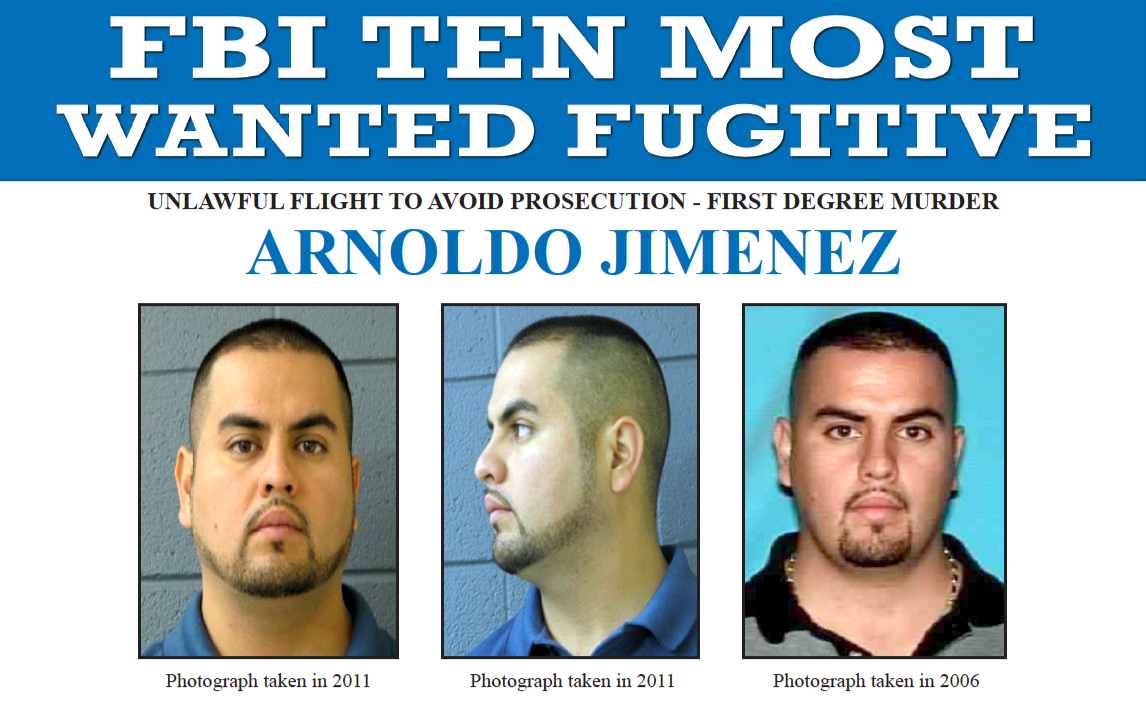
Chicago Man Wanted for Murder Added to the FBI’s List of Ten Most Wanted Fugitives

 FBI Special Agent in Charge (SAC) of the Chicago Field Office Jeffrey S. Sallet and Chief Richard Shore of the Burbank Police Department (BPD) in Illinois announced today the addition of an alleged murderer, Arnoldo Jimenez, to the FBI’s list of Ten Most Wanted Fugitives.

Jimenez, 37, is the 522nd fugitive to be named to the FBI’s list of Ten Most Wanted Fugitives, which has been in existence since 1950. Jimenez is being sought for his alleged involvement in the murder of his new wife the morning after their wedding. He should be considered armed and dangerous.

On May 12, 2012, Jimenez allegedly stabbed his wife to death in his black, four-door, 2006 Maserati, then allegedly dragged her body into the bathroom tub of her apartment in Burbank, Illinois. Jimenez was charged with first degree murder by the Circuit Court of Cook County, Illinois, and a state warrant was issued for his arrest on May 15, 2012. A federal arrest warrant was issued by the United States District Court, Northern District of Illinois, Eastern Division, on May 17, 2012, after Jimenez was charged federally with unlawful flight to avoid prosecution.

Screenshot of top portion of Arnoldo Jimenez's FBI Ten Most Wanted Fugitive poster displaying three photos and charges of unlawful flight to avoid prosecution, first-degree murder

Select to view related story, poster, and other information

“Arnoldo Jimenez is accused of brutally stabbing his wife to death just hours after their wedding. Because of this horrific crime, a family has forever lost their mother, daughter, and sister,” said SAC Sallet. “Our local, state, and federal partners have worked tirelessly on this investigation, and we are now asking for the public’s assistance to ensure that Jimenez is swiftly brought to justice.”

“I first want to express my condolences to the victim’s family for their tragic loss seven years ago, and thank the FBI for their assistance, commitment, and dedication in our investigation,” said Chief Shore. “This collaborative partnership will continue until Arnoldo Jimenez is apprehended and brought to justice, and I ask for the public’s assistance in locating Arnoldo Jimenez.”

Jimenez may have fled to Durango, Mexico, specifically in the area of Santiago Papasquiaro. He may also frequent Reynosa, Tamaulipas, Mexico. He has previously resided in Chicago, Illinois.

Jimenez also uses the aliases Arnoldo Gimenez and Arnoldo Rochel Jimenz. He is described as follows:

  • DOB Used: February 19, 1982
  • Place of Birth: Texas
  • Hair: Black
  • Eyes: Brown
  • Height: 6’0”
  • Weight: 200 to 225 pounds
  • Race: White (Hispanic)
  • Nationality: American

Additional information and wanted posters in English and Spanish can be found at this link: https://www.fbi.gov/wanted/topten

The FBI’s Ten Most Wanted Fugitives list was established in March 1950. Since then, 488 fugitives have been apprehended or located; 162 of them were apprehended as a result of citizen cooperation.

Since its inception, there have been 30 fugitives wanted from the Chicago region placed on the list. In addition, 29 fugitives that have been placed on the list were arrested in the Chicago region.

The FBI is offering a reward of up to $100,000 for information leading to the arrest of Arnoldo Jimenez. Anyone with information concerning Jimenez should take no action themselves, but should immediately contact the nearest FBI office or local law enforcement agency.

All information can remain anonymous and confidentiality is guaranteed. Individuals from outside of the United States should contact the nearest U.S. Embassy or Consulate. Calls may also be directed to 1-800-CALL-FBI (1-800-225-5324). The FBI’s Chicago Field Office may be reached at 312-421-6700.

This fugitive investigation is being conducted by the FBI’s South Suburban Major Crimes Task Force (SSMCTF) in Chicago. Formed in 1999, the SSMCTF is comprised of 58 south and southwest suburban departments, along with personnel from the Cook County Sheriff’s Police Department, Illinois State Police, and federal partners. The SSMCTF has approximately 150 investigators and crime scene personnel at its disposal, serving a population area of approximately one million.

Kentucky Man Sentenced to 292 Months in Prison for Child Exploitation and Production of Child Pornography

LEXINGTON, Ky.— In a significant development, Sean Ryan Reardon, a 30-year-old resident of Stanford, Ky., has been sentenced to 292 months in federal prison by Chief U.S. District Judge Danny Reeves. Reardon pleaded guilty to charges of enticing a minor to engage in sexually explicit conduct for the purpose of producing child pornography.

According to Reardon's plea agreement, he met the minor victim in Fall 2019 and initiated communication with the victim via Snapchat in early 2020. Reardon admitted to engaging in sexual contact with the victim at his home and other locations between July 2021 and March 2022. Additionally, he confessed to capturing pictures and videos of these encounters and exchanging sexually explicit content through Snapchat and Google Duo.

Having entered a guilty plea in February 2023, Reardon is required to serve 85 percent of his prison sentence under federal law. Following his release, he will be under the supervision of the U.S. Probation Office for 10 years.

The sentence was jointly announced by Carlton S. Shier IV, United States Attorney for the Eastern District of Kentucky; Jodi Cohen, Special Agent in Charge of the FBI Louisville Field Office; and Col. Phillip Burnett, Commissioner of the Kentucky State Police.

The FBI and Kentucky State Police conducted the investigation, with Assistant U.S. Attorney Mary Melton representing the United States in the case.

This prosecution falls under the purview of Project Safe Childhood, a nationwide initiative launched by the Department of Justice in May 2006 to combat the alarming rise of child sexual exploitation and abuse. The initiative coordinates federal, state, and local resources to locate, apprehend, and prosecute individuals who exploit children online, as well as to identify and rescue victims.