Sunday, June 21, 2026

What's Your Trip, Bitch?


It was late August 1980, brutally hot, the kind of Los Angeles heat that made the pavement shimmer and turned a wool uniform into a portable furnace.

I was still in the Police Academy, about a month away from graduation, and I was closer to 21  than 22 years old.

That afternoon I was wearing a brand-new LAPD uniform: wool pants, a long-sleeved wool shirt, a tie, polished shoes, and brass that gleamed in the sunlight. Every crease was sharp. Every stitch was exactly where it was supposed to be. Everything met academy standards. I looked like a police officer, but I just wasn't one yet.

This was my first academy ride-along.

I reported to Newton Division for the PM watch. Roll call began at 2:45 p.m. for a watch that officially started at 3:30. During roll call I was assigned to 13A55 with two senior officers. The training officer drove. Another experienced officer rode in the front passenger seat. I occupied the back seat, there to observe and learn what police work was really like.

Newton Station sat on Newton Street directly across from the Coca-Cola plant. The massive building was designed to resemble an ocean liner. Even today, I remember thinking it looked as though somebody had picked up a giant ship and dropped it in the middle of an industrial district filled with warehouses, loading docks, railroad tracks, and endless stretches of concrete.

We had barely cleared the station parking lot when the radio came alive.

"Ambulance shooting, 42nd and Central. Code 3."

I knew what a shooting was, and I knew what an ambulance was, but I didn't yet understand what "ambulance shooting" meant.

The training officer immediately activated the lights and siren.

Our black-and-white was a 1978 Plymouth Fury, one of the muscle cars of the 1960s and 1970s repurposed as a police car. It had white doors, a black body, and "To Protect and To Serve" painted on the side. Mounted on the roof were two light canisters, one over the driver and one over the passenger. Each displayed solid red lights forward and flashing amber lights to the rear. Between them sat the siren. We called the lights mouse ears because they looked like Mickey Mouse ears sitting on top of the car.

The mouse ears came alive, the siren wound up, and we rolled onto Newton Street before turning south onto Central Avenue. From there it was almost a straight shot to 42nd Street, roughly 30 blocks away.

The training officer furiously drove through traffic while the siren echoed off buildings and cars scrambled out of our way. Every lane change threw me across the vinyl rear seat. I bounced from one side to the other, grabbing whatever I could hold onto while trying to look like I belonged there. The ride seemed to take forever and no time at all.

Then we arrived. In my memory, there were thousands of people. Realistically, it was probably hundreds. But to a young academy recruit, closer to 21 than 22, wearing a brand-new uniform and seeing his first shooting victim, it looked like the entire city had gathered at 42nd and Central.

People filled the sidewalks. They spilled into the street. They crowded parking lots and storefronts. The August heat hung over everything, and the air was thick with exhaust, sweat, hot asphalt, and fear.

In the middle of all that was a river of dark red blood. Not a puddle. A river. So much blood that it looked as though there should have been four bodies instead of one. I had never seen anything remotely like it—not in the academy, not in training films, not anywhere.

The victim lay face down in the gutter, unconscious.

The ambulance and fire department arrived almost simultaneously. Paramedics immediately rolled him over and began working on him. CPR started at once. While one paramedic compressed his chest, others worked around him, preparing equipment and getting him onto a gurney.

The crowd pressed closer. The heat was oppressive. The noise was constant. The scene felt completely out of control. Then the training officer grabbed me by the arm and pulled me close and said, "Get in the ambulance. Write down anything he says."

He was sending me to take a dying declaration. If the victim regained consciousness and identified his attacker, his words could become evidence. My job was simple: listen and write. So I climbed into the back of the ambulance.

CPR continued throughout the entire trip to the hospital. The victim never regained consciousness.

I was less than thirty minutes into my first shift ride-along and already on my second ride with lights and siren. Looking back, that was extraordinarily unusual, but then everything about that afternoon was unusual.

One paramedic worked over him continuously while another managed equipment and medications. The ambulance raced through traffic Code 3, rocking violently through intersections and around corners. Equipment rattled. Radios crackled. Orders were shouted over the siren.  I sat where I could, trying to stay out of the way while watching everything unfold. Outside was heat, noise, and movement. Inside was urgency. Through it all, the victim never opened his eyes, said a word, or did anything to show he was conscious of his surroundings.

When we reached the hospital, the rear doors flew open. The paramedics jumped out and started rolling the gurney toward the emergency room, and I followed right behind them. The transition was immediate. One moment we were in the suffocating August heat surrounded by an uncontrolled crowd. The next we stepped into the cold, sterile air of the emergency room.

The contrast was startling. Outside, the chaos had been raw and emotional. Inside, the chaos was disciplined. Doctors, nurses, technicians, and paramedics moved rapidly in every direction, but every movement had purpose. Orders were given calmly. Equipment appeared instantly. People flowed around one another with practiced precision.

The victim was rushed into a trauma room. CPR continued. No signs of life. I followed and took a position against the wall with my notebook ready.

The medical team began preparing for an open-heart massage. Instruments were brought in. Staff prepared the victim's chest. Antiseptic solution was applied. Equipment was arranged and checked. Everyone was moving quickly. Then a nurse stepped forward carrying a catheter.

As God is my witness, the moment she began inserting it, the victim suddenly sat bolt upright. His eyes opened wide. He reached out and grabbed the nurse by the wrist. In a perfectly clear voice, he said: "What's your trip, bitch?"

Then he collapsed backward onto the bed. For a fraction of a second, the room seemed to freeze. Then everyone went right back to work. Moments later, the doctors opened his chest with rib spreaders and began performing open-heart massage.

They did everything they could. The victim never regained consciousness. He never spoke another word. And despite every effort in that room, he died. Standing against that wall, I wrote down exactly what he had said.

Those words became the first entry in the first officer's notebook I ever carried.

More than two decades later, on the day I retired, I still had that notebook.

The first thing I had ever written down as a police officer was still there, preserved in fading pencil on aging paper:

"What's your trip, bitch?"

Those were not the most important words I would hear during my career. They were not the saddest. They were not the last.

But they were the first.

And they were my introduction to policing.


Saturday, June 20, 2026

Stagecoaching

We called it the Stagecoach.

The Stagecoach wasn't a horse-drawn wagon crossing the frontier. It was an RTD bus rattling through downtown Los Angeles in the middle of the night. Yet somehow the name made perfect sense.

To understand why, you have to understand something about police culture in the 1980s.

People often think policing influenced popular culture, and it certainly did. Television shows, movies, and novels borrowed heavily from police stories, police language, and police personalities. But the influence ran both ways. Popular culture shaped police officers as much as police officers shaped popular culture.

When I was a young officer, I read Joseph Wambaugh's The Blue Knight. Like many cops of my generation, I wanted some of the experiences I had read about. Not because I wanted danger or excitement, but because those stories helped define what police work was supposed to look like. The books, the movies, and the television shows created a shared mythology that became part of police culture.

In 1981, Fort Apache, The Bronx brought the imagery of the American frontier back into policing. The precinct house became a fort. Patrol officers became cavalrymen. The streets became hostile territory. The movie didn't invent those comparisons, but it gave them new life at a time when many of us were just beginning our careers.

So when officers referred to riding the RTD bus as "taking the Stagecoach," nobody thought it sounded strange. It fit naturally into the language and traditions of the job. Whether the term came from an old-timer, a movie, or some long-forgotten story, I never knew. My partner used it, and before long I did too.

That's how police culture works.

Stories become language. Language becomes tradition. Eventually nobody remembers where it started.

We simply called it the Stagecoach.

In the mid-1980s, I worked a foot beat in downtown Los Angeles. It covered a single block on Fifth Street between Spring and Broadway. On paper it didn't sound like much. In reality, it was one of the busiest and most fascinating pieces of sidewalk in the city.

The beat was anchored by the Alexander Hotel on the northeast corner of Spring and Fifth. At the other end stood Broadway, lined with theaters, cheap hotels, storefronts, and an endless stream of humanity moving through the heart of downtown.

I worked both night watch and graveyard shifts. The graveyard shift began around eleven o'clock at night and continued until dawn.

When you worked a foot beat, you walked. There was no patrol car waiting for you. To get from Central Division to the beat meant crossing several city blocks. Rather than make the walk, we'd leave through the back door of the station, head down to Fifth Street, and board the RTD bus.

Officially, it was public transportation.

Unofficially, it was the Stagecoach.

The bus carried us to the beat and often carried us back again. Sometimes it carried our prisoners.

When we made an arrest, transportation was always a consideration. We could walk someone back to the station, although that wasn't usually practical. We could call for an aid unit to transport the prisoner. Occasionally we could get the B-Wagon—the old paddy wagon—to pick them up.

But every now and then the simplest solution was to board the RTD bus with the prisoner and ride four blocks back to Central.

Nobody thought much about it. It was simply another part of working downtown.

The Stagecoach also served another purpose.

Sometimes we'd ride right past our stop.

Instead of getting off, we'd remain seated and let the bus roll slowly through the block while we watched the street through the windows.

You'd be surprised what you could see from a city bus.

People who disappeared when they spotted uniformed officers suddenly became visible when they thought we weren't around. Drug dealers relaxed. Wanted suspects emerged from doorways. People who owed us conversations wandered into view.

One night we watched a chain snatch occur right in front of us. What looked like a quick theft was actually a robbery unfolding in real time. The victim screamed, the suspect ran, and before the bus had gone half a block we were already moving.

The Stagecoach gave us something every foot-beat officer values: a chance to observe before being observed.

And that block was worth observing.

Every street has a personality. Fifth Street had an entire ecosystem.

Some nights the air carried the smell of kimchi from nearby restaurants. Other nights the city sanitation crews would steam-clean the sidewalks and the street would fill with the scent of hot water, detergent, and decades of accumulated grime. Sometimes the smell of urine hung in the air. Most nights it was a mixture of everything.

The sidewalks never stopped moving.

Street prostitutes drifted between doorways.

Heroin addicts searched for their next fix.

Homeless men pushed shopping carts containing everything they owned.

Residents from the old hotels came downstairs simply to get out of their rooms for a few minutes.

The Alexander Hotel and the surrounding single-room occupancy hotels housed people trying to survive difficult circumstances. Some lived alone. Others somehow managed to raise families inside rooms barely large enough for a bed. Parents stepped outside for a cigarette. Workers returned from late shifts. Children peered from windows overlooking the street below.

Crime lived there.

But so did ordinary life.

That's what outsiders often failed to understand.

At four o'clock in the morning, one of the movie theaters on Broadway would empty out. Hundreds of people would emerge carrying blankets, bags, and bundles of clothing. Many had spent the night inside because a movie ticket was safer, warmer, and cheaper than spending the night on the sidewalk.

For a few minutes the entire block changed.

People flowed onto the street and moved in every direction. Some headed toward missions. Some returned to hotels. Others drifted toward bus stops, coffee shops, or wherever the day would take them.

Then, as dawn approached, the balance shifted again.

Factory workers appeared.

Janitors.

Restaurant employees.

People heading to jobs that started before sunrise.

The prostitutes and addicts didn't disappear, but they became part of a different crowd. The character of the street changed as another day began.

Standing on that block night after night taught me that a city breathes.

It inhales.

It exhales.

The people change. The smells change. The sounds change.

Yet the street remains.

And somewhere near the beginning and end of every shift, the Stagecoach would rumble down Fifth Street.

Just a city bus.

Yet for a pair of foot-beat cops working downtown Los Angeles, it was transportation, observation post, occasional prisoner transport, and a small piece of police culture.

A relic of a time when cops borrowed language from novels and movies, just as novels and movies borrowed stories from cops.

The Stagecoach.

A simple name for a city bus, and a reminder that the line between police culture and popular culture has always run both ways.

Friday, June 12, 2026

Armed Felon Charged after Allegedly Shooting Fort Lauderdale Police K-9

MIAMI – A grand jury returned an indictment Thursday charging a Fort Lauderdale man with possession of a firearm by a convicted felon after allegedly firing at a police K-9 during a pursuit in Fort Lauderdale.

According to court records, on April 18, law enforcement responded to a residential burglary in which a firearm had been stolen. Officers established a perimeter and, with assistance from aviation and K-9 units, located Christian Bouie, 30, of Fort Lauderdale, hiding in a tree in a nearby yard. When ordered to come down, Bouie fled, scaled a fence, and ran into an adjacent property.

As a police K-9 pursued him, Bouie allegedly pulled out a firearm and fired two rounds at the dog, striking the dog. Bouie continued fleeing before officers ultimately apprehended him. After taking Bouie into custody, officers recovered a firearm from his pocket.

“Police K-9s protect our officers, our neighborhoods, and our families,” said U.S. Attorney Jason A. Reding QuiƱones for the Southern District of Florida. “This indictment alleges that a convicted felon unlawfully possessed a firearm and fired at a police K-9 during a pursuit in Fort Lauderdale. When armed felons allegedly endanger law enforcement and the public, our Office will prosecute those cases to the fullest extent of federal law.”

Bouie has prior felony convictions, including a conviction for robbery with a firearm, and is prohibited from possessing a firearm under federal law.

If convicted, Bouie faces up to 15 years in federal prison. A federal district court judge will determine any sentence after considering the U.S. Sentencing Guidelines and other statutory factors.

U.S. Attorney Reding QuiƱones and Special Agent in Charge Jason Stankiewicz of the Bureau of Alcohol, Tobacco, Firearms, and Explosives (ATF), Miami Field Division, made the announcement. 

ATF Miami Field Division is investigating the case, with assistance from the Fort Lauderdale Police Department.

Assistant U.S. Attorney James M. Ustynoski is prosecuting the case.

An indictment is merely an allegation. All defendants are presumed innocent until proven guilty beyond a reasonable doubt in a court of law.

Friday, May 29, 2026

Stolen Guns Are Crime Guns: ATF Philadelphia Field Division Provides Tips for Safe Storage To Protect Your Community

Philadelphia – Agents of the Bureau of Alcohol, Tobacco, Firearms and Explosives (ATF) have seen this pattern repeatedly: unsecured firearms stolen from lawful owners, recycled through violent offenders, and used again and again to commit serious crimes. These incidents often escalate in severity, placing innocent bystanders at risk—frequently in ordinary places, in the middle of the day.

For example, Giante Hilliard of West Mifflin was prohibited from owning a firearm because of his multiple felony conviction, including aggravated assault and terroristic threats. In 2023, he was captured on surveillance video during a dangerous gunfire exchange outside a McKees Rocks bar.

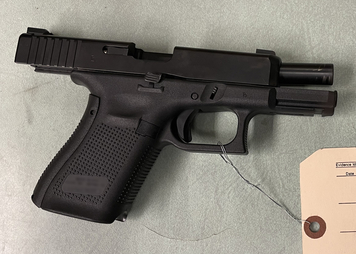
Two months later, during a traffic stop, the driver of the car Hilliard was riding in rammed three police vehicles while attempting to escape. After abandoning the disabled vehicle, Hilliard was seen on surveillance video hiding a black bag under a dumpster. Police recovered the bag and found a loaded Smith & Wesson handgun that had been reported stolen, along with approximately 300 doses of a heroin-fentanyl mixture. Ballistic testing confirmed the firearm was the same gun Hilliard used in the McKees Rocks shootout.

The stolen Smith & Wesson handgun used in the 2023 shootout outside a McKees Rocks bar.

The stolen Smith & Wesson handgun used in the 2023 shootout outside a McKees Rocks bar.

While Hilliard was sentenced to more than 16 years in prison in January 2025, many stolen firearms remain in the hands of criminals. And this is not just a big-city problem; in Altoona, 15-year-old Devon Pfirsching was killed in 2020 with a stolen gun that was reportedly purchased through Snapchat.

“When a gun is stolen, it’s not just a loss—it’s a threat to our communities,” said Walter Shaw, special agent with the ATF Pittsburgh Field Office. For ATF agents, investigating gun violence often means responding after serious injuries or death has already occurred. While agents work every day to identify shooters, trace firearms, and disrupt criminal networks, many cases share a troubling starting point: a firearm that was stolen before it was ever used in a crime.

“This is the part of the job we know doesn’t have to happen,” Shaw said. “We can’t always stop someone who is determined to commit violence, but we can prevent many of the guns criminals use from ever getting into their hands.”

Shaw explained that investigators frequently trace violent crimes back to firearms taken from homes or vehicles where they were left unsecured, sometimes only briefly. Once stolen, those firearms often move quickly through illegal networks, making recovery more difficult and increasing the likelihood they will be used in multiple crimes.

“When we recover a stolen gun at a crime scene, we’re already past the point where prevention was possible,” Shaw said. “Secure storage is one of the few points where lawful gun owners can directly interrupt that chain before it starts.”

From an enforcement perspective, secure storage is not about regulation or restriction, it is about eliminating one of the most predictable sources of crime guns. Every firearm that is properly secured is one less opportunity for theft, diversion, and preventable violence.

In fact, most crime guns recovered in Pennsylvania were originally purchased legally within the state. In 2023 for example, ATF traced 17,027 firearms recovered during criminal investigations in Pennsylvania. Of those, nearly 10,000—approximately 59 percent—were originally sold in in our state.

Stolen firearms are a major source of the illegal firearms market. Nationally, 95 percent of stolen firearms are taken from private citizens. Pennsylvania recovery data shows that 94.8 percent of stolen firearms remain in-state. While Pennsylvania ranks as the nation’s ninth most common source for firearms trafficking, stolen firearms predominantly remain a threat to our own neighborhoods.

“These examples show that stolen firearms rarely remain ‘lost,’” Shaw noted. “Instead, they often resurface in violent crimes that hurt Pennsylvania communities.”


Best Practices at Home

“Secure storage is essential,” Shaw warned. “Guns left unattended in homes, vehicles, or unsecured storage areas provide an easy path for theft and diversion into criminal hands. Firearms should be treated as potential community risks—any gun can be used in a crime if it falls into the wrong hands.”

“If you own a firearm, lock it in a safe or secure lockbox, store ammunition separately when possible, inventory and secure all firearms, and report any loss or theft immediately.”

The National Shooting Sports Foundation (NSSF) encourages all gun owners to review their firearm storage practices and take steps to ensure firearms are properly secured. NSSF recommends using a combination of safety tools and educating family members on the core rules of gun safety and proper firearm handling.

  • CABLE LOCK: Can be used on most firearms, allows for relatively quick access in an emergency, and provides basic protection from theft.
  • GUN CASE: An affordable option to conceal, protect, or legally transport a registered firearm.
  • LOCK BOX: Integrated locking mechanisms provide reliable protection and allow for legal transport outside the home.
  • ELECTRONIC LOCK BOX: Prevents unauthorized access and allows only the individual with the code to access the firearm.
  • FULL-SIZE AND BIOMETRIC GUN SAFES: Provide protection from theft and environmental damage while allowing safe storage of multiple firearms.

Download ATF’s safety and security guide for firearms owners.


Theft From Cars

According to national FBI data, firearm thefts from vehicles have been increasing, particularly in rural areas and parking garages. About half of all firearm thefts from vehicles occur when cars are parked at the owner’s residence.

Locking vehicle doors does not provide secure firearm storage. Glove compartments and center consoles—even when lockable—are not secure and can be easily pried open. Firearms should never be left accessible to children.

If you must store a firearm in your vehicle, take the following steps:

  • Always check—and double-check—that firearms are unloaded.
  • Use a secure storage device that keeps the firearm out of sight.
  • Avoid leaving firearms unattended for extended periods.
  • Remove the firearm from the vehicle and return it to secure home storage as soon as you arrive home.

Consider using a lockable gun case or lock box in your vehicle, preferably one secured to the vehicle itself to prevent theft.

Vehicle storage options vary widely in price and design. Some manufacturers offer custom solutions for specific vehicle models, including:

  • CAR CONSOLE STORAGE: Custom-fitted units that provide concealment and deter theft.
  • VEHICLE CARGO AREA STORAGE: Designed for transporting firearms to the range or field.
  • CABLE LOCKS: Can be effective when secured to the vehicle and kept out of sight.

View resources for secure firearms storage in your vehicle 

.


My Gun's Been Stolen!

If your firearm is lost or stolen, immediately contact your local law enforcement agency to report the incident. The “time-to-crime”—how quickly a stolen firearm is used in a criminal act—can be alarmingly short.

Providing a complete and accurate description of the firearm is critical for law enforcement investigations, insurance claims, and recovery of the firearm.

ATF strongly recommends maintaining a Personal Firearms Record stored separately from firearms. ATF Publication 3312.8 can be obtained from your local ATF office or downloaded as a fillable PDF from the ATF website. This record is for personal use only and is not collected or maintained by ATF or any other federal agency.

A person writes on an ATF Personal Firearms Record next to a firearm

A Personal Firearms Record can help recovery when a firearm is lost or stolen.

By completing and maintaining this record in a safe location, separate from your firearms, you help protect your property and take an important step toward keeping firearms out of the hands of criminals.

“Responsible firearm ownership does not end at the point of purchase,” Shaw emphasized. “Secure storage is not just about preventing unauthorized access in the home—it is about preventing predictable, preventable harm when stolen guns fall into the hands of individuals willing to use them.”

ATF Raises the Reward to $10,000 for Information To Help Identify Person(s) Responsible for Setting Fire to the Home of Adair County Sheriff

Dallas — The Bureau of Alcohol, Tobacco, Firearms and Explosives and Adair County Sheriff’s Office are requesting the public’s help for information that could lead to the identification and/or arrest of the suspect(s) responsible for setting fire to the home of Adair County Sheriff, Jason Ritchie.

On May 19, a fire was reported at the residence of Adair County Sheriff Jason Ritchie. Special agents from the ATF Muskogee Field Office responded and found evidence of forced entry and detected an ignitable liquid. Special agents are pursuing multiple leads; however, no suspects have been identified at this time.

“Fire, when used as a tool of violence, can ruin lives, property, and the American sense of security. ATF has a longstanding working relationship with the Adair County Sheriff’s Office and is determined to locate the individual(s) responsible for this reckless act and hold them accountable. We will continue working alongside our law enforcement partners to protect the community and ensure those who endanger public safety are brought to justice” stated ATF Special Agent in Charge Brian Garner.

Anyone with any information about this crime should contact ATF Muskogee Office at 918-594-1800, Adair County Sheriff’s Office at 918-696-2106 or ATF at 1-888-ATF-TIPS. Information can also be sent to ATFTips@atf.gov or through ATF’s website at www.atf.gov/contact/atftips.

ATF is the federal law enforcement agency primarily responsible for administering and enforcing the criminal provisions of the Federal laws pertaining to arson. More information about ATF and its programs is available at www.atf.gov.

Friday, May 22, 2026

Fitchburg Detective Honored With Hometown Hero Award

Detective Trundle and U.S. Attorney Elgersma Standing With Award

MADISON, WIS. – The U.S. Attorney’s Office for the Western District of Wisconsin proudly announces that Detective Jordan Trundle of the Fitchburg Police Department has been awarded the inaugural Hometown Hero Award sponsored by the U.S. Department of Justice in honor of America’s 250th birthday.

In a ceremony today, U.S. Attorney Chadwick M. Elgersma presented Detective Trundle the award in recognition of his outstanding work as a Task Force Officer with ATF Madison’s Crime Gun Task Force. The task force was formed to reduce gun violence by removing handguns from felons, drug traffickers, and other prohibited persons. The task force also aims to eliminate dangerous machine guns and machine gun conversion devices from Wisconsin communities.

Since joining the task force in July 2024, Detective Trundle has worked tirelessly to make the Fitchburg Police Department a model agency for processing crime guns. Detective Trundle has worked to streamline his department’s procedures for documenting and analyzing firearms used in the commission of federal and state crimes. Detective Trundle has also led in service training sessions to ensure his fellow officers are educated on the new procedures. Through his efforts, Detective Trundle has personally opened approximately two dozen federal firearms cases which have led to eighteen indictments.   

In addition to his contributions to the Crime Gun Task Force,  Detective Trundle was recognized in May 2024 by the Fitchburg Police Department for his outstanding service during a shots fired incident. He has participated in training for the department’s Citizens Academy, including conducting demonstrations on building clearing tactics and K9 apprehension.

“Today we honor one of our absolute best,” said U.S. Attorney Elgersma. “The Western District of Wisconsin is proud to recognize Detective Trundle for his exceptional work and service to his fellow Wisconsinites. He is an extraordinary example of what a law enforcement officer can be, and I am grateful for his continued service.”

The Hometown Hero Award was created in honor of the 250th birthday of the United States of America. The U.S. Department of Justice is proud to honor law enforcement across the country with recognition of the extraordinary service to their fellow citizens.

MAN CHARGED FOR UNLAWFUL POSSESSION OF A FIREARM AFTER SHOOTING AT GRAND PRAIRIE POLICE OFFICERS.

A previously convicted felon who shot at Grand Prairie Police Department (GPPD) officers during a domestic violence investigation was charged with unlawful possession of a firearm announced United States Attorney for the Northern District of Texas Ryan Raybould. 

“The Chief in Grand Prairie has been a great friend to this office and to our collective efforts in rooting out violent crime in North Texas.  I told him when I met with him months ago that we would stand up for the men and women under his charge.  Today I’m keeping my promise.  We will always go after those who try to intimidate and harm our great law enforcement officers in North Texas.”

The complaint alleges that on May 2, 2026, GPPD officers were dispatched to investigate a domestic disturbance after a child called to report that things had gotten “physical” while their mom and her boyfriend were arguing.  Upon arrival at the scene, GPPD officers encountered Malik Williams sitting in a silver Altima.  Upon seeing the mother in a blood-stained shirt, officers told Williams that he was not free to leave.  Williams immediately sped off in the Altima and officers pursued with their lights and sirens activated.  Eventually, a GPPD officer executed a Precision Immobilization Technique (PIT) maneuver to force Williams’ car to stop and block the driver’s door so that Williams could not escape.

As the officer got out of his patrol vehicle, Williams shot at him with an AR-15 rifle. A second officer then returned fire. Williams surrendered after he was struck and injured.  He was then taken to a hospital.  Investigators later learned that Williams was on parole for six prior felonies—five of them involving domestic violence against the same domestic violence victim in this case.

The Federal Bureau of Investigation’s Dallas Field Office, the Bureau of Alcohol, Tobacco, Firearms, and Explosives, and the Grand Prairie Police Department conducted the investigation.  Assistant U.S. Attorney Walt Junker is prosecuting the case. 

U.S. Attorney’s Office Honors Law Enforcement Partners and “Hometown Heroes” During National Police Week

INDIANAPOLIS- On May 15, 2026, United States Attorney Tom Wheeler recognized more than 160 individuals from 33 federal, state, and local law enforcement agencies during the Office’s annual awards ceremony at the Indiana War Memorial & Museum in downtown Indianapolis. Held during National Police Week, the ceremony honored law enforcement professionals whose exceptional work safeguarded communities across Indiana in cases concluded in 2025.

In commemoration of America’s 250th anniversary, the U.S. Attorney’s Office named Matt and Laurie Shahnavaz—Founders of the Remember Officer Noah Foundation—as the 2026 Hometown Heroes. This award honors the enduring American ideals of liberty, service, and civic responsibility. Matt and Laurie were recognized for their extraordinary service, unwavering devotion to their community, and steadfast support of law enforcement in carrying forward the mission and legacy of fallen Elwood Police Officer Noah Jacob Shahnavaz.

 Case Awards:

Outstanding Collaborative Investigation

Recognizes cases demonstrating exceptional teamwork and the ability to overcome significant challenges through multi‑agency coordination.

Awarded to: U.S. v. Carranza, et al and U.S. v. Patients Choice Labs

 Project Safe Childhood – Shield of Innocence

Honors those who provide extraordinary assistance to victims of federal child sexual abuse crimes, including sustained emotional support, extensive off‑duty dedication, detailed financial analysis to secure restitution, and resolving complex investigative challenges.

Awarded to: U.S. v. Austin Ryan Lauless, U.S. v. Bryan Lee Fish, and U.S. v. Moises Bojorquez

 L.E.A.T.H Heroism Award

Presented to a case demonstrating extraordinary commitment and fortitude in pursuing justice for domestic violence victims. The award honors IMPD Officer Breann Leath, who was killed in the line of duty while responding to a domestic disturbance. The LEATH Initiative—led by ATF, IMPD, and the U.S. Attorney’s Office—focuses on domestic violence offenders who illegally possess firearms or have significant violent criminal histories.

Awarded to: U.S. v. Pedro Zuniga-Lopez

 Investigative Excellence Award

Recognizes cases that significantly advanced the mission of the U.S. Attorney’s Office and the Department of Justice through complex, thorough, and proactive evidence analysis.

Awarded to:  U.S. v. Julian Green, et al and U.S. v. Freire-Pifferrer, et al

 Excellence in the Pursuit of Justice

Presented to a case in which local, state, and federal officials achieved extraordinary results in preventing crime, enhancing community safety, and seeking justice.

Awarded to: U.S. v. James Henley, et al

 Community Impact

Recognizes a case that produced widespread, positive impact on constituents, strengthened law enforcement relationships, and contributed to the lasting legacy of the U.S. Attorney’s Office for the Southern District of Indiana.

Awarded to: U.S. v. Desha Morris, U.S. v. Aaron Strong and U.S. v. Kristopher McDonald

 Outstanding Agency Service

Presented to cases that substantially contributed to the mission of the U.S. Attorney’s Office and the Department of Justice.

Awarded to: U.S. v. Lawrence Taylor, U.S. v. Otha Watkins II, U.S. v. Jeremy Mack, U.S. v. Mitchell Gibson and Quaylan Anderson v. United States.

Excellence in Appellate Practice

Recognizes an appellate case exemplifying excellence in legal writing, issue preservation, and advocacy before the appellate courts, contributing meaningfully to the development of the law and the protection of the United States’ interests.

Awarded to: U.S. v. Fenner, et al

Participating Agencies

Honorees represented the following 33 agencies:

  • Bureau of Alcohol, Tobacco, Firearms and Explosives
  • Drug Enforcement Administration
  • Federal Bureau of Investigation – Indianapolis and Tampa
  • Federal Bureau of Prisons – FCC Terre Haute
  • Homeland Security Investigations – Indianapolis and Cleveland
  • IRS–Criminal Investigation
  • U.S. Attorney’s Office, District of Maryland
  • U.S. Department of Agriculture, Office of Inspector General
  • U.S. Department of Health and Human Services, Office of Inspector General
  • U.S. Department of Justice, Civil Frauds Section
  • U.S. Department of Justice, Civil Rights Division
  • U.S. Department of Labor, Office of Inspector General
  • U.S. Postal Inspection Service
  • Indiana Attorney General’s Homeowner Protection Unit
  • Indiana Family and Social Services Administration
  • Indiana State Police
  • Charlestown Police Department
  • Clarksville Police Department
  • Cleveland, Ohio Police Department
  • Evansville Police Department
  • Fishers Police Department
  • Hamilton County Sheriff’s Office
  • Henry County Sheriff’s Office
  • Indianapolis Metropolitan Police Department
  • Jeffersonville Police Department
  • Lawrence County Prosecutor’s Office
  • Morgan County Sheriff’s Office
  • New Castle Police Department
  • Plainfield Police Department
  • Princeton Police Department
  • Richmond Police Department
  • Vanderburgh County Sheriff’s Office
  • Zionsville Police Department

Friday, May 15, 2026

Liberty County felon sentenced to 14 years in federal prison after taking firearm from law enforcement officers during courtroom scuffle

BEAUMONT, Texas – A Liberty convicted felon has been sentenced to 14 years in federal prison for a firearms violation in the Eastern District of Texas, announced U.S. Attorney Jay R. Combs.

Allen Joe Fregia, Sr., 48, pleaded guilty to possession of a firearm by a prohibited person and was sentenced to 168 months in federal prison by U.S. District Judge Marcia Crone on May 14, 2026.

According to information presented in court, on April 29, 2025, Fregia was a defendant in a Liberty County courtroom where he had just been sentenced to prison by a State District Judge.  As he was being escorted out of the courtroom by several law enforcement officers, Fregia became enraged and noncompliant, and a scuffle ensued. During the altercation, Fregia removed a firearm from an officer’s gun holster. The officer was able to retrieve the firearm as other officers were able to subdue Fregia.  During the altercation, an officer suffered injuries that required medical attention. Fregia, a previously convicted felon, was prohibited from possessing the firearm.

This case is part of Operation Take Back America, a nationwide initiative that marshals the full resources of the Department of Justice to repel the invasion of illegal immigration, achieve the total elimination of cartels and transnational criminal organizations (TCOs), and protect our communities from the perpetrators of violent crime.

This case was investigated by the Texas Rangers, Liberty County Sheriff’s Office and the Bureau of Alcohol, Tobacco, Firearms, and Explosives and prosecuted by Special Assistant U.S. Attorney Tommy Coleman.

Saturday, May 09, 2026

Long Beach Man Sentenced to 2½ Years in Federal Prison for Possessing Molotov Cocktail at Anti-ICE Protest Last Year in Downtown L.A.

LOS ANGELES – A Long Beach man who possessed a Molotov cocktail during an anti-immigration enforcement protest in downtown Los Angeles last year was sentenced today to 30 months in federal prison.

Wrackkie Quiogue, 28, was sentenced by United States District Judge Anne Hwang. 

Quiogue pleaded guilty in November 2025 to one count of possession of an unregistered destructive device. He has been in federal custody since June 2025.

In June 2025, federal law enforcement officials began conducting immigration enforcement operations throughout the greater Los Angeles area. During and following those operations, protests occurred in and around Los Angeles County. While many of the protestors peacefully exercised their First Amendment rights, some individuals directly engaged in violent actions to obstruct, impede, or injure law enforcement officers.

One such protest that turned violent occurred on June 8, 2025, in the Civic Center area of downtown Los Angeles. Members of the crowd threw rocks and bottles at law enforcement officials. The Los Angeles Police Department (LAPD) declared an unlawful assembly. 

One police officer witnessed Quiogue possessing a Molotov cocktail. The glass bottle he held contained a flammable liquid (ethanol) and a source of ignition, namely a yellow piece of cloth soaked in ethanol, which acted as a wick. 

Fearing that Quiogue would light the Molotov cocktail and throw it at the officers, police approached Quiogue, causing him to attempt to flee. As the LAPD officers pursued him, Quiogue threw the unlit Molotov cocktail into the air. LAPD officers subdued and arrested Quiogue, who was holding a lighter in his right hand.

Quiogue admitted to knowingly possessing the destructive device and that he had not registered it with the National Firearms Registration and Transfer Record as required by federal law.

“Unlike many of the individuals in the crowd, who were gathered to peacefully exercise their First Amendment rights and protest immigration enforcement operations, [Quiogue] came prepared to instigate violence and inflict harm on the law enforcement officers assigned to protect the Roybal Federal Building,” prosecutors argued in a sentencing memorandum. “[Quiogue]’s premeditated actions endangered the law enforcement officers protecting Roybal Federal Building and the civilians who gathered to peacefully protest.”

The Bureau of Alcohol, Tobacco, Firearms and Explosives investigated this matter with the assistance of the Los Angeles Police Department.

Assistant United States Attorney David C. Lachman of the Major Frauds Section prosecuted this case.

Friday, May 01, 2026

Star Prairie Sporting Goods Store Burglarized, $10,000 Reward Offered

STAR PRAIRIE, Wis. – The Bureau of Alcohol, Tobacco, Firearms and Explosives (ATF), in partnership with the National Shooting Sports Foundation (NSSF), is offering a reward of up to $10,000 for information leading to the arrest and conviction of those responsible for a February 12, 2026, burglary of a federally licensed firearms dealer in Star Prairie, Wisconsin.

The St. Croix County Sheriff’s Office and ATF are investigating the early-morning break-in, during which a suspect entered through a window and stole nearly 50 firearms and a large quantity of ammunition.

Anyone with information is asked to call the St. Croix County Sheriff’s Office at 715-386-4701 or email tipline@sccwi.gov 

Former Dallas Police Department Sergeant Sentenced to 28 Months in Federal Prison for Selling Stolen Service Weapons

A former Dallas Police Department sergeant who sold stolen service weapons was sentenced to 28 months in federal prison, announced United States Attorney for the Northern District of Texas Ryan Raybould.

Thomas Fry, 53, of Royse City, Texas, was sentenced on Wednesday, April 22, 2026, by United States District Judge Brantley Starr for possession and sale of a stolen firearm.

“This police officer violated his oath and the public’s trust when he chose to commit a crime,” said U.S. Attorney Ryan Raybould. “Our law enforcement partners work day and night to keep us safe and enforce the law, and our trust and faith in them will not waiver.  We will work tirelessly with our law enforcement partners to root out the few bad apples among their ranks.”

“This case strikes at the core of public trust,” said Brian Garner Special Agent in Charge of the Bureau of Alcohol, Tobacco, Firearms and Explosives Dallas Field Division. “The very individuals entrusted to safeguard our communities must be held to the highest standard. When that trust is violated through the theft and illegal sale of firearms, it endangers the public and undermines the integrity of law enforcement. This 28-month federal sentence sends a clear message: no one is above the law, and those who abuse their authority will be held accountable. ATF remains committed to working alongside our partners to protect our communities and prevent illegal firearms trafficking.

Court records reveal that Fry, who at the time was a sergeant with the Dallas Police Department, admitted to three separate instances of taking a firearm owned by the Dallas Police Department, knowing that the firearms were stolen, and selling them to an Oklahoma pawn shop in June and July of 2022.

The Bureau of Alcohol, Tobacco, Firearms & Explosives and the Dallas Police Department conducted the investigation. Assistant U.S. Attorney Marty Basu prosecuted the case.

Friday, April 24, 2026

Pensacola Man Sentenced to Federal Prison for Threatening a Pensacola Police Department Detective

Pensacola, Florida – Tamal W. Jenkins, 20, of Pensacola, Florida, was sentenced to 20 months in federal prison for interstate threatening communication with intent to extort. The sentence was announced by John P. Heekin, United States Attorney for the Northern District of Florida.

U.S. Attorney Heekin said: “My office stands shoulder-to-shoulder with the brave men and women of law enforcement who are on the front lines in the fight against crime. They deserve our gratitude and respect for placing themselves in harm’s way every day to keep our communities safe. As this case demonstrates, anyone who harms or threatens to harm a law enforcement officer will be aggressively prosecuted by my office and held accountable.”

Court documents reveal that, in July 2025, the Pensacola Police Department arrested suspects during a homicide investigation. Within days of the arrest, one of the responsible Pensacola Police Detectives received an electronic text message threatening to kill the Detective if she did not release the suspects who are now facing homicide charges.  Through legal process and electronic investigative techniques, law enforcement identified Jenkins as the person who made the threat against the Detective for acting in the course of her official duties.

Jenkins imprisonment will be followed by three years of federal supervised release.  Jenkins also faces a violation of prior state-ordered probation for firearm and drug offenses.

Pensacola Police Chief Eric Winstrom said: “Threats of violence against those upholding the law cannot be tolerated. The Pensacola Police Department is grateful to our federal partners for recognizing the gravity of this incident and ensuring Mr. Jenkins is held accountable.”

The case involved a joint investigation by the Bureau of Alcohol, Tobacco, Firearms & Explosives and the Pensacola Police Department. The case was prosecuted by Assistant United States Attorney David L. Goldberg.

This case is part of Operation Take Back America, a nationwide initiative that marshals the full resources of the Department of Justice to repel the invasion of illegal immigration, achieve the total elimination of cartels and transnational criminal organizations (TCOs), and protect our communities from the perpetrators of violent crime.

Sunday, April 19, 2026

The Anatomy of Elder Fraud: Ten Scams Every Family Should Recognize

Financial crimes against older adults are not isolated incidents. They are structured, repeatable, and increasingly sophisticated. What appears to be a single deceptive phone call or email is often part of a broader pattern of exploitation that targets trust, urgency, and vulnerability.

The scope of the problem is significant. Each year, an estimated one in ten adults age 60 and older experience some form of abuse, including financial exploitation, with many cases going unreported (Sill & Haskins, 2025) . Financial fraud alone has resulted in billions of dollars in losses among older Americans, with over $3.4 billion reported lost to scams targeting individuals aged 60 and older in 2023 (Federal Bureau of Investigation [FBI], 2024). These figures likely underrepresent the true scale due to underreporting driven by embarrassment, fear, or lack of awareness (Federal Trade Commission [FTC], 2023).

Understanding how these scams operate is essential. What follows is a breakdown of ten of the most common schemes and how they are carried out.

Tech Support Scams

The victim receives a pop-up message, email, or phone call claiming their computer is infected or compromised. The scammer impersonates a legitimate company and instructs the victim to grant remote access. Once inside the system, the offender may install malware, access financial information, or demand payment for fake repairs. These scams rely on fear and technical confusion to gain control (FBI, 2024).

Government Impersonation Scams

Scammers pose as representatives of agencies such as the IRS or Social Security Administration. Victims are told they owe money or face legal consequences. Payment is demanded immediately, often through untraceable methods like gift cards. These scams exploit authority and urgency, two factors shown to increase compliance (FTC, 2023).

Grandparent Scams

The offender impersonates a grandchild or relative in distress, often claiming arrest or injury. The victim is urged to send money quickly and not inform others. This tactic relies on emotional manipulation and family loyalty, which are particularly effective among older adults (FBI, 2024).

Romance Scams

Offenders build relationships through online platforms, gaining trust over time. Eventually, they request money for emergencies or opportunities. In 2023, romance scams accounted for some of the highest financial losses among fraud categories, particularly affecting older victims (FBI, 2024). These scams succeed because they exploit emotional connection rather than immediate deception.

Lottery and Sweepstakes Scams

Victims are told they have won a prize but must pay fees or taxes to receive it. The promise of a reward is paired with urgency, discouraging verification. The FTC reports that such scams continue to target older adults despite longstanding public awareness campaigns (FTC, 2023).

Investment Scams

These schemes promise high returns with little risk, often involving cryptocurrency or real estate. Victims are persuaded to invest large sums. According to the FBI, investment scams resulted in the highest reported financial losses among fraud types in 2023 (FBI, 2024). These scams exploit financial security concerns and the desire for stability in retirement.

Phishing and Email Scams

Fraudulent messages impersonate legitimate institutions, directing victims to fake websites or requesting credentials. Once access is obtained, accounts are compromised. The increasing digital engagement of older adults has expanded exposure to these tactics (Internet Crime Complaint Center [IC3], 2024).

Charity Scams

Following disasters or crises, scammers pose as charitable organizations and solicit donations. Victims are pressured to act quickly. The National Council on Aging notes that older adults are particularly vulnerable due to their higher likelihood of charitable giving (National Council on Aging [NCOA], 2023).

Home Repair and Contractor Fraud

Scammers approach homeowners offering urgent or discounted repairs. Payment is requested upfront, and work is either incomplete or never performed. Older adults are targeted due to higher rates of homeownership and a desire to maintain independence (Consumer Financial Protection Bureau [CFPB], 2022).

Business Email Compromise and Account Takeover

Scammers gain access to email accounts and impersonate trusted contacts. They request transfers or redirect payments. These schemes are highly effective because they leverage existing relationships rather than creating new ones (IC3, 2024).

The Pattern Beneath the Scams

Despite differences in execution, these scams share common elements: exploitation of trust, creation of urgency, and limitation of verification. Older adults are disproportionately targeted due to factors such as social isolation, cognitive decline, and financial stability (Sill & Haskins, 2025) . Research indicates that financial exploitation often occurs within relationships of trust, further complicating detection and reporting (CFPB, 2022).

What Families Can Do

Prevention requires more than awareness. It requires structure and involvement. Families play a critical role in reducing risk.

  1. Maintain consistent communication
    Regular contact reduces isolation, a known risk factor for exploitation (NCOA, 2023).

  2. Encourage verification of financial requests
    Creating a habit of pausing and confirming requests can disrupt scam attempts (FTC, 2023).

  3. Monitor financial activity when appropriate
    Early detection of unusual transactions is key to limiting losses (CFPB, 2022).

  4. Educate about common scam tactics
    Awareness of patterns increases resistance to manipulation (FBI, 2024).

  5. Establish trusted advisors or contacts
    Having a designated person to consult before financial decisions adds a layer of protection (NCOA, 2023).


Conclusion

Elder fraud is not simply a collection of isolated crimes. It is a system of exploitation built on predictable human factors. As the population ages and technology evolves, these schemes will continue to adapt.

Understanding how these scams work is essential, but it is not sufficient. Protection depends on relationships, communication, and the presence of trusted systems that reduce isolation and increase accountability.

The challenge is not eliminating risk entirely. It is ensuring that when risk appears, it is met with awareness, structure, and support.

References

Consumer Financial Protection Bureau. (2022). Suspicious activity reports on elder financial exploitation.

Federal Bureau of Investigation. (2024). Internet crime report 2023.

Federal Trade Commission. (2023). Protecting older consumers report.

Internet Crime Complaint Center. (2024). Elder fraud report.

National Council on Aging. (2023). Top scams targeting older adults.

Sill, K., & Haskins, P. A. (2025). Studies of mistreatment of older adults offer solutions to an urgent and growing societal problem. National Institute of Justice Journal.

Friday, April 17, 2026

Baltimore Man Sentenced for Armed Robberies, Carjacking, Assaulting Federal Officer

Baltimore, Maryland – A Baltimore man is headed to federal prison for his role in robbing multiple local commercial businesses and then later assaulting a Deputy U.S. Marshal while at the U.S. Courthouse in Baltimore.

U.S. District Court Judge Ellen L. Hollander sentenced Sharif Northington, 23, of Baltimore, to 10 years in prison for interfering with commerce by robbery, and using, carrying, and brandishing a firearm during and in relation to a crime of violence. Northington also received one year in prison, consecutive to the 10-year sentence, for intentionally assaulting an officer and employee of the United States. In September 2024, following a court proceeding at the U.S. Courthouse in Baltimore, Northington threatened and then assaulted the Deputy U.S. Marshals escorting him to his cell.

Kelly O. Hayes, U.S. Attorney for the District of Maryland, announced the sentence with Special Agent in Charge Charles Doerrer, Bureau of Alcohol, Tobacco, Firearms and Explosives (ATF); Clinton J. Fuchs, U.S. Marshal for the District of Maryland (USMS); Commissioner Richard Worley, Baltimore Police Department (BPD); and Chief Robert McCullough, Baltimore County Police Department (BCPD).

According to court documents, in November 2022, Northington conspired with co-conspirators Devin Grimes, 27, of Baltimore, and John Hyman, 21, of Baltimore, to commit armed commercial robberies and at least one armed carjacking.  During each robbery and carjacking, the co-conspirators used a firearm while demanding money, a vehicle, and/or other items.

On November 29, Northington, Grimes, and Hyman — who were wearing masks and hoods — entered a Northeast Baltimore 7-Eleven convenience store. Grimes brandished a handgun and then proceeded to rob the store with Northington and Hyman.  The suspects stole money from the cash register and then fled the store.  But unknown to the suspects, the stolen cash included a money tracker which helped law enforcement officers track their movements. In response, both BPD and BCPD dispatched officers, detectives, and aviation squads to locate the suspects.

The co-conspirators then went to a carry-out restaurant, less than a mile away. Upon entering, Grimes went to the back of the restaurant and brandished a handgun. He then confronted a delivery driver and robbed the man of the keys in his pocket.  Then Grimes returned to the register and demanded the cashier open the register. Grimes then removed money from the register before the three co-conspirators fled the store in the delivery man’s vehicle.

BPD and BCPD aviation units soon located and apprehended the co-conspirators. During the arrests, law enforcement recovered a loaded Smith & Wesson .40 caliber pistol, money, and a money tracker from Grimes.  Law enforcement also discovered additional cash in the vehicle. 

In December 2024, Judge Hollander sentenced Grimes to 10 years in federal prison. Then in September 2025, Judge Hollander sentenced Hyman to 10 years in prison for his role in the crimes.        

U.S. Attorney Kelly O. Hayes commended the ATF, USMS, BPD, and BCPD for their work in the investigation. Ms. Hayes also thanked Assistant U.S. Attorney John Sippel who prosecuted this federal case.

Friday, April 10, 2026

Brooklyn Man Pleads Guilty to Setting NYPD Vehicles Ablaze

Earlier today, at the federal courthouse in Brooklyn, Jakhi McCray pleaded guilty to committing arson of 10 New York City Police Department (NYPD) vehicles and one trailer in Brooklyn, New York.  The proceeding was held before United States Magistrate Judge Seth D. Eichenholtz.  When sentenced, McCray faces a mandatory minimum sentence of five years in prison and a maximum of 20 years’ imprisonment, as well as a fine and restitution in an amount to be determined by the Court.   

Joseph Nocella, Jr., United States Attorney for the Eastern District of New York, Bryan DiGirolamo, Special Agent in Charge, Bureau of Alcohol, Tobacco, Firearms and Explosives, New York Division (ATF), and Jessica S. Tisch, Commissioner, NYPD, announced the guilty plea.

“The defendant’s actions were not only dangerous, but they were also a direct attack on public safety and the rule of law,” stated United States Attorney Nocella. “By deliberately setting fire to multiple police vehicles in the pre-dawn hours, the defendant put at risk the lives of first responders and residents asleep in their beds nearby, and ultimately, strained resources meant to protect the community.  Today’s guilty plea ensures accountability and sends a clear message that acts of violence and destruction against law enforcement will be met with serious consequences.”

“This defendant’s actions—setting fire to multiple NYPD vehicles and causing significant damage—demonstrates a blatant disregard for public safety and the rule of law. Arson is not a form of protest—it is a dangerous crime that puts lives at risk,” stated ATF Special Agent in Charge DiGirolamo.  “The swift work of the ATF New York Arson and Explosives Task Force, comprised of ATF, NYPD, and FDNY personnel, underscores the strength of our coordinated response to violent crime. We remain committed to working alongside our partners to protect our communities and ensure those who commit violent acts are brought to justice.”

As detailed in court filings and facts presented during the plea proceeding, on June 12, 2025, McCray scaled a fence into a secure, private lot on DeKalb Avenue between Wilson Avenue and Central Avenue in the Bushwick section of Brooklyn that housed NYPD vehicles, and intentionally set on fire 10 NYPD vehicles and one trailer. Shortly thereafter, an NYPD officer assigned to inspect the lot saw the fire and observed McCray escaping through a hole in the fence.  McCray ultimately self-surrendered on July 21, 2025.  NYPD estimates the arson caused over $800,000 in damages.  The arson was committed two days before protests were scheduled to be conducted over the June 14-15, 2025 weekend, compromising NYPD resources to protect and secure the public.

The government’s case is being handled by the Office’s General Crimes Section.  Assistant United States Attorney Rebecca M. Urquiola is in charge of the prosecution.

The Defendant:

JAKHI MCCRAY
Age: 22
Brooklyn, New York

E.D.N.Y. Docket No. 26-CR-68 (ENV) 

Contact

John Marzulli
Denise Taylor                      
United States Attorney’s Office
(718) 254-6323

U.S. Attorney’s Office Charges Three Men With Attempting To Rob Undercover Federal Agent in Chicago

CHICAGO — The U.S. Attorney’s Office today charged three men with attempting to rob a federal agent during an undercover firearm transaction in Chicago.

JEREMY JONES, CHRISTOPHER DENSMORE, and CARMELL MASSEY attempted to rob an agent from the U.S. Bureau of Alcohol, Tobacco, Firearms, and Explosives on Thursday morning, according to a criminal complaint filed in U.S. District Court in Chicago.  The agent was working undercover when the agent met with the defendants in a parking lot on the South Side of Chicago for the purpose of buying two firearms from them, the complaint states.  During the meeting, the defendants attempted to rob the agent of $600 in government funds that the agent planned to use to purchase the guns, the complaint states. When Jones pointed a firearm at the undercover agent, the agent responded by firing a shot at him, the complaint states.  Jones and the two other defendants attempted to flee the area, but law enforcement quickly arrested all three defendants, the complaint states.

The complaint charges Jones, 19, Densmore, 22, and Massey, 20, all of Chicago, with one count of attempted robbery and one count of brandishing a firearm during a crime of violence.  The firearm charge is punishable by a mandatory minimum sentence of seven years in federal prison and a maximum of life.  The attempted robbery charge is punishable by a maximum of 25 years. The defendants were scheduled to make initial appearances in federal court in Chicago this afternoon.

The complaint was announced by Andrew S. Boutros, United States Attorney for the Northern District of Illinois, and Christopher Amon, Special Agent-in-Charge of the Chicago Field Division of the U.S. Bureau of Alcohol, Tobacco, Firearms, and Explosives.  The Chicago Police Department provided valuable assistance. The government is represented by Assistant U.S. Attorney Rachel Gurley.

“Each and every day in Chicago, ATF agents put their lives on the line to fight violent crime and make our city safer,” said U.S. Attorney Boutros.  “The undercover agent in this case demonstrated the utmost bravery, courage, and skill, all of which are the hallmarks of our nation’s dedicated ATF agents.  Any crimes against law enforcement—especially violent crimes—are direct assaults on the rule of law.  Through these serious federal charges, the Chicago U.S. Attorney’s Office will seek to hold these violent offenders accountable.”

“During an undercover firearms trafficking operation yesterday, the offenders arrived with the intention of conducting a robbery,” said ATF SAC Amon.  “They did not realize they were targeting highly trained agents who immediately took action to take the offenders into custody and protect their own.  I am proud of the professionalism and bravery demonstrated by our undercover law enforcement officers, ATF agents, and Task Force Officers on the scene.  These professionals risk their lives day in and day out to target violent criminals and their sources of crime guns.  Once the radio call went out, the Chicago Police Department immediately responded and provided critical investigative support, and I am grateful for their work.  To be very clear, the conduct of these offenders will not be tolerated, and I want to thank U.S. Attorney Boutros and his team for swiftly bringing federal charges in this case.”

The public is reminded that a complaint is not evidence of guilt.  The defendants are presumed innocent and entitled to a fair trial at which the government has the burden of proving guilt beyond a reasonable doubt.

Friday, April 03, 2026

Pensacola Man Sentenced to 30 Years in Federal Prison For Attempting To Kill an Escambia County Sheriff’s Deputy

Pensacola, Florida – Darrion K. Finley, 22, of Pensacola, Florida, has been sentenced in federal court on charges related to a shooting incident in late 2024. John P. Heekin, United States Attorney for the Northern District of Florida announced the sentencing.

US Attorney John Heekin with federal and state partners at press conference

The Indictment charged Finley with possession of a firearm by a convicted felon, attempting to kill an Escambia County Sheriff’s Deputy to prevent certain communications, and discharging a firearm during and in relation to a crime of violence.

U.S. Attorney Heekin said: “This case shows the deadly threats our brave men and women in law enforcement face every day as they fight to remove violent criminals from our communities. My office remains firmly committed to aggressively prosecuting those violent offenders, and we will stand shoulder to shoulder with our law enforcement partners in the fight to keep our streets safe. Let me be clear: anyone who threatens, shoots at, or in any way harms a law enforcement officer in the Northern District of Florida will face the full might of the Department of Justice.”

Court documents reveal that on December 17, 2024, the defendant was driving in Pensacola in a stolen vehicle. When the Escambia County Sheriff’s Office attempted to conduct a traffic stop of the defendant, he accelerated and law enforcement began its vehicle pursuit. One of the pursuing deputies executed a PIT maneuver to immobilize Finley’s vehicle, after which Finley fired a 9-millimeter pistol at the Deputy’s vehicle, striking the passenger side door of the patrol vehicle. As the Deputy and his K9 approached the defendant’s vehicle, Finley exited the car armed with the pistol, and began pointing it at the officer.  The Deputy released his K9, which lunged at Finley and prevented him from firing the pistol, after which Finley attempted to flee on foot but was immobilized and detained. Upon recovering Finley’s handgun, it was discovered that a live round had lodged in the ejection port, indicating the defendant had tried to fire the weapon a second time at the Deputy but it malfunctioned.

“Darrion Finley’s brazen attempt to murder one of our deputies during a routine traffic stop highlights the extreme dangers our officers face every single day,” said Escambia County Sheriff Simmons. “Thanks to the quick thinking and bravery of our deputy and his K9 partner, a dangerous felon is now off our streets for decades. We will continue working shoulder-to-shoulder with our federal partners to hold violent criminals accountable and keep Escambia County safe.”

“Escambia County residents are better off with this violent man behind bars,” said Tampa Field Division’s Special Agent in Change Kirk Howard. “The suspect shot at law enforcement with complete disregard for the community and this sentencing sends a clear message that acts of violence against law enforcement and our community will not be tolerated.”

The case was jointly investigated by the Bureau of Alcohol, Tobacco, Firearms, and Explosives, the Escambia County Sheriff’s Office, the State Attorney’s Office for the First Judicial Circuit, and the Florida Department of Law Enforcement. The case was prosecuted by Assistant United States Attorneys David L. Goldberg and Jessica S. Etherton.

This case is part of Operation Take Back America, a nationwide initiative that marshals the full resources of the Department of Justice to repel the invasion of illegal immigration, achieve the total elimination of cartels and transnational criminal organizations (TCOs), and protect our communities from the perpetrators of violent crime.

Armed Felon Who Pointed Gun at Police Sentenced to Federal Prison

ATLANTA - Lee Milton Reeves, a multi-convicted felon who threatened employees and police officers at gunpoint in the bathroom of a Riverdale, Georgia restaurant, was sentenced to seven years in federal prison.

“This case shows precisely why convicted felons are prohibited from possessing guns,” said U.S. Attorney Theodore S. Hertzberg. “Had Reeves pulled the trigger, this case could have ended in tragedy. My office will never stop working towards making Georgia safe by removing armed felons from the community.”

“The sentence imposed today sends a clear message to convicted felons prohibited from possessing firearms: ATF’s top priority remains keeping our communities safe,” said Assistant Special Agent in Charge Ryan Todd. “ATF will continue working with our law enforcement partners to target individuals who unlawfully possess firearms.”

According to U.S. Attorney Hertzberg, the charges, and other information presented in court: On March 17, 2024, officers from the Riverdale Police Department responded to an emergency call about a man with a gun at a fast-food restaurant. Once there, officers found Reeves holed up in a bathroom, where Reeves pointed at gun at them. Subsequent investigation revealed that, the day before, Reeves had fired that same gun inside a trailer where a mother and daughter lived.

On March 26, 2026, Lee Milton Reeves, 40, of Mechanicsville, Georgia, was sentenced to seven years in prison to be followed by three years of supervised release. Reeves pleaded guilty to possession of a firearm by a prohibited person on December 17, 2025.

This case was investigated by the Bureau of Alcohol, Tobacco, Firearms and Explosives, with assistance from the Riverdale Police Department and the Bibb County Sheriff’s Office.

Assistant U.S. Attorney James Hwang prosecuted the case.

This case is part of Project Safe Neighborhoods (PSN), a program bringing together all levels of law enforcement and the communities they serve to reduce violent crime and gun violence, and to make our neighborhoods safer for everyone. On May 26, 2021, the Department launched a violent crime reduction strategy strengthening PSN based on these core principles: fostering trust and legitimacy in our communities, supporting community-based organizations that help prevent violence from occurring in the first place, setting focused and strategic enforcement priorities, and measuring the results.