Monday, November 21, 2011

Internet Crime: Holiday Shopping Tips

In advance of the holiday season, the FBI reminds shoppers to beware of cyber criminals and their aggressive and creative ways to steal money and personal information. Scammers use many techniques to fool potential victims including fraudulent auction sales, reshipping merchandise purchased with a stolen credit card, sale of fraudulent or stolen gift cards through auction sites at discounted prices, and phishing e-mails advertising brand name merchandise for bargain prices or e-mails promoting the sale of merchandise that ends up being a counterfeit product.

Fraudulent Classified Ads or Auction Sales
Internet criminals post classified ads or auctions for products they do not have. If you receive an auction product from a merchant or retail store, rather than directly from the auction seller, the item may have been purchased with someone else's stolen credit card number. Contact the merchant to verify the account used to pay for the item actually belongs to you.

Shoppers should be cautious and not provide credit card numbers, bank account numbers, or other financial information directly to the seller. Fraudulent sellers will use this information to purchase items for their scheme from the provided financial account. Always use a legitimate payment service to protect purchases.

Diligently check each seller's rating and feedback along with their number of sales and the dates on which feedback was posted. Be wary of a seller with 100% positive feedback, if they have a low total number of feedback postings and all feedback was posted around the same date and time.

Gift Card Scam
The safest way to purchase gift cards is directly from the merchant or authorized retail merchant. If the merchant discovers the card you received from another source or auction was initially obtained fraudulently, the merchant will deactivate the gift card number, and it will not be honored to make purchases.

Phishing and Social Networking
Be leery of e-mails or text messages you receive indicating a problem or question regarding your financial accounts. In this scam, you are directed to follow a link or call the number provided in the message to update your account or correct the problem. The link actually directs the individual to a fraudulent Web site or message that appears legitimate; however, any personal information you provide, such as account number and personal identification number (PIN), will be stolen.

Another scam involves victims receiving an e-mail message directing the recipient to a spoofed Web site. A spoofed Web site is a fake site or copy of a real Web site that is designed to mislead the recipient into providing personal information.

Consumers are encouraged to beware of bargain e-mails advertising one day only promotions for recognized brands or Web sites. Fraudsters often use the hot items of the season to lure bargain hunters into providing credit card information. The old adage "if it seems too good to be true" is a good barometer to use to legitimize e-mails.

Black Friday has traditionally been the "biggest shopping day of the year." The Monday following Thanksgiving has more recently (2005) been labeled Cyber Monday, meaning the e-commerce industry endorses this special day to offer sales and promotions without interfering with the traditional way to shop. Scammers try to prey on Black Friday or Cyber Monday bargain hunters by advertising "one day only" promotions from recognized brands. Consumers should be on the watch for too good to be true e-mails from unrecognized Web sites.

Along with on-line shopping comes the growth of consumers utilizing social networking sites and mobile phones to satisfy their shopping needs more easily. Again, consumers are encouraged to beware of e-mails, text messages, or postings that may lead to fraudulent sites offering bargains on brand name products.

Tips
Here are some tips you can use to avoid becoming a victim of cyber fraud:

 •Do not respond to unsolicited (spam) e-mail.
 •Do not click on links contained within an unsolicited e-mail.
 •Be cautious of e-mail claiming to contain pictures in attached files, as the files may contain viruses. Only open attachments from known senders. Always run a virus scan on attachment before opening.
 •Avoid filling out forms contained in e-mail messages that ask for personal information.
 •Always compare the link in the e-mail to the web address link you are directed to and determine if they match.
 •Log on directly to the official Web site for the business identified in the e-mail, instead of "linking" to it from an unsolicited e-mail. If the e-mail appears to be from your bank, credit card issuer, or other company you deal with frequently, your statements or official correspondence from the business will provide the proper contact information.
 •Contact the actual business that supposedly sent the e-mail to verify that the e-mail is genuine.
 •If you are requested to act quickly or there is an emergency, it may be a scam. Fraudsters create a sense of urgency to get you to act impulsively.
 •If you receive a request for personal information from a business or financial institution, always look up the main contact information for the requesting company on an independent source (phone book, trusted internet directory, legitimate billing statement, etc.) and use that contact information to verify the legitimacy of the request.
 •Remember if it looks too good to be true, it probably is.

To receive the latest information about cyber scams, please go to the FBI Web site and sign up for e-mail alerts by clicking on one of the red envelopes. If you have received a scam e-mail, please notify the IC3 by filing a complaint at www.ic3.gov.

Fourth Circuit Upholds 100-Year Sentence in Okun Case

RICHMOND, VA—Neil H. MacBride, United States Attorney for the Eastern District of Virginia, announced that the United States Court of Appeals for the Fourth Circuit upholding the conviction and 100-year sentence of Edward H. Okun, the former owner of The 1031 Tax Group LLP (1031TG), whose fraud led to the loss of more than $126 million in client funds.

“Financial fraudsters make calculated, rational decisions, and the threat of spending as much as 100 years in prison can begin to change corporate culture and behavior,” said U.S. Attorney MacBride. “Today’s opinion confirms that it is just for fraudsters who rob the life savings of their victims to spend the rest of their lives—or at least a big chunk of it—behind bars.”

Okun was convicted by a federal jury in Richmond, Va., on March 19, 2009, of conspiracy to commit mail and wire fraud, wire fraud, conspiracy to commit money laundering, money laundering, bulk cash smuggling and perjury. He was sentenced by U.S. District Judge Robert E. Payne on Aug. 4, 2009, to 100 years in prison.

According to the evidence presented at trial, from August 2005 through April 2007, Okun and others used 1031TG and its subsidiaries, all owned by Okun, in a scheme to defraud clients of millions of dollars through false pretenses. Section 1031 of the Internal Revenue Code allows investment property owners to defer the capital gains tax that would otherwise be due on properties sold, if the proceeds are used to purchase new property in a specified time frame. To facilitate this exchange, investment property owners deposit the proceeds of property sales with qualified intermediaries and sign exchange agreements that include various promises by the qualified intermediaries to clients regarding the safekeeping and use of exchange funds.

Specifically, the evidence presented at trial established that 1031TG obtained funds by promising clients that their money would be used solely to effect 1031 exchanges as outlined in the exchange agreements. After making such promises, evidence showed that Okun and others misappropriated approximately $126 million in client funds to support his lavish lifestyle, pay operating expenses for his various companies, invest in commercial real estate, and purchase additional qualified intermediary companies to obtain access to additional client funds. In the negotiations to purchase additional qualified intermediary companies, evidence showed that Okun and others misled owners of those companies to induce them to sell their companies to Okun, who then took control of and misappropriated the client funds.

The evidence also showed that Okun instructed his employees in Richmond to withdraw $15,000 in cash from Investment Properties of America’s (IPofA) bank account, a company owned by Okun, and smuggle the cash to his personal yacht on Paradise Island in the Bahamas to avoid federal currency reporting requirements.

The investigation was conducted by the U.S. Postal Inspection Service, the Internal Revenue Service and the FBI. The case was prosecuted by Assistant U.S. Attorneys Michael S. Dry and Jessica A. Brumberg for the Eastern District of Virginia and Brigham Q. Cannon, a former Trial Attorney for the Criminal Division’s Fraud Section. A copy of this press release may be found on the website of the United States Attorney’s Office for the Eastern District of Virginia at http://www.justice.gov/usao/vae. Related court documents and information may be found on the website of the District Court for the Eastern District of Virginia at http://www.vaed.uscourts.gov or on https://pcl.uscourts.gov.

Sunday, November 20, 2011

East St. Louis Man Pleads Guilty to Firearm Offense

An East St. Louis man, Kenneth C. Walton, 21, pleaded guilty today in United States District Court, East St. Louis, to unlawful possession of a firearm by a previously convicted felon, the United States Attorney for the Southern District of Illinois, Stephen R. Wigginton, announced today. Sentencing is scheduled for February 27, 2012. The charge carries a maximum sentence of up to 10 years in prison, a $250,000 fine, or both, up to three years’ supervised release, and a $100 special assessment. Walton has been in custody since his arrest on September 27, 2011.

According to court documents, on January 3, 2011, members of the FBI WAVE task force were patrolling East St. Louis, Illinois, within the Southern District of Illinois, and approached the parking lot of the 365 AM/PM Market, a location well-known for open air drug dealing and weapon possession. When agents pulled onto the lot, Walton looked toward them before immediately turning and walking into the store. An FBI special agent followed Walton into the store where he observed Walton walking away from the entrance to the bathroom. The agent asked Walton what he hid in the store, and he replied, “A little weed.” Walton said he hid the marijuana under a mop in the bathroom. The agent found four small bags of marijuana under a mop in the bathroom and a .45 caliber semiautomatic pistol under the sink with one live round of ammunition in the magazine.

Walton gave a voluntarily statement stating he got the gun on New Year’s Eve and fired it a couple times. The firearm functioned as designed and was manufactured in Ohio, thereby affecting interstate commerce. Walton has a prior felony conviction which occurred on June 4, 2008, in the Circuit Court of St. Clair County, Illinois.

The WAVE Task Force focuses its efforts on combating violent crime in East St. Louis, Washington Park, and surrounding communities. WAVE was formed in November, 2009, and is a collaboration of law enforcement officers from the Illinois State Police, the Metropolitan Enforcement Group of Southwestern Illinois (MEGSI), the East St. Louis Police Department, the Federal Bureau of Investigation, and the Bureau of Alcohol, Tobacco, Firearms, and Explosives. The WAVE Task Force receives financial support through the Department of Justice’s Project Safe Neighborhoods (PSN) initiative, a nationwide federal program which endeavors to address gunrelated violence.

The case is being handled by Assistant United States Attorney Kit Morrissey.

Former Executive Director of the American Samoa Special Services Commission Pleads Guilty to Conspiracy to Steal More Than $325,000 in AmeriCorps Grant Funds

WASHINGTON—The former executive director of the American Samoa Special Services Commission (the commission) pleaded guilty today to conspiracy to steal more than $325,000 in AmeriCorps grant funds, announced Assistant Attorney General Lanny A. Breuer of the Justice Department’s Criminal Division.

Mine S. Pase, 62, of Pago Pago, American Samoa, pleaded guilty to a one-count criminal information in U.S. District Court for the District of Columbia before U.S. District Judge Reggie B. Walton.

According to court documents, between approximately March 2001 and October 2010, Pase served as the commission’s executive director. As an agency of the American Samoa government, the commission administered community-based programs and services for the benefit of the people of American Samoa, including tutoring, literacy training, conservation efforts and counseling. To fund its mission, the commission relied exclusively on AmeriCorps grants from the Corporation for National and Community Service. From approximately January 2002 through October 2010, the commission and its programs received a total of $9,416,698 in AmeriCorps grant funds.

Pase admitted that she arranged for herself, commissioners, commission staff and others to receive federal grant funds for their personal benefit. According to court documents, Pase and her staff received $109,532 in federal grant funds for official business trips that they did not take. In addition, among other things, Pase, commissioners and commission staff received approximately $78,889 in federal grant funds to pay for retreats to Apia, Western Samoa, and separately spent $89,313 on meals for the commission’s staff, when Pase knew that such expenditures were not authorized under the grants and that the commission had no legal authority to use the funds in that manner.

According to court documents, Pase arranged for her and her family members to receive $28,009 as payment for office space used by commission programs that was severely damaged and in need of repairs. In addition, Pase’s daughter also received $19,665 as payments under a bogus “lease agreement,” when in fact Pase owned and controlled the vehicle that was purportedly being leased by the commission.

Pase admitted that she knew at the time that she and others had no legal entitlement to receive these federal grant funds and she had no intention of repaying the money to the commission or the federal government, or requiring others to repay the money.

The charge of conspiracy to commit theft of federal grant funds carries a maximum prison sentence of five years and a $250,000 fine. Sentencing has been scheduled for March 23, 2012, before Judge Walton.

The case is being prosecuted by Trial Attorney Edward J. Loya Jr. of the Criminal Division’s Public Integrity Section. The case is being investigated by special agents of the Office of Inspector General for the Corporation for National and Community Service, with assistance from special agents of the FBI-Honolulu Division, American Samoa Resident Agency.

Pharmacy Owner and Technician Indicted on Federal Health Care Fraud and Conspiracy Charges

MCALLEN, TX—Sara Elicia Garza, 55, and Valerie Jean Flores 38, both of Mission, Texas, have been arrested on charges of health care fraud and conspiracy to commit health care fraud, United States Attorney Kenneth Magidson announced today along with Texas Attorney General Greg Abbott.

A federal grand jury in McAllen returned the 15-count sealed indictment on Nov. 15, 2011. In it, Garza is charged with one count of conspiracy to defraud the Texas Medicaid/Vendor Drug program, one count of conspiracy a defraud Humana Insurance, seven counts of submitting false and fraudulent claims to the Texas Medicaid/Vendor Drug program and five counts of submitting false and fraudulent claims to Humana Insurance. The indictment also charges Flores with one count of conspiracy a defraud the Texas Medicaid/Vendor Drug program and seven counts of submitting false and fraudulent claims to the Texas Medicaid/Vendor Drug program. The indictment was unsealed today after the pair was taken into custody by federal and state authorities this morning. Both appeared before United States Magistrate Judge Dorina Ramos today for an initial appearance on the charges and a detention hearing. Judge Ramos ordered that Garza be released on a $100,000 bond with a 10 percent cash deposit and that Flores be released on a $50,000 unsecured bond. Garza and Flores are scheduled to be arraigned on Nov. 23, 2011, at 11:00 a.m.

Garza is a pharmacist and the owner and operator of Sara’s Pharmacy and Gift Corner located in Mission, Texas, while Flores was formerly employed by Garza as the senior pharmacist technician at Sara’s Pharmacy. In July 2011, agents from the FBI and the Medicaid Fraud Control Unit of the Texas Attorney General’s Office executed a federal search warrant and seized documents and computers at Sarah’s Pharmacy and Gift Store. The pharmacy closed on or about Oct. 28, 2011, while the gift store remains operational.

The indictment alleges that Garza and Flores conspired to send false and fraudulent bills to the Texas Medicaid/Vendor Drug program and to Humana Insurance and that they submitted false and fraudulent claims to Medicaid/Vendor Drug and to Humana for prescription medications that were never dispensed or provided to the Medicaid beneficiaries or the persons insured by Humana. The indictment alleges that false and fraudulent claims for prescription medication were also submitted to other health care benefit programs such as Blue Cross/Blue Shield and Caremark. Not only were the false and fraudulent claims submitted for prescription medications that were never dispensed but some of the claims were for prescription medications used to treat medical conditions that the “patients” never had, according to the indictment. In some cases, the doctors whose names were used on the prescriptions had never seen the “patients.” To cover up their fraudulent scheme and billings, the pair forged prescriptions, forged doctors’ signatures on prescriptions, forged patients’ signatures on logs that purportedly indicated that the patient had received medications and altered pharmacy records.

According to the indictment, Garza and Flores caused the Medicaid/Vendor Drug program to pay more than $461,951 for fraudulent claims for medications that never dispensed to patients. Humana is alleged to have paid Garza an excess of $78,711 for similar fraudulent claims. As a result of this fraudulent scheme, an excess of $540,663 was to paid to Sara’s Pharmacy from on or about Nov. 15, 2006, through on or about June 17, 2011.

Each of the 15 counts of the indictment carries a maximum punishment of 10 years in prison and up to a $250,000 fine plus up to three years of post prison supervised release. The investigation leading to the charges in this case was conducted by the FBI and the Texas Attorney General’s Medicaid Fraud Control Unit. Assistant United States Attorney Casey N. MacDonald and Special Assistant United States Attorney Rex G. Beasley are prosecuting the case.

An indictment is a formal accusation of criminal conduct, not evidence.

A defendant is presumed innocent unless convicted through due process of law.

FEMA Administrator Fugate Lauds Senate Confirmation of Ernest Mitchell as U.S. Fire Administrator

See the best firefighter books written by real firefighter writers and learn about their bravery while getting great training tips!

WASHINGTON - Federal Emergency Management Agency (FEMA) Administrator Craig Fugate today praised the Senate for confirming Ernest Mitchell Jr. as the Administrator of the U.S. Fire Administration (USFA). USFA, a component of FEMA and the Department of Homeland Security (DHS), is the lead federal entity responsible for providing support to America’s fire departments and fire services organizations.

"With decades of experience fighting fires and leading fire service organizations, Chief Mitchell will be a great addition to our team at FEMA and a tremendous asset to firefighters and first responders around the country," said Fugate. "As with our other senior leaders at FEMA, he comes from a state and local background, which means he understands the kind of support our nation’s fire departments and fire service organizations need. He will be a tireless advocate for firefighters and the communities they serve and I look forward to working with him."

Mitchell, a retired fire chief, has more than 33 years of experience working in the fire service at the federal, state and local levels. He is a past president of the International Association of Fire Chiefs (IAFC). Prior to retiring in 2004, he served as the Fire Chief and Assistant Director of Disaster Emergency Services for the City of Pasadena, California, Fire Department.

He previously served as Fire Chief and Deputy City Manager of Monrovia, California, and also served as a Battalion Chief for the City of Compton in California.

In addition to maintaining his active membership in the IAFC, Mitchell currently serves on the International Association of Firefighters Hazardous Materials Advisory Board and the International Fire Service Training Association Executive Board.  Mitchell holds an A.S. in fire science from Long Beach City College, a B.P.A. from the University of San Francisco and an M.P.A. from California State University at Northridge.

Fugitive Sought in Relation to Serial Robberies of Banks in Grocery Stores

HOUSTON—An 18-count federal superseding indictment has been unsealed today charging nine area men for their roles in the robbery of eight area banks, United States Attorney Kenneth Magidson announced today along with Special Agent in Charge Stephen L. Morris of the FBI.

The indictment, unsealed just moments ago, charges Patrick Wayne Simmons, 27, along with eight others for robbing several area banks, including one involving the shooting of an off duty Harris County deputy. Simmons is currently a fugitive and a photo of him is below. Anyone with knowledge if his whereabouts is asked to contact the FBI at 713-693-5000.

“Even in this high-tech age, old fashioned bank robberies are still a cause for concern,” said Morris, “The FBI will continue to support our local law enforcement partners in the vigorous pursuit of those who commit the most violent crimes.”

Charged with Simmons are Marcus Rosemond Tarpley, 30, Anthony Demonde Nowlin, 22, Alonzo Horace Harris, 35, Hakim Ibn Ahmad, 29, Reginald Mosley, 35, Mark Eric Simpson, 28, Shelton McGowen, 22, and Derrick Williams 26. Six have been in federal custody since their initial arrest on Sept. 16, 2011, and will remain in federal custody pending trial, while Simpson and Harris have been in state custody on unrelated charges. Simpson and Harris made their his initial appearances Wednesday and Thursday, respectively, at which time both were ordered temporarily detained pending detention hearings set for Monday, Nov. 21, 2011, at 10:00 a.m. before U.S. Magistrate Judge Nancy Johnson.

The indictment alleges that the conspiracy began on May 4, 2007, and ended with the arrest of Tarpley, Nowlin, Ahmad, Mosley, McGowen and Williams on Sept. 16, 2011.

The 18-count indictment includes one count of conspiracy to interfere with commerce through robbery, one count of conspiracy to commit bank robbery, eight counts of bank robbery and eight counts of possessing and/or discharging firearms during a violent crime. According to the superseding indictment, the defendants would “case” banks and credit unions that were located in grocery stores, using force, violence and intimidation to rob them. During the robberies, which were committed on weekday mornings between 9:00 a.m. and noon, the defendants would use semi-automatic pistols, shotguns and Uzi style firearms to intimidate the bank employees. The superseding indictment further alleges that the defendants would also use stolen vehicles, primarily Dodge products, during the robberies to elude law enforcement.

During the Aug. 4, 2011, robbery of Wells Fargo Bank in Sugar Land involving Tarpley, Simmons, Mosley, Nowlin, Harris and Simspon, according to the indictment, a firearm was discharged and an off-duty Harris County deputy who was in the bank on personal business was shot.

Tarpley, Nowlin, Ahmad, Mosley, McGowen and Williams were arrested on the morning of Sept. 16, 2011, on Interstate 45 North after several of them were observed both driving and going in and out of a stolen Dodge Intrepid. Officers later observed McGowen enter the Associated Credit Union for the purpose of casing it for a robbery. Law enforcement officers observed several suspicious vehicles with paper plates near the Kroger that housed the Associated Credit Union on the day of their Sept. 16 arrest. Due to previous robberies of groceries store banks and credit unions, law enforcement had reason to believe that the defendants were about to commit a robbery.

This matter was investigated by the FBI Bank Robbery Task Force which is comprised of personnel from the FBI, Houston Police Department and the Harris County Sheriff’s Office with special assistance from the Fort Bend County Sheriff’s Office and the Baytown and Pasadena Police Departments. The case is being prosecuted by Assistant U.S. Attorneys Suzanne Elmilady and Kebharu H. Smith.

An indictment is a formal accusation of criminal conduct, not evidence.

A defendant is presumed innocent unless convicted through due process of law.

Third Conspirator Admits Her Role in Conspiracy Involving Fraudulent U.S. Income Tax Returns Requesting Tax Refunds Stolen from Mail

TAMPA, FL—United States Attorney Robert E. O’Neill announces that Yudheiris Janga (40, Orlando) today pleaded guilty to conspiracy to commit theft or receipt of stolen mail matter. Janga faces a maximum penalty of five years in federal prison.

On October 13, 2011, in a related case, Carmelo Rosado, Jr. (40, Orlando) pleaded guilty to conspiracy to commit theft or receipt of stolen mail matter and bribery of a public official. Rosado faces a maximum penalty of 20 years in federal prison.

On September 13, 2011, in another related case, Victor Manual Pena (42, Bronx, New York) pleaded guilty to conspiracy to commit theft or receipt of stolen mail. Pena faces a maximum penalty of five years in prison.

According to the plea agreements and other pleadings, Janga, Rosado and Pena participated in a conspiracy to file fraudulent federal Individual Income Tax Returns. Through the fraudulent tax returns, the conspirators requested the tax refunds in the form of U.S. Treasury checks, be mailed to addresses throughout the United States, including the Middle District of Florida. The conspiracy also involved stealing and taking possession of the U.S. Treasury tax refund checks so that they could be negotiated for the benefit of the conspirators and others.

Through identity theft, fraudulent federal income tax returns, in the names of individuals who are residents of Puerto Rico, were filed with the Internal Revenue Service. (The names and Social Security numbers of residents of Puerto Rico were illegally used because Puerto Rico residents typically are not required to file federal income tax returns with the IRS. A resident of Puerto Rico is not required to file a federal income tax return so long as all of the Puerto Rico resident’s income was derived from Puerto Rican sources.) All of the fraudulent returns requested income tax refunds. Among the fraudulent returns were approximately 68 returns that requested a total of $509,017 in tax refunds. These returns were filed electronically and accepted by the IRS. The income tax refunds were scheduled to be paid and delivered, via the U.S. mail, to various apartments in the Chapel Trace Apartment Complex, located at 412 and 424 Chapel Trace Drive, Orlando, Florida.

Janga identified and recruited Rosado, who was then employed as a U.S. Postal Service letter carrier, to intercept, to steal and take possession of U.S. Treasury checks for the tax refunds mailed to the Chapel Trace Apartment Complex. Rosado was to deliver the intercepted checks to Janga in exchange for payment for his part in the scheme. On March 7, 2011, Rosado stole 68 U.S. Treasury checks representing income tax refunds from the U.S. mail. On March 8, 2011, Rosado delivered the stolen checks to Janga, who took possession of them. Janga was to pass the stolen checks on to another conspirator in exchange for payment.

On April 4, 2011, Pena and his co-conspirators drove from New York to the Chapel Trace Apartment Complex in Orlando and, at the direction of their recruiter, made efforts to obtain the stolen U.S. Treasury checks from Janga. On April 5, 2011, Pena took possession of the stolen U.S. Treasury checks from Janga, concealed them on his person, and gave them to the conspirator who had recruited him into the scheme. On the same date, Janga was given $9,000 in cash as at least partial compensation for her participation and the participation of Rosado.

As a part of the investigation, the true income tax refund checks were replaced with “decoy” checks, so that the $509,017 in federal funds represented by the true refund checks would not be lost.

This case was investigated by the Internal Revenue Service-Criminal Investigation, Federal Bureau of Investigation, U.S. Postal Service Office of Inspector General, and the U.S. Postal Inspection Service. It is being prosecuted by Assistant United States Attorneys Rachelle DesVaux Bedke and Josie Thomas.

These prosecutions arise out of a coordinated effort among various United States Attorney’s Offices to combat the scheme to use stolen Puerto Rican identities to file fraudulent federal tax refund claims. These offices included the United States Attorney’s Office for the Middle District of Florida, Eastern District of Pennsylvania, Middle District of Pennsylvania, Southern District of New York, District of Connecticut, and the District of Massachusetts and investigative agencies working with each United States Attorney’s Office. Investigation and enforcement actions in each of these Districts resulted in arrests as part of the multi-district effort.

Sara Lynn Wegner Pleads Guilty in U.S. Federal Court

The United States Attorney’s Office announced that during a federal court session in Billings, on November 17, 2011, before Chief U.S. District Judge Richard F. Cebull, SARA LYNN WEGNER, a 29-year-old resident of Hardin, pled guilty to conspiracy to distribute methamphetamine. Sentencing has been set for February 17, 2012. She is currently released on special conditions.

In an offer of proof filed by Assistant U.S. Attorney Lori Harper Suek, the government stated it would have proved at trial the following:

The BIA Drug Enforcement Division has been involved in an ongoing investigation related to the distribution of methamphetamine in and around the Crow Indian Reservation. As part of that investigation, WEGNER was identified as a distributor of methamphetamine.

On June 25, 2010, law enforcement conducted a controlled purchase of .15 grams of methamphetamine from an individual who has recently been convicted and sentenced for his/her role in a federal methamphetamine trafficking conspiracy. That individual met with a BIA confidential source, and sold the source methamphetamine that was provided by WEGNER. Law enforcement confirmed the methamphetamine was provided by WEGNER, because they followed the individual to WEGNER’s house, where the individual obtained the methamphetamine and then provided it to the confidential source. The individual was then interviewed, and identified WEGNER as a purchaser and distributor of methamphetamine in the Hardin area and on the Crow Indian Reservation.

WEGNER was then interviewed on March 17, 2011, and May 13, 2011. She admitted that she is a user and a distributor of methamphetamine. Specifically, she told law enforcement that, in February 2010, she began to purchase methamphetamine from an individual who has pled guilty to conspiracy to distribute methamphetamine in federal court, and is awaiting sentencing. WEGNER estimated that she received methamphetamine from this individual at least four times per week from February 2010 to April 2010. She admitted that she purchased ½ gram to 1 gram quantities of methamphetamine each time. WEGNER also admitted that she gave this individual and another individual, who is currently charged with conspiracy to distribute methamphetamine in federal court, a ride to Billings twice so that they could purchase methamphetamine. WEGNER did not know how much methamphetamine was purchased, but she described the methamphetamine as “a large amount of methamphetamine in a clear plastic bag.” WEGNER received methamphetamine and gas in exchange for the rides to Billings. She also received a small amount of money.

WEGNER also admitted that she had other sources of methamphetamine, but she would not provide specific information for fear of retaliation. She did admit that she had purchased 1/16 ounce of methamphetamine, twice a week, for a three- to four-week period of time during June and July 2010, from one of the unnamed sources.

WEGNER did identify numerous individuals that she sold methamphetamine to in the Hardin area and on the Crow Indian Reservation. Many of these individuals have been interviewed, and have confirmed the information provided by WEGNER.

WEGNER faces possible penalties of 20 years in prison, a $250,000 fine and three years’ supervised release.

The investigation was conducted by the Federal Bureau of Investigation and other law enforcement agencies.

A copy of the offer of proof can be obtained by contacting Sally Frank at (406) 247-4638.

Saturday, November 19, 2011

Nogales CBP Officers Stop Seniors Smuggling ‘Date-Rape’ Drug into U.S.

Nogales, Ariz. — U.S. Customs and Border Protection officers assigned to the Tucson Field Office, a component of CBP’s Joint Field Command – Arizona, stopped three Mexican women yesterday involved in apparently separate smuggling attempts of a strong animal tranquilizer often used in the commission of sexual assaults.

Officers at the Morley Pedestrian crossing referred a 54-year-old Nogales, Sonora, woman for secondary questioning after she attempted to enter the United States. When officers searched the subject, they found 30, 10ml bottles of ketamine.

Officers then referred a 63-year-old Nogales, Sonora, woman for additional questioning when she attempted to enter the United States through a pedestrian lane. Officers searched the subject and found 30 more 10ml bottles of ketamine.

In a third incident, officers referred a 69-year-old Nogales, Sonora, woman for additional questioning after she attempted to enter the United States through a pedestrian lane. When officers searched the woman they found 25 10ml bottles containing ketamine.

In all three instances, the drugs were processed for seizure and the women were referred for visa cancellations.

This was the second day in recent weeks that officers have seized substantial amounts of ketamine. On Oct. 20, a 25-year-old Nogales, Ariz. woman was stopped with 50 bottles of the drug.

The Drug Enforcement Administration describes ketamine as a clear, odorless and tasteless liquid developed in the early 1960s to replace phencyclidine (PCP) as an anesthetic. Since ketamine is odorless and tasteless, it can be added to beverages without being detected, and it induces amnesia. Because of these properties, the drug is sometimes given to unsuspecting victims and used in the commission of sexual assaults referred to as “drug rape” or “date rape.”

Individuals arrested are charged with a criminal complaint, which raises no inference of guilt. An individual is presumed innocent until competent evidence is presented to a jury that establishes guilt beyond a reasonable doubt.

CBP's Office of Field Operations is the primary organization within Homeland Security tasked primarily with an anti-terrorism mission at our nation’s ports. CBP officers screen all people, vehicles and goods entering the United States while facilitating the flow of legitimate trade and travel. Their mission also includes carrying out border-related duties, including narcotics interdiction, enforcing immigration and trade laws, and protecting the nation's food supply and agriculture industry from pests and diseases.

Get all the information you need on Homeland Security Operations!

U.S. Customs and Border Protection is the unified border agency within the Department of Homeland Security charged with the management, control and protection of our nation's borders at and between the official ports of entry. CBP is charged with keeping terrorists and terrorist weapons out of the country while enforcing hundreds of U.S. laws.

High-Ranking Taiwan Representative Pleads Guilty to Felony Charge, Pays $80,000 Restitution to Victims and Will be Deported

Human Trafficking Rescue Project

KANSAS CITY, MO—Beth Phillips, United States Attorney for the Western District of Missouri, announced that a high-ranking representative of Taiwan pleaded guilty in federal court today to fraud in foreign labor contracting for fraudulently obtaining two Filipino servants for her residence.

Hsien-Hsien “Jacqueline” Liu, 64, of Taiwan, residing in Overland Park, Kan., waived her right to a grand jury and pleaded guilty before U.S. District Judge Greg Kays to the charge contained in a federal information.

Liu is the Director General of the Taipei Economic and Cultural Office located in Kansas City, Mo. The Taipei Economic and Cultural Office (TECO) is one of 13 offices responsible for maintaining close unofficial relations between the people of the United States and the people of Taiwan. They are generally the equivalent of a consulate of a foreign government, but the United States does not recognize Taiwan as a sovereign state.

At the conclusion of today’s court hearing, Liu paid a total of $80,044 in restitution for the two victims, which represents full restitution for the hours they worked, based upon a work schedule of 16-18 hours per day, six-and-a-half days per week. The victims have been certified as victims of a severe form of human trafficking under the Trafficking Victims Protection Act. As a result, they will receive government support for a T visa, which would, allow among other benefits, them to legally remain and work in the United States.

Under the terms of today’s binding plea agreement, the government and Liu jointly recommend a sentence of time served, which will trigger Liu’s immediate deportation from the United States upon being sentenced. Liu remains in federal custody until her sentencing hearing.

By pleading guilty today, Liu admitted that she fraudulently entered into employment contracts with two Filipino housekeepers, whom Liu then brought to the United States to work for her on B-1 visas. Liu paid them significantly less than the contractual amount and forced them to work excessive hours.

In November 2010, Liu recruited and solicited a female citizen of Manila, Phillippines (identified in the plea agreement as Female Victim #1) to come to the United States to work as a housekeeper for her residence. Liu sent a signed contract via both Federal Express and fax from Kansas City, Mo., to Manila, which contained fraudulent terms of employment. The employment contract, which was used to obtain a B-1 visa for the victim, required that she be paid $1,240 per month to work 40 hours a week, eight hours a day. It only required her to be present in the residence during work hours.

Liu admitted that she did not intend to comply with these terms. From March 6, 2011 to August 2011, contrary to the terms of the contract, Liu only paid the victim $450 a month, increased her work hours to 16-18 hours per day, and required that she work on the weekends and holidays. Liu had surveillance cameras installed inside the residence to monitor the victim and did not allow her to leave the residence without supervision or permission.

The government’s investigation uncovered evidence that Liu had earlier engaged in the same conduct with another employee. Although the original federal criminal complaint charged Liu with conduct related to Female Victim #1, the affidavit filed in support of that complaint referred to a second victim. As part of today’s plea agreement, Liu is required to accept responsibility for the prior victim (identified in the plea agreement as Female Victim #2), also a woman from the Philippines, whom Liu employed in 2009-2010.

This case is being prosecuted by Assistant U.S. Attorney Cynthia L. Cordes. It was investigated by the FBI and the U.S. Department of Labor Wage and Hour Division, in conjunction with the Human Trafficking Rescue Project.

Camp Counselor Who Enticed Minors to Engage in Sexual Activity on the Internet Sentenced to 14 Years

David B. Fein, United States Attorney for the District of Connecticut, announced that JASON BETENSKY, 27, last residing in Philadelphia, Penn., was sentenced today by United States District Judge Christopher F. Droney in Hartford to 168 months of imprisonment, followed by 10 years of supervised release, for coercing, and then threatening, minors to send him sexually explicit images of themselves over the Internet.

“This defendant tricked nine boys into sending him sexually explicit images of themselves over the Internet, threatened them into continuing this behavior, and then circulated some of these images to the victims’ family and friends,” stated U.S. Attorney Fein. “It’s a heinous crime that has adversely affected the mental health of his victims, and this lengthy term of imprisonment is appropriate to deter this defendant and others from exploiting children. The cases handled by this Office confirm that one of the attractions of the Internet for child predators is the anonymity it provides to the user, which is also why it can be so dangerous. Children don’t necessarily know whom they are interacting with when on the Internet and can be placed in difficult or dangerous positions by those who seek to exploit them. I want to commend the FBI, the other members of the Connecticut Computer Crimes Task Force, and the Jupiter Police Department for investigating this serious matter and assisting in bringing this defendant to justice.”

According to court documents and statements made in court, from approximately 2003 to 2007, BETENSKY was employed as a counselor at a summer camp in North Carolina. As a camp counselor, BETENSKY learned information about the campers, about their relationships with one another, and about what happened to them during the summer. When camp was not in session, BETENSKY learned additional information about the campers from social networking sites on the Internet and used the Internet to contact a number of the campers. When contacting the campers, BETENSKY posed as a young female, sometimes pretending to have met them at camp. BETENSKY used the information that he obtained to appear legitimate, including information about “mutual” friends and about events that took place at the camp.

After starting an online relationship with a camper, BETENSKY would persuade the camper to engage in sexually explicit conversations. BETENSKY also persuaded his victims to send him sexually explicit pictures and videos of themselves. BETENSKY reciprocated by sending pornographic pictures of unknown females that he obtained on the Internet. BETENSKY also recorded video feeds that were sent by the victims.

BETENSKY then used the pictures and recorded videos of a victim to pressure the victim if the victim attempted to end the online relationship with him. Specifically, BETENSKY threatened to send, and at times did send, copies of the pictures and videos to friends and family members of the victims.

Through this scheme, BETENSKY was able to coerce at least nine campers, all of whom he knew to be under the age of 18, to send him sexually explicit images and videos of themselves.

On January 24, 2011, BETENSKY pleaded guilty to one count of using the Internet to entice a minor to engage in illicit sexual activity.

BETENSKY was arrested on September 20, 2010. Following his arrest, BETENSKY was released into the custody of his parents. BETENSKY has been detained since July 2011 when he was arrested for allegedly stealing millions of hotel reward points, with a cash value of more than $66,000, while working at a hotel in Philadelphia.

This case was investigated by the Federal Bureau of Investigation and the Connecticut Computer Crimes Task Force, which includes federal, state and local law enforcement agencies. The Jupiter (Fl.) Police Department has assisted the investigation. The case was prosecuted by Assistant United States Attorney Edward Chang.

The Connecticut Computer Crimes Task Force investigates crimes occurring over the Internet, including computer intrusion, Internet fraud, copyright violations, Internet threats and harassment, and online crimes against children. The Task Force is housed in the main FBI office in New Haven, Connecticut. For more information about the Task Force, please contact the FBI at 203-777-6311.

U.S. Attorney Fein noted that this prosecution is part of the U.S. Department of Justice’s Project Safe Childhood Initiative, which is aimed at protecting children from sexual abuse and exploitation. For more information about Project Safe Childhood, please visit projectsafechildhood.gov.

To report cases of child exploitation, please visit cybertipline.com.

West Palm Beach Man Found Guilty of Weapons and Drug Charges

Get the latest news and updates at the best police news center! 

Wifredo A. Ferrer, United States Attorney for the Southern District of Florida; John V. Gillies, Special Agent in Charge, Federal Bureau of Investigation (FBI), Miami Field Office; and Delsa Bush, Chief, West Palm Beach Police Department, announced that Gerson Theramene, 28, of West Palm Beach, was found guilty by a jury yesterday afternoon of all charges against him. He was found guilty of possession of a firearm and ammunition by a convicted felon, in violation of 18 U.S. C. § 922(G); possession with intent to distribute cocaine and cocaine base (crack), in violation of 21 U.S. C. § 841(a)(1); and possession of a firearm in furtherance of a drug trafficking crime, in violation of 18 U.S. C. § 924(c).

A sentencing date has not yet been schedule. Theramene faces a maximum statutory sentence of up to 10 years in prison on the felon in possession charge, up to 20 years in prison on each of the two drug trafficking charges, and a consecutive term of five years and up to life in prison on the possession of a firearm in furtherance of a drug trafficking crime charge.

According to court filings and the evidence presented at trial, Theramene was arrested following the April 29, 2011 search of his home. Upon executing the warrant, officers found a Ruger 9 mm semi-automatic handgun with a 30-round high capacity magazine loaded with 20 rounds of ammunition in his bedroom. In a dresser drawer in his room they also found 8.1 grams of powder cocaine and just under a gram of crack cocaine, a digital scale and a razor blade. Theramene also had in his pocket $725 in cash.

Mr. Ferrer commended the investigative efforts of the West Palm Beach Police Department and the FBI. Mr. Ferrer also thanked the Bureau of Alcohol, Tobacco, Firearms and Explosives and the Palm Beach County Sheriff’s Office for their assistance on this case. This case was prosecuted by Assistant U.S. Attorney Lauren Jorgensen.

A copy of this press release may be found on the website of the United States Attorney’s Office for the Southern District of Florida at www.usdoj.gov/usao/fls. Related court documents and information may be found on the website of the United States District Court for the Southern District of Florida at www.flsd.uscourts.gov or on http://pacer.flsd.uscourts.gov.

Searching for Individual who Robbed Alcoa Tenn Federal Credit Union in Vonore

The Knoxville Division of the Federal Bureau of Investigation (FBI) and Chief Randy Kirkland of the Vonore Police Department (VPD) are asking for the public’s assistance in identifying the individual who robbed the Alcoa Tenn Federal Credit Union today.

At approximately 3:30 p.m., the suspect entered the Alcoa Tenn Federal Credit Union located at 160 Deer Crossing in Vonore, Tennessee, displayed a handgun and verbally demanded money. Witnesses described the suspect as a white male with dark hair, in his late 30s to early 40s, approximately 5’5” to 5’7” tall, and weighing approximately 145 to 165 pounds. The suspect was wearing blue jeans, a dark-colored jacket and light-brown, work boots. He was also wearing a dark-colored, baseball style cap.

After obtaining an undetermined amount of money, the suspect fled the scene in an older model, primer colored, small, pickup truck. A reward is being offered for any information which leads to the arrest of this individual. Anyone with information is asked to please call the Knoxville FBI at 865-544-0751 or the VPD at 423-442-4357. This matter is being investigated jointly by the FBI SSTF and the VPD.

All defendants are presumed innocent unless and until proven guilty in a court of law.

Federal Indictment Charges Estate Planning CEO and Employee with Fraudulently Obtaining Millions in Death Benefits and Investments in the Names of Terminally Ill and Elderly Individuals

PROVIDENCE, RI—A Rhode Island attorney and an employee of his Cranston, R.I., estate planning company were charged in a 66-count federal grand jury indictment returned Thursday alleging that they conspired to steal and to use the identities of terminally ill patients and elderly individuals to obtain more than $25 million in illicit profits from insurance companies and bond issuers.

Attorney Joseph A. Caramadre, 49, president, CEO and majority owner of Estate Planning Resources, and Raymour Radhakrishnan, 27, an employee of Estate Planning Resources, are charged with conspiracy and multiple counts of mail fraud; wire fraud; identity theft; aggravated identity theft; and money laundering. Caramadre is also charged with one count of witness tampering.

The two-year investigation and indictment were announced by Peter F. Neronha, U.S. Attorney for the District of Rhode Island; Richard DesLauriers, Special Agent in Charge of the FBI’s Boston Field Office; Robert Bethel, Inspector in Charge of the Postal Inspection Service, Boston Division; and William P. Offord, Special Agent in Charge of the Boston Office of the Internal Revenue Service - Criminal Investigation.

The indictment alleges that Caramadre and Radhakrishnan made misrepresentations to terminally ill and elderly patients and their family members in order to obtain their personal identity information. It is alleged they used the information, including names; dates of birth; and Social Security numbers, to obtain more than 200 variable annuities and to open more than 75 brokerage accounts in order to purchase “death-put” bonds in the victims’ names without their knowledge and consent. It is alleged that the defendants either forged the signatures of terminally ill people on account documents or obtained the signatures by means of misrepresentations. When the terminally ill person died, it is alleged that Caramadre and others reaped substantial profits by exercising death benefits associated with the investments. The scheme allegedly generated more than $25 million in illicit profits.

It is alleged that Attorney Joseph Caramadre launched the scheme in 1995. Raymour Radhakrishnan is alleged to have begun participating in the scheme when he was hired by Caramadre in 2007.

According to the indictment, one means by which the defendants undertook their alleged scheme was to regularly place advertisements in the Rhode Island Catholic newspaper, offering a $2,000 charitable gift to people suffering from a terminal illness. It is alleged that Radhakrishnan met with individuals and their family members who responded to the advertisement and gave them money on Caramadre’s behalf, while, at the same time, making an assessment as to the life expectancy of the person. It is alleged that if Radhakrishnan believed the person was likely to die in the near future, he would tell them Caramadre had more money available for them. Radhakrishnan and Caramadre then allegedly either forged the terminally ill person’s signatures or obtained their signatures on account opening documents by making misrepresentations and omissions about the nature of the documents.

The indictment alleges that some terminally ill people were misled when they were told their signatures were needed for receipts documenting Caramadre’s charitable gift. Others were allegedly misled when they were told that an account would be opened to benefit the terminally ill person’s surviving family members, or that an account would be opened to benefit other families suffering from terminal illness. The indictment alleges that Caramadre and Radhakrishnan concealed from the terminally ill people, their families and care givers that Caramadre and his investors stood to make a substantial profit from their deaths.

In addition, the indictment alleges that Caramadre and Radhakrishnan made numerous misrepresentations to insurance companies, brokerage houses and other corporate entities. It is alleged that they falsely claimed that the terminally ill people were clients of Caramadre’s law practice and that the terminally ill people were not paid or given money to become annuitants. It is also alleged that the defendants misrepresented the financial assets and investment experience of the terminally ill people; misrepresented the relationship between the terminally ill people and Caramadre or his clients; that the proceeds of the accounts would go to the terminally ill; falsely claimed that Caramadre paid for the terminally ill people’s burial expenses at the request of the Catholic Church; and concealed Caramadre’s ownership interest in many of the investments.

According to the indictment, Caramadre attracted capital from wealthy and prominent individuals and corporations as investors by telling them that he discovered a “loophole” which permitted the use of terminally ill persons on variable annuities and as co-owners on joint brokerage accounts to be used to purchase death-put bonds. Caramadre allegedly entered into profit-sharing agreements with some of these outside investors, through which Caramadre allegedly received a significant percentage of all profits earned.

The indictment seeks the forfeiture by Caramadre of property derived from the scheme.

An indictment is merely an allegation and is not evidence of guilt. A defendant is entitled to a fair trial in which it will be the government’s burden to prove guilt beyond a reasonable doubt.

The case is being prosecuted by Assistant U.S. Attorneys Lee H. Vilker and John P. McAdams.

The matter was investigated by the U.S. Attorney’s Office and law enforcement agents from the FBI, U.S. Postal Inspection Service and IRS - Criminal Investigation.

Friday, November 18, 2011

A Massachusetts housing authority partners with "IMAGE" program

BOSTON — A Massachusetts-based housing authority has signed the state's first-ever agreement between a local housing authority and U.S. Immigration and Customs Enforcement (ICE) to strengthen hiring practices and to combat the unlawful employment of illegal aliens.

The Lowell Housing Authority has signed "IMAGE" or "ICE Mutual Agreement between Government and Employers," a voluntary program that allows a partnership with ICE to reduce unauthorized employment and the use of fraudulent identity documents.

"This partnership enables ICE to recognize the highest level of employment integrity that promotes a healthy, safe, and productive work environment that can only be achieved with the cooperation of the entire community," said Bruce M. Foucart, special agent in charge of ICE's Homeland Security Investigations (HSI) in Boston. "We applaud the Lowell Housing Authority for joining IMAGE business participants around the country who are committed to protecting the integrity of their workforce by helping to ensure that their employees are lawfully represented."

The Lowell Housing Authority (LHA) was founded in 1937 and throughout its history has proudly achieved the highest performance rating from the U.S. Department of Housing and Urban Development (HUD). The LHA serves the residents of the Lowell, Mass., with an unwavering commitment to provide safe, affordable housing for the people who need it most. LHA recognizes the ever changing needs of the community guided by prudent financial restraints of a public subsidy corporation.

"This partnership with ICE sends a clear message to other housing providers, local government, and our residents, that we recognize the benefits of promoting a legal workforce," said Gary K. Wallace, executive director of LHA. "We value our membership in this important program."

To qualify for IMAGE certification, LHA will perform the following requirements:

           Enroll in the E-Verify program within 60 days;
           Establish a written hiring and employment eligibility verification policy that includes internal Form I-9 audits at least once per year; and
           Submit to a Form I-9 inspection.

Undocumented workers create vulnerabilities in today's marketplace by presenting false documents to gain employment, completing applications for fraudulent benefits, and stealing identities of legal United States workers. To combat this, ICE initiated the IMAGE program in 2006.

Upon enrollment in and commitment to the IMAGE Best Employment Practices, program participants are deemed "IMAGE certified," a distinction DHS and ICE believe will become an industry standard. IMAGE also provides to all employers free training on the Form I-9, fraudulent document detection, and building a solid immigration compliance model.

Companies interested in more information on the IMAGE program can call the ICE office in Boston at (617)565-6286, or visit ICE.gov/IMAGE.

Maryland Man Sentenced to Two Years in Prison for Acting as an Accessory in September 2008 Bank Robbery

Defendant Served as Getaway Driver

WASHINGTON—Edward Weary, 44, was sentenced today to 24 months in prison for acting as an accessory after a bank robbery, announced U.S. Attorney Ronald C. Machen Jr., James W. McJunkin, Assistant Director in Charge of the FBI’s Washington Field Office, and Cathy L. Lanier, Chief of the Metropolitan Police Department (MPD).

Weary, of Glen Burnie, Maryland, pled guilty to the charge in August 2011 and was sentenced today by the Honorable John D. Bates in the U.S. District Court for the District of Columbia. Upon completion of his prison term, Weary will be placed on three years of supervised release. He also was ordered to pay $64,080 in restitution.

According to a factual proffer of evidence presented at the time of the guilty plea, on the morning of September 18, 2008, Weary met Derrick Benson and an accomplice in Southeast Washington and agreed to serve as the driver in a bank robbery. Weary then drove Benson and the accomplice to a PNC Bank in the 600 block of Pennsylvania Avenue SE.

Weary parked his car on a street behind the bank and waited as Benson and the accomplice went into the bank. Benson stood as the lookout at the front of the bank as the accomplice approached a bank employee and handed over a note demanding money. Benson and the other individual stole $64,080 from the bank before returning to Weary’s waiting vehicle. Weary then drove Benson and the accomplice from the scene. Later that day, Weary received some of the proceeds from the bank robbery. Benson, now 34, of Washington, D.C., was sentenced in March 2011 to more than eight years in prison for his role in this and other offenses.

In announcing the sentence, U.S. Attorney Machen, Assistant Director McJunkin, and Chief Lanier commended the investigative work of the special agents from the FBI’s Washington Field Office who worked on the case, as well as MPD Detective Elmer Baylor, and the entire joint FBI/MPD Violent Crimes Task Force. They also praised the work of the FBI Physical Scientist/Forensic Examiner who assisted in the investigation. Lastly, they praised the efforts of Assistant U.S. Attorneys David B. Kent and Frederick W. Yette, who are prosecuting this matter.

Chapin Man Sentenced on Bank Fraud Charges Deriving from Sale of Myrtle Beach Property

COLUMBIA, SC—United States Attorney Bill Nettles stated today that Kenneth Paul Holmes, age 48, of Chapin, South Carolina, was sentenced in federal court in Florence, South Carolina, for conspiracy to commit bank fraud, a violation of 18 U.S.C. § 1349. United States District Judge Terry L. Wooten of Florence sentenced Holmes to five months’ imprisonment and ordered him to pay $2,488,398.00 in restitution.

Evidence presented at the guilty plea hearing established that Holmes was an investment developer in the Myrtle Beach area and was involved in building seven properties. When Holmes was unable to sell his properties in Horry County between October, 2007 and November 1, 2008, he, along with a group of mortgage brokers and investors, obtained straw purchasers to purchase the property at inflated prices obtaining loans in excess of $5,200,000 thus allowing Holmes to sell his property and creating an excess of $1,680,000 which they divided. Judge Wooten granted the government’s motion for a reduction of Holmes’ sentence based upon the substantial assistance Holmes had provided to the government in investigating and prosecuting other individuals.

The case was investigated by agents of the Federal Bureau of Investigation. Assistant United States Attorney William E. Day, II of the Florence office handled the case.

ICE HSI investigation leads to discovery of Arizona smuggling tunnel

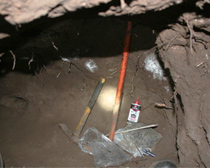
NOGALES, Ariz. — An active drug smuggling tunnel was located and shut down here Tuesday following a multi-agency probe spearheaded by U.S. Immigration and Customs Enforcement's (ICE) Homeland Security Investigations (HSI).
 
The U.S. entrance to the tunnel was concealed beneath the front porch of a home located approximately one-half mile west of the DeConcini Port of Entry. Further inspection revealed the tunnel ran south into Mexico, coming up inside a drainage tunnel that parallels the U.S./Mexico border on International Street.

Three Bay Area Residents Charged with Oxycodone Trafficking

Possession of Firearms Alleged; $235,524 Cash Seized

SAN FRANCISCO—A federal grand jury in San Francisco returned an indictment in which three Bay Area residents are charged variously with conspiracy; possession with intent to distribute oxycodone and oxymorphone; distribution of oxycodone and oxymorphone; and possession of a firearm by a felon, United States Attorney Melinda Haag announced.

Kim Whatley, 51, of Hayward, Calif., was charged with one count of conspiracy to possess with intent to distribute and to distribute oxycodone, three counts of possession with intent to distribute and distribution of oxycodone and/or oxymorphone, and one count of possession of a firerarm by a felon. Lobis Burton, 72, of Pittsburg, Calif., was charged with one count of conspiracy to possess with intent to distribute and to distribute oxycodone and two counts of possession with intent to distribute and distribution of oxycodone. Ella Mae Simpson, 54, of Hayward, Calif., was charged with one count of conspiracy to possess with intent to distribute and to distribute oxycodone, three counts of possession with intent to distribute and distribution of oxycodone, and one count of possession of a firerarm by a felon.

According to the indictment, which was unsealed yesterday, the three defendants conspired to possess and distribute oxycodone. The defendants also each allegedly engaged in individual hand-to-hand sales of oxycodone and oxymorphone in the Bay Area. In addition, the indictment alleges that Whatley and Simpson are both convicted felons and each possessed a firearm. The indictment also containes forfeiture allegations for the firearms and $235,524 in cash that was seized by the government.

The maximum statutory penalty for each count of conspiracy to possess with intent to distribute and to distribute oxycodone and each count of possession with intent to distribute and distribution of oxycodone and/or oxymorphone, in violation of Title 21, U.S.C. §§ 846, 841(a)(1), and (b)(1)(C) is 20 years in prison and a fine of $1,000,000. The maximum statutory penalty for each count of felon in possession of a firearm, in violation of Title 18, U.S.C. § 922(g)(1) is 10 years in prison and a fine of $250,000. However, any sentence following conviction would be imposed by the court after consideration of the U.S. Sentencing Guidelines and the federal statute governing the imposition of a sentence, 18 U.S.C. § 3553.

The defendants are scheduled for their initial appearance in District Court on Dec. 9, 2011, before U.S. District Court Judge Susan Illston.

Katherine Dowling and Natalie Wight are the Assistant U.S. Attorneys who are prosecuting the case with the assistance of Rawaty Yim. The prosecution is the result of a seven-month, multi-district investigation by the Federal Bureau of Investigation, Drug Enforcement Agency, and Health and Human Services.

Please note, an indictment contains only allegations against an individual and, as with all defendants, these defendants must be presumed innocent unless and until proven guilty.

Eastern European Couple Sentenced for Multi-Year Bank Fraud Scheme

Valentinas Babakinas, also known as Dainius Vysniauskas, 36, of Lithuania and Tatsiana Leichanka, 24 of Belarus, were sentenced yesterday to 71 and 51 months, respectively, for their roles in a bank fraud scheme involving over 100 bank accounts and dozens of aliases, United States Attorney Barbara L. McQuade announced. The sentences followed guilty pleas to counts of bank fraud, attempt and conspiracy to commit bank fraud. McQuade was joined in the announcement by Special Agent in Charge Andrew Arena, Federal Bureau of Investigation.

The sentences were imposed by Judge Sean F. Cox in U.S. District Court in Detroit, where the two pleaded guilty on April 13, 2011.

According to court records, the couple was arrested on April 20, 2010 while trying to open a fraudulent account at Chase Bank in Sterling Heights. While in the custody of the Sterling Heights Police, officers ultimately learned that the couple had left their 16-month-old son alone in a Southfield Apartment over 24 hours earlier. Neither defendant had mentioned the existence of the child or his circumstances at the time of their arrest.

Upon entry to the apartment to recover the child, Southfield Police found evidence of the fraud offenses including hundreds of bank checkbooks, bank cards, credit cards, stolen mail, false identification documents, computer equipment, cell phones, and cash. The two possessed fictitious identification documents and debit/credit cards for over 60 names. Evidence of the fraudulent conduct went back to 2007.

Further investigation revealed that both Vysniauskas and Leichanka were both in the country illegally, Vysniauskas after having illegally re-entered the country in 2007 after having been deported for theft offenses and Leichanka on a 90-day expired student visa from 2004.

The pair next face a hearing in the Oakland County Family Court on November 18, 2011 to determine the fate of the child.

U.S. Attorney McQuade recognized the outstanding efforts of the Organized Crime Section of the FBI and the invaluable assistance provided by DHS-ICE, the Southfield and Sterling Heights Police Departments and the Oakland County Sheriffs Office.

Assistant United States Attorney John O’Brien prosecuted the case for the United States.