Friday, August 29, 2025

Defense Secretary Honors Tennessee Police Department During Award Ceremony

Defense Secretary Pete Hegseth honored a local police department today for being a recipient of the 2025 Employer Support of the Guard and Reserve Secretary of Defense Employer Support Freedom Award during a city hall ceremony in Hendersonville, Tennessee.

Originally announced July 7, 2025, the Hendersonville Police Department was one of 15 organizations to receive the coveted Freedom Award, the highest U.S. government honor presented to employers for supporting military reserve component employees.  

Hegseth, a former National Guardsman who has ties to Tennessee, spoke highly of the ESGR and said he was honored to make the trip from Washington to present the award. 

"This place means a lot to me; what these men and women do means a lot to me; [and] what ESGR does means a lot to me," Hegseth said.  

He went on to explain that he wishes every child in America could see and interact with those who serve in order to counter the more superficial "celebrity clickbait culture" that he sees as being pervasive in our society.  

"If you want to look for heroes … just look around this room," Hegseth told those in attendance, noting that the manner in which they respond to unknown daily contingencies is demonstrative of their heroism.

Two men, one in a police officer’s uniform and the other in civilian business attire, are talking. There is a U.S. flag behind them.

Hegseth went on to commend the department's 15 reserve component service members for choosing to serve part time in the military in addition to their already hazardous full-time jobs. 

"That's the bedrock of what a country is built on; that's how you know that you're not just free, but you live free because you're committed to the very service at a baseline level," he said.  

The secretary also assured the department employees that, just as the Hendersonville Police Department has their backs, so does the entire chain of command, including President Donald J. Trump. 

"If the top has your back, as President Trump does, or if the secretary of defense has your back, or the attorney general … that means you can go out — step out on a difficult issue, whatever it is — and do your job the right way, and execute knowing you have that support," Hegseth said, also noting that ESGR supports the service members and their families at a macro level.  

Hegseth wound down his remarks by once again thanking the police department for supporting the part-time service members.

A man in civilian business attire stands amid roughly 20 men in police officer uniforms. They are flanked on either side by a pair of police motorcycles.


"Thanks for what you do with this community [and] for your willingness to let [the service member employees] go elsewhere, to serve the country as well," he said. 

"It's our job to make sure they're well served by the plans we give them, and the missions we give them, and [that we] bring them home safe," he added.  

ESGR began the Freedom Award program in 1996 to recognize exceptional employer support, with 370 honorees to date. 

In addition to the Hendersonville Police Department, the following 14 organizations also received the award in 2025: 

  • Cox Enterprises; Atlanta  
  • GE Aerospace; West Chester, Ohio  
  • GM Financial; Fort Worth, Texas  
  • Honeywell; Minneapolis 
  • Kimberly-Clark Corporation; Neenah, Wisconsin 
  • Anchorage Fire Department; Anchorage, Alaska 
  • Coppell Independent School District; Coppell, Texas 
  • Metropolitan Airports Commission; Minneapolis 
  • Mike Monroney; Oklahoma City 
  • Air Aviation; Allen, Texas 
  • Art C. Klein Construction Inc.; Colorado Springs, Colorado 
  • Boyd Jones; Omaha, Nebraska 
  • Graham Construction; Des Moines, Iowa 
  • MI Technical Solutions; Chesapeake, Virginia

Tuesday, August 26, 2025

DOD Systems Bolster Border Security Operations


Aug. 25, 2025 | 

By Army Pfc. Dominic Atlas, Joint Task Force Southern Border |

Along the rugged terrain of the southern border, the Defense Department deploys optic systems to enhance detection and monitoring capabilities in support of U.S. Customs and Border Protection.

The ground-based operational surveillance system — expeditionary, the long-range advanced scout surveillance system, and the common remotely operated weapon station are advanced tools and unique military capabilities used by service members assigned to Joint Task Force Southern Border to monitor large areas, detect illegal crossings and strengthen perimeter security in coordination with CBP agents.

Whether elevated on towers, deployed from concealed positions or mounted on armored vehicles, these systems provide persistent coverage across challenging and often inaccessible landscapes. Each platform offers a unique capability, contributing to the multilayered detection and monitoring strategy in place along the southern border.

Elevated Overwatch and Area Monitoring

The ground-based operational surveillance system — expeditionary, is an advanced fixed-position monitoring asset. Mounted on telescoping masts or permanent towers, GBOSS-E integrates electro-optical and infrared cameras, laser rangefinders and ground radar to enable nonstop observation across large sectors of terrain.

From its elevated position, the system allows operators to detect, identify and geolocate movement in open desert and rugged terrain — critical for tracking groups attempting to cross into the U.S. without authorization. What makes the system unique is that it is an organic asset to military police units. 

By employing it in this mission, soldiers are not only enhancing border security but also building readiness by training with and refining the use of their equipment in a real-world environment.

"Integrating the GBOSS-E system into our mission set has enhanced our soldiers' ability to detect threats from a distance. These systems allow our soldiers to pick up on movement and heat signatures through radar and camera capabilities that enhance monitoring efforts, especially at night and from a distance," said Army Sgt. 1st Class Sean Marshall, Headquarters and Headquarters Detachment, 759th Military Police Battalion. "In an austere environment like Yuma, [Arizona,] where the desert extends for miles, the GBOSS-E is a force multiplier that enables us to use the terrain to our advantage."

Long-Range Target Detection From Concealed Positions

The long-range advanced scout surveillance system provides high-fidelity visual monitoring and long-range target detection from mobile platforms such as the Stryker armored vehicle. By combining thermal imaging, day cameras, GPS, and a laser rangefinder, LRAS3 enables soldiers to observe and identify subjects from several kilometers away while remaining protected under armor and out of sight.

Originally designed as a cavalry asset for reconnaissance teams in forward-deployed environments, the LRAS3 has been in use for decades. With the integration of cavalry elements into infantry formations, the system has transitioned from a specialized tool to one now available at the company level. 

Along the southern border, LRAS3 has found a new purpose, providing personnel with long-range detection capabilities to discreetly monitor trails, canyons and key terrain features from standoff positions. Repurposed for homeland security, the system continues to prove its value by supporting CBP operations.

"This system allows a Stryker with a mounted LRAS3 to provide U.S. Border Patrol with the information and location needed to interdict suspected illegal aliens," said Army 1st Lt. Elias Stephenson, 2nd Battalion, 12th Infantry Regiment, 2nd Brigade Combat Team, 4th Infantry Division. "It's used in areas that have substantial observation capabilities to support the detection capabilities of the system and enable U.S. Border Patrol interdiction."

Remote Observation With Defensive Capability

The common remotely operated weapon station provides operators with long-range observation capabilities. Mounted on Stryker armored vehicles, CROWS allows soldiers to detect and track activity while remaining protected inside the vehicle.

Equipped with stabilized optics, thermal and day cameras and a laser rangefinder, the system is now employed along the southern border strictly as a detection and monitoring asset. 


Originally designed to integrate with crew-served weapons in combat zones, the system has been repurposed for homeland security missions to provide personnel with long-range observation capability without its traditional armament. This adaptation highlights its versatility — enabling soldiers and Department of Homeland Security personnel to maintain persistent watch over high-risk border sectors while remaining protected inside their vehicles.

The common remotely operated weapon station is a remote camera system on the Stryker that is normally used for the Stryker's mounted machine gun for targeting in combat. 

"For the southern border mission, we don't have weapons mounted. So, it's been repurposed to extend our duration for detection and monitoring capabilities. This allows our vehicle commanders to detect individuals at greater distances and enable border apprehensions," Stephenson said.

Integrated Systems, Unified Mission

Together, GBOSS-E, LRAS3 and CROWS demonstrate the unique military capabilities that DOD contributes to border security operations. By combining advanced surveillance platforms, specialized training and the ability to operate in austere environments, these systems strengthen detection and monitoring efforts across the southern border. 

Their integration also reflects the close partnership between DOD and DHS in protecting national sovereignty and disrupting illicit activity.

As the mission continues, these systems remain vital to detecting movement, monitoring critical areas and supporting soldiers and law enforcement personnel working together to secure the southern border, Stephenson said.

Friday, August 22, 2025

Send Clinicians, Not Cops? Inside Denver’s STAR

In response to the increasing frequency of mental health crises and nonviolent emergencies, many U.S. cities have launched initiatives to divert certain emergency calls away from law enforcement. Denver’s Support Team Assisted Response (STAR) program is at the forefront of this movement. Staffing clinically trained behavioral health professionals alongside paramedics, STAR addresses mental health, homelessness, poverty, and substance use crises with a trauma-informed, community-centered approach. This essay explores STAR’s inception, operations, outcomes, challenges, and broader implications as an alternative to traditional policing in emergency response.

Origins and Development of STAR

Denver’s STAR program was launched in June 2020, modeled on the successful CAHOOTS initiative in Eugene, Oregon. The pilot was funded by the Caring for Denver Foundation and supported by partnerships between Denver’s Department of Public Health and Environment, Denver Health, WellPower, and Denver 911. The goal was to create a third pathway—beyond police and conventional EMS—for responding to low-risk behavioral health and social distress calls.

During its initial six-month pilot, responding to roughly 748 calls, the program showed early promise: no arrests, no police backup, and a potential reduction of about 2.8% in police service calls. Encouraged by these early results, STAR expanded operational capacity, staff, and geographic reach.

How STAR Operates

STAR teams consist of a behavioral health clinician paired with an EMT or paramedic, operating in unmarked vehicles and plain clothes to reduce stigma and perceived threat. Dispatchers screen incoming 911 calls and divert appropriate "STAR-eligible" cases to this alternative response team.

As of February 2024, STAR staff included 16 clinicians and 16 EMTs/paramedics, operating eight vans. The program runs daily from 6 a.m. to 10 p.m., with expansion toward 24/7 coverage anticipated by 2025. STAR addresses a spectrum of needs—mental health triage, de-escalation, transportation to care, and resource connection. In early years, around 41% of individuals were referred to formal treatment, and 38% were transported to community services.

Program Scale & Evolving Impact

By 2025, STAR had logged over 14,000 encounters and served more than 8,500 individuals. Of the approximately 12,000 clinical contacts recorded between June 2020 and December 2024, only 3% resulted in a mandatory psychiatric hold. In contrast, roughly 30% triggered transport and linkage to services, and about 50% resulted in referrals to community-based care.

Moreover, between June 1, 2020, and June 3, 2025, STAR responded to 25,144 incidents, signaling substantial integration into Denver’s 911 system.

Community and System Benefits

STAR’s benefits span multiple domains:

  1. Diverting Vulnerable Populations from Criminal Justice
    STAR’s clinical teams can de-escalate situations without criminalization—minimizing police involvement, jail risk, and other adverse outcomes.

  2. Operational Efficiency for First Responders
    City officials note that redirecting low-risk behavioral health calls to STAR frees law enforcement, EMS, and firefighters to focus on high-acuity emergencies.

  3. Criminal Justice Outcomes
    A Stanford-led study found a 34% decrease in low-level criminal offenses in neighborhoods served by STAR during its pilot, equivalent to roughly 1,400 fewer reported offenses.

  4. Innovation Model for Other Cities
    Denver positions STAR as a national exemplar. Surveys found consensus that “sending police to deal with every social problem simply isn’t working.” The program exemplifies creative, multi-stakeholder public safety innovation.

Challenges and Limitations

Despite its successes, STAR faces notable challenges:

  • Limited Hours and Funding Constraints
    Operating only from 6 a.m. to 10 p.m., STAR lacks full 24/7 availability due to funding limitations. Denver’s STAR budget was around $7.2 million, including city and grant support. Expansion would require additional investment.

  • Dispatcher Reliance and Call Screening
    Effectiveness depends on accurate triage by 911 dispatchers—misclassification can lead to safety issues or mismatches in response.

  • Need for Community Involvement
    Some community advocates question the pace and transparency of STAR’s expansion, advocating for stronger public input via advisory boards. Denver is now moving to formalize such bodies.

Broader Context and Replication

Denver is part of a broader trend toward non-police crisis response. Cities like New York (B-HEARD), San Francisco, Minneapolis, and others are piloting or expanding similar models, often inspired by CAHOOTS and STAR. Yet challenges with staffing, funding, and dispatcher workflows persist.

STAR’s success illustrates the effectiveness of a clinical, de-escalating approach—particularly in a time where overreliance on policing is increasingly scrutinized.

Conclusion

Denver’s Support Team Assisted Response (STAR) program represents a bold reimagining of first response—substituting clinicians and EMTs for police in low-risk behavioral health and social emergencies. Since its 2020 launch, STAR has expanded significantly, delivering over 25,000 responses, reducing crime, and fostering community trust. Its low psychiatric hold rate and high referral rate speak to the success of trauma-informed crisis intervention. Yet continued impact depends on extending operating hours, securing sustainable funding, and deepening community engagement. As more cities look to follow in its footsteps, STAR stands as both a model—and a work in progress—in the shift from law enforcement to healthcare-based emergency support.


References 

Denver Department of Public Health & Environment. (2024, February). Support Team Assisted Response (STAR) Program [Website]. Retrieved from Denver official site

Gillespie, S., Curran‑Groome, W., & Rogin, A. (2024, September 30). Evaluating alternative crisis response in Denver’s Support Team Assisted Response (STAR) program: Interim findings [Brief]. Urban Institute.

WellPower. (2025, June 25). Denver’s STAR Program: Five years of community impact [Blog post]. Retrieved from WellPower website

Stanford study as cited by Axios. (2022, June 22). Study: Denver’s STAR police‑alternative program lowered crime and costs [News article]. Axios.

Axios. (2025, June 9). What’s next for the police response alternative STAR as it turns 5 [News article]. Axios.

Wednesday, May 28, 2025

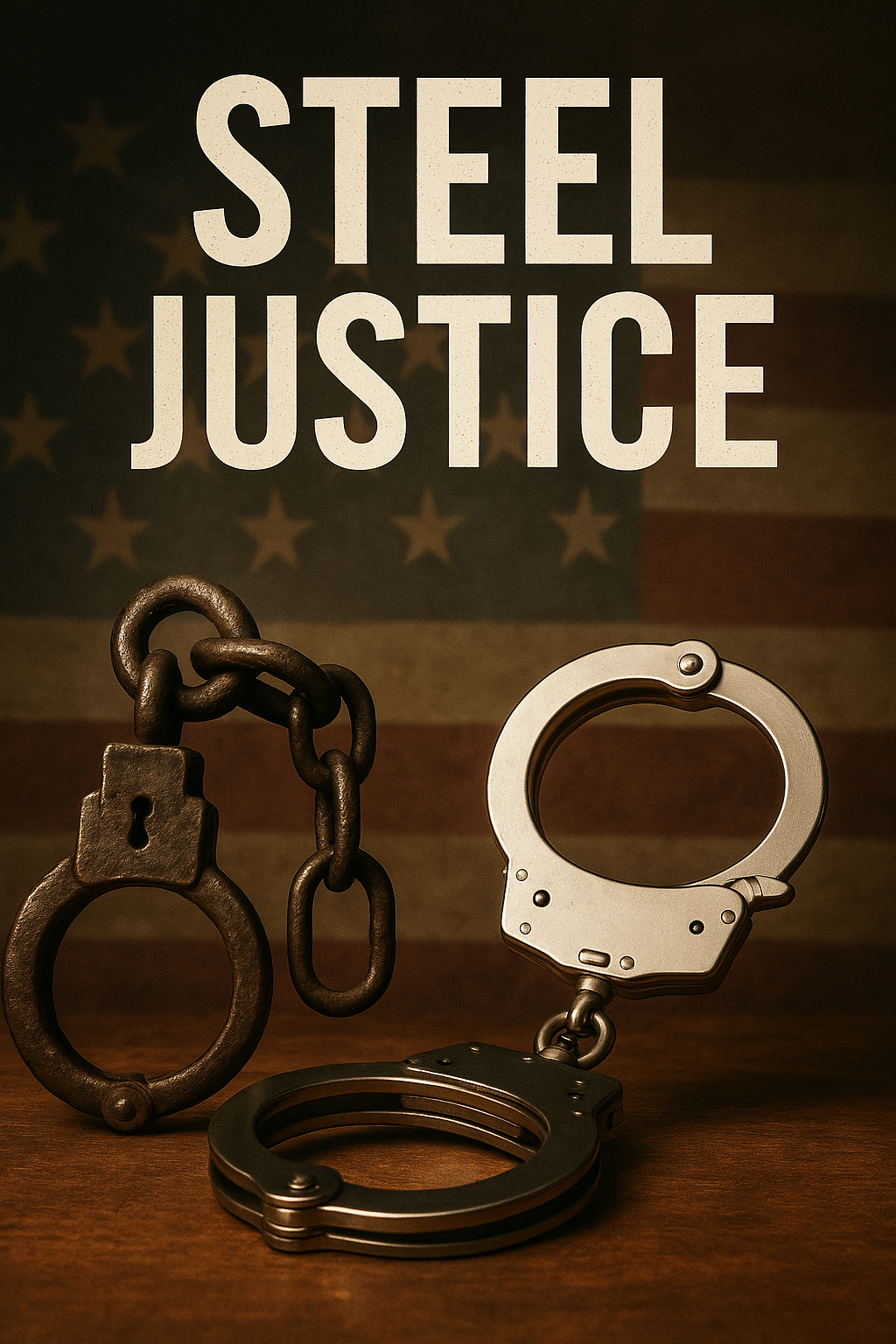
Steel Justice: The Evolution of Handcuffs in American Law Enforcement

The handcuff—cold, mechanical, and unyielding—stands as one of the most enduring symbols of law enforcement power. Though small in size, this tool carries immense legal, psychological, and historical weight. From rudimentary iron shackles to precision-engineered swing-through cuffs, the evolution of handcuffs in American law enforcement reflects deeper currents of control, innovation, and shifting societal norms. This is the story of Steel Justice—how restraint became regulation, and how a click of steel came to define the frontline of criminal justice.


Colonial Beginnings: Shackles and Shame

In early colonial America, restraint was about more than just security—it was public spectacle. Iron collars, wooden stocks, and leg shackles were common, designed not only to detain but to shame. Imported from Europe, these tools of restraint were used on criminals, indentured servants, and enslaved people, often in public squares where humiliation was part of the punishment. Handcuffs, in the modern sense, had yet to be born. Control was crude, symbolic, and deeply tied to public moral order.


Industrial America and the Birth of Modern Handcuffs

The 19th century brought the machinery and metallurgy needed to transform restraint from artisanal chains to standardized tools. In 1862, William V. Adams patented one of the earliest mechanical handcuffs in the U.S., featuring a simple ratchet mechanism. These early models, often made of wrought iron, were heavy, slow to apply, and still dependent on keys or latches that varied by manufacturer.

But a seismic shift came in 1912, when George A. Carney patented the swing-through, self-locking handcuff—a design that revolutionized policing. The new mechanism allowed an officer to apply cuffs quickly with one hand, locking automatically upon closure. This innovation made restraint faster, safer (for the officer), and more standardized. Two years later, Carney’s invention became the basis of the Peerless Handcuff Company, which still dominates the industry today.


Standardization and the Rise of Peerless

Throughout the 20th century, Peerless and similar companies pushed handcuffs into national standardization. By mid-century, most American police departments had adopted the Carney design or slight variations thereof. The double-lock feature—allowing cuffs to be “frozen” in place to prevent over-tightening—became a required safety standard.

As policing professionalized, so did restraint protocols. Officers were now trained to handcuff using specific techniques—standing, kneeling, prone—depending on the subject’s behavior and threat level. The handcuff was no longer just a tool; it was part of a larger choreography of control, designed to minimize risk and maximize compliance.


From Cold Steel to Plastic Restraints

The Vietnam War era, with its civil rights protests and growing unrest, introduced another evolution: plastic handcuffs, or “flex-cuffs.” Light, cheap, and disposable, they became tools of mass arrest, used in crowd control, riots, and political demonstrations. While they solved logistical problems, they also introduced new concerns: cutting circulation, lack of adjustability, and potential misuse.

As the U.S. grappled with increasing protests in the 2000s—Occupy Wall Street, Black Lives Matter, anti-lockdown demonstrations—plasticuffs became fixtures of tactical units and crowd suppression teams.


Symbolism and Scrutiny in the 21st Century

In recent decades, the image of handcuffs has shifted dramatically in the public imagination. No longer just tools of justice, they have become symbols of overreach, oppression, and—at times—racialized policing. Viral bodycam footage and bystander videos have captured countless scenes where the application of handcuffs, especially on nonviolent or mentally ill individuals, appears excessive or tragic.

Legal battles and civil rights investigations have further questioned how and when handcuffs are applied. Federal courts have ruled that handcuffing is a seizure under the Fourth Amendment and must meet the test of reasonableness. The Department of Justice and numerous state agencies now require detailed reporting any time restraints are used, particularly in schools, hospitals, or against vulnerable populations.

Yet, for all this scrutiny, handcuffs remain standard issue. In nearly every American police cruiser, a pair of Peerless or Smith & Wesson cuffs sits holstered beside the officer—ready, waiting, and unchanged in design for over a century.


Engineering Control: The Anatomy of Modern Restraint

Modern handcuffs are marvels of mechanical design. Most are constructed of high-carbon steel, featuring a pawl-and-ratchet system that locks automatically when the arm swings through. Some are chain-linked, offering flexibility, while others are hinged or rigid, offering more control but less mobility.

Advanced models include:

  • Hinged cuffs for aggressive subjects

  • Leg irons for transport

  • Spit hoods (controversial) to prevent biting/spitting

  • Electronic stun cuffs used in correctional facilities

Despite technological advances, officers are trained to prioritize de-escalation and verbal commands before using restraints. But as stress, fear, and split-second decisions shape real encounters, the mechanical certainty of the handcuff remains alluring—click, secure, done.


Conclusion: The Paradox of Steel Justice

Handcuffs are tools of order. But they are also symbols of power—wielded at the razor’s edge of legality and morality. Their evolution tells a larger story about American justice: its industrial roots, its innovations, and its blind spots.

“Steel justice” is not about the restraint itself, but what it represents—the struggle between safety and liberty, control and compassion. As technology and oversight evolve, so too must our understanding of what it means to restrain. Because every click of the cuff is a choice, and every choice shapes the legacy of justice in America.


🔍 References (APA Style)

  • Peerless Handcuff Company. (n.d.). Company history. https://www.peerless.net

  • Carney, G. A. (1912). U.S. Patent No. 1,137,291. U.S. Patent and Trademark Office.

  • Vitale, A. (2017). The end of policing. Verso Books.

  • U.S. Department of Justice. (2019). Use of force and restraint policy review. https://www.justice.gov

  • Barkan, S. E. (2018). Criminology: A sociological understanding (7th ed.). Pearson.

Tuesday, May 20, 2025

Erosion from Within: The Judiciary’s Fight to Preserve the Rule of Law

The rule of law—the principle that all individuals and institutions are subject to and accountable under the law—is the bedrock of democratic governance. It ensures the consistent and impartial application of justice, protects individual rights, and establishes the boundaries of governmental power. Yet, this foundational tenet of American democracy is facing unprecedented internal pressures. As Chief Justice John Roberts recently warned, the judiciary is witnessing a troubling erosion of public trust and institutional independence. This essay explores the nature of the threats facing the rule of law from within the United States' own legal and political systems, the judiciary’s efforts to uphold its integrity, and the reforms needed to ensure the continued strength and credibility of one of democracy's core institutions.

I. Understanding the Rule of Law and Its Fragility

To appreciate the judiciary's current struggle, one must first understand the importance and fragility of the rule of law. It rests on several interrelated pillars: legal predictability, impartial adjudication, equal access to justice, and judicial independence. These pillars can be slowly weakened not only by direct political attacks but also by public cynicism, inconsistent enforcement, or legislative overreach. Unlike overt crises that provoke immediate responses, the erosion of the rule of law often begins subtly—with disinformation, manipulation of norms, and politically motivated legal decisions.

Chief Justice Roberts has long advocated for the judiciary's nonpartisan role, cautioning against the politicization of the courts. In a 2025 speech at Georgetown Law, he emphasized that "the rule of law is not self-executing" and warned that sustained attacks on the integrity of judges could lead to a breakdown in public faith in the judicial process. When citizens begin to view courts as mere extensions of partisan ideologies rather than impartial arbiters, the legal system’s legitimacy is jeopardized.

II. Politicization of the Judiciary

One of the most significant internal threats to the rule of law is the growing politicization of judicial appointments and decisions. The U.S. Supreme Court, once viewed as a relatively neutral institution, has increasingly been perceived as politically divided. Judicial confirmations have become intensely partisan affairs, with nominees evaluated more on their perceived ideological alignment than on their legal qualifications. As a result, public confidence in the courts' neutrality has plummeted.

This erosion of trust extends beyond the Supreme Court. State and federal courts have also seen growing interference from political actors. Judges have faced attacks from elected officials, and in some cases, legislatures have attempted to limit judicial review or restrict court jurisdiction over controversial issues. In Florida and Texas, for example, laws have been proposed or passed that limit what judges can consider in cases involving educational content, voting rights, and immigration enforcement. These efforts reflect a broader trend toward undermining judicial independence in favor of ideological conformity.

III. Disinformation and Attacks on Judicial Integrity

The modern information landscape poses another significant threat to the judiciary. Misinformation campaigns, often fueled by social media, have targeted judges and court rulings, painting legitimate legal decisions as partisan betrayals. In high-profile cases, judges have been doxxed, threatened, and vilified online, making it increasingly difficult for them to perform their duties without fear or favor.

Chief Justice Roberts has decried such attacks as dangerous and corrosive. "The judiciary does not respond well to criticism by meme," he quipped in a recent speech, acknowledging the difficult balance between free speech and respect for judicial institutions. The rise in threats against judges—including death threats—has led to heightened security measures and calls for legislative protection. Yet the damage to public perception may be more enduring than the immediate risks to individual judges.

IV. Internal Challenges: Ethical Lapses and Accountability

While external pressures are substantial, the judiciary also faces internal challenges that contribute to the erosion of the rule of law. Ethical lapses by judges, including undisclosed financial interests, conflicts of interest, and inappropriate public commentary, have damaged public trust. Recent investigations into travel and financial disclosures of federal judges, including Supreme Court justices, have raised questions about transparency and accountability.

The lack of binding ethics rules for Supreme Court justices, in particular, has fueled criticism. While lower federal courts follow strict judicial codes of conduct, the highest court remains governed largely by self-regulation. This disparity undermines the judiciary’s credibility and reinforces perceptions of elitism or double standards.

V. The Judiciary’s Countermeasures and Defense of the Rule of Law

Despite these challenges, the judiciary continues to fight to preserve its independence and the broader principle of the rule of law. Many judges, both state and federal, have courageously issued rulings that uphold constitutional principles even in the face of political backlash. From decisions protecting voting rights to judgments blocking executive overreach, these actions demonstrate the judiciary’s critical role as a check on power.

Additionally, professional associations and judicial councils have advocated for stronger ethical standards and more robust judicial training. Educational programs have been developed to emphasize impartiality, integrity, and the historical role of courts in defending democracy. The National Center for State Courts and the American Bar Association have launched initiatives aimed at improving public understanding of the judicial system and countering misinformation.

VI. Necessary Reforms and the Road Ahead

To truly preserve the rule of law, deeper reforms are necessary. First, a binding code of ethics for Supreme Court justices must be established. Transparency and accountability are essential to maintaining public trust, and no judge should be exempt from scrutiny.

Second, judicial appointments must be depoliticized. While it may be unrealistic to completely remove politics from the process, reforms such as bipartisan selection commissions and increased scrutiny of nominees' qualifications can reduce overt partisanship.

Third, civics education must be reinvigorated. A population that understands how the legal system works is less susceptible to disinformation and better equipped to hold leaders accountable. Judicial institutions must invest in outreach and education to strengthen public understanding of their role.

Finally, increased protection and support for judges are needed. This includes not only physical security but also legal protections against harassment and defamation. Courts must remain safe spaces for reasoned deliberation, not battlegrounds for political vendettas.

Conclusion: A Fight Worth Waging

The judiciary is often described as the "least dangerous branch" of government, but its role in safeguarding democracy is indispensable. The erosion of the rule of law, as Chief Justice Roberts has warned, is not merely a theoretical concern but a lived reality that threatens the integrity of the entire democratic system.

The fight to preserve judicial independence is not one that can be won by judges alone. It requires the support of lawmakers, educators, media professionals, and ordinary citizens. By recognizing the value of impartial justice and demanding accountability from all branches of government, the public can help reinforce the very foundation of American democracy.

In the end, the rule of law will survive not because it is invincible, but because those who believe in its promise choose to defend it—from without and, just as importantly, from within.

Saturday, May 17, 2025

Justice Delayed: The Alarming Rise of Murder Exonerations in the United States

The criminal justice system in the United States is designed to serve one essential function: to uphold justice by identifying and punishing the guilty while protecting the innocent. However, a growing body of evidence reveals a persistent and disturbing flaw within this system—the wrongful conviction of innocent individuals, particularly in cases of murder. Over the last three decades, hundreds of individuals have been exonerated after being convicted of murder, their freedom restored after years—sometimes decades—of unjust imprisonment. These exonerations have not only underscored the fallibility of the justice system but have also prompted calls for comprehensive reform. This essay explores the scale of wrongful murder convictions in the U.S., the systemic causes behind them, notable case studies, the human cost, and the path forward toward a more equitable system of justice.

The Scope of the Problem: Documented Murder Exonerations

Since 1989, when the National Registry of Exonerations began systematically tracking such cases, over 3,300 individuals in the United States have been exonerated of serious crimes, with murder accounting for a substantial proportion (Gross et al., 2023). In fact, murder convictions represent nearly 40% of all known exonerations, and these cases often involve the longest periods of incarceration prior to release. The 2023 annual report by the Registry documented 153 new exonerations, 75 of which were for murder—a striking statistic that reveals a justice system still struggling with accuracy and fairness (National Registry of Exonerations, 2024).

Particularly troubling is the high rate of official misconduct in murder exonerations. The Death Penalty Information Center (2024) found that in 85% of the homicide exonerations recorded in 2023, some form of official misconduct played a role—ranging from the suppression of exculpatory evidence to coercive interrogations and perjury by law enforcement or prosecutors. This pattern is not merely coincidental; it points to systemic vulnerabilities that allow, and sometimes incentivize, wrongful convictions.

Causes of Wrongful Murder Convictions

The causes of wrongful murder convictions are multifaceted and often overlapping. Among the most frequently cited are official misconduct, mistaken eyewitness identification, false confessions, and misapplication of forensic science.

Official Misconduct: Official misconduct by police officers and prosecutors remains one of the leading causes of wrongful murder convictions. Such misconduct includes tampering with or withholding evidence, coercing witnesses, or knowingly presenting false testimony. According to the Innocence Project (2024), misconduct was a factor in 54% of all wrongful convictions and nearly 80% of wrongful murder convictions.

Eyewitness Misidentification: Eyewitness testimony is notoriously unreliable, especially in high-stress situations such as violent crimes. The Innocence Project has reported that mistaken identification played a role in 63% of all wrongful convictions that were later overturned through DNA evidence (Innocence Project, 2024).

False Confessions: False confessions, often elicited through aggressive or deceptive interrogation tactics, have been a factor in nearly 29% of wrongful convictions. Vulnerable populations, such as juveniles and individuals with intellectual disabilities, are especially susceptible to coercion (Leo & Drizin, 2010).

Misapplied Forensic Science: Faulty forensic techniques, ranging from bite mark analysis to flawed ballistics testing, have led to numerous wrongful murder convictions. A 2009 report by the National Academy of Sciences called for sweeping reforms in forensic science, citing a lack of standardized methodologies and oversight (National Research Council, 2009).

Notable Exoneration Cases

Numerous high-profile exoneration cases have drawn public attention to the flaws in the justice system. One of the most harrowing cases is that of Peter Sullivan, a British man who was wrongfully imprisoned for 38 years before new DNA evidence proved his innocence. His case underscores the critical importance of post-conviction review processes and access to DNA testing (The Guardian, 2025).

In the United States, the case of Glynn Simmons is equally disturbing. Convicted in 1975 of a murder he did not commit, Simmons spent nearly 48 years behind bars before being exonerated in 2023, making him one of the longest-serving wrongfully convicted individuals in U.S. history (Death Penalty Information Center, 2024). His case illustrates the devastating human cost of wrongful convictions and the institutional inertia that often resists admitting errors.

Demographic Disparities in Exonerations

A significant racial dimension compounds the problem of wrongful murder convictions. African Americans make up approximately 13% of the U.S. population but account for over 50% of all murder exonerations (Gross et al., 2017). The reasons for this disparity are deeply rooted in systemic racism, including racial profiling, biased jury selection, and unequal access to quality legal representation. These disparities are especially stark in death penalty cases, where African Americans are more likely to be wrongfully convicted and sentenced to death.

Moreover, geographic disparities reveal that certain states have disproportionate numbers of exonerations. Texas, Illinois, and New York lead the nation in documented exonerations, with 363, 303, and 281 respectively (Davis, 2024). While these numbers may reflect more active innocence projects or review boards, they also suggest higher rates of initial miscarriages of justice.

The Human Cost of Wrongful Convictions

The personal and societal costs of wrongful murder convictions are incalculable. Exonerees lose years—sometimes decades—of their lives, often missing out on relationships, careers, and fundamental life experiences. Many struggle with psychological trauma, including post-traumatic stress disorder, depression, and anxiety. The 2023 exoneration report estimates that exonerees collectively lost 2,230 years of freedom that year alone (National Registry of Exonerations, 2024).

Financial compensation for exonerees is inconsistent and often inadequate. Only 38 states have statutes providing some form of compensation, and the amounts vary widely. Even when compensation is granted, it cannot restore lost time or undo the psychological damage inflicted by wrongful incarceration.

Legal Reforms and Advocacy Efforts

Recognizing the need for systemic reform, advocacy organizations such as the Innocence Project have been instrumental in pushing for legislative changes. These reforms include mandatory recording of interrogations, improved forensic science standards, and the establishment of conviction integrity units (CIUs) within prosecutors’ offices.

CIUs, which review claims of innocence in closed cases, have played a crucial role in recent exonerations. However, their effectiveness varies significantly depending on their structure, funding, and willingness to challenge past convictions. Critics argue that some CIUs are more symbolic than substantive, lacking the independence or resources necessary to conduct thorough investigations.

The Role of DNA Evidence and Technology

Advances in DNA testing have revolutionized the process of uncovering wrongful convictions. Post-conviction DNA testing has exonerated more than 375 individuals in the United States, including dozens convicted of murder (Innocence Project, 2024). Nevertheless, access to DNA testing remains uneven, with some states imposing restrictive statutes of limitations or evidentiary requirements that hinder legitimate claims.

In addition to DNA evidence, new technologies such as facial recognition and digital forensics hold promise but also raise ethical and accuracy concerns. Without stringent oversight and transparent methodologies, these technologies could replicate or exacerbate existing biases.

Conclusion: A Call to Action

The rising number of murder exonerations in the United States is both a tragedy and a warning. It reveals not only the fallibility of human judgment but also the structural defects that permeate the justice system. As these cases come to light, they must serve as a catalyst for comprehensive reform. Ensuring justice requires more than good intentions; it demands accountability, transparency, and an unwavering commitment to the truth.

We owe it to the wrongfully convicted—and to the integrity of our democratic institutions—to confront these failings and to strive for a system where justice is not only done but seen to be done.

References

Davis, N. (2024). Exonerations by state: Wrongful conviction statistics in the U.S. Retrieved from https://www.nealdavislaw.com/criminal-defense-guides/exonerations-by-state-2019/

Death Penalty Information Center. (2024). 2023 exoneration report: Official misconduct remains leading cause of wrongful convictions. Retrieved from https://deathpenaltyinfo.org

Gross, S. R., Possley, M., & Stephens, K. (2023). National Registry of Exonerations: 2023 Annual Report. University of Michigan Law School. Retrieved from https://www.law.umich.edu/special/exoneration/Pages/about.aspx

Gross, S. R., O’Brien, B., Hu, C., & Kennedy, E. H. (2017). Race and wrongful convictions in the United States. National Registry of Exonerations. Retrieved from https://www.law.umich.edu/special/exoneration/Documents/Race_and_Wrongful_Convictions.pdf

Innocence Project. (2024). DNA exonerations in the United States. Retrieved from https://innocenceproject.org/dna-exonerations-in-the-united-states/

Leo, R. A., & Drizin, S. A. (2010). The problem of false confessions in the post-DNA world. North Carolina Law Review, 82(3), 891–984.

National Research Council. (2009). Strengthening forensic science in the United States: A path forward. Washington, DC: National Academies Press.

The Guardian. (2025, May 14). What Peter Sullivan's case reveals about the system that wrongfully imprisoned him. Retrieved from https://www.theguardian.com


Wednesday, May 14, 2025

Rikers Island: The Troubled History of New York City’s Notorious Jail

Rikers Island is one of the most infamous correctional facilities in the United States. Located in the East River between the boroughs of Queens and the Bronx, the jail complex has become synonymous with the systemic failures of the American penal system. Over the decades, Rikers has been home to a range of detainees—from those awaiting trial to high-profile criminals—and has become a symbol of both the overuse of incarceration and the urgent need for reform. This article explores the island’s history, its transformation into a jail complex, the controversies that have plagued it, and the future of incarceration in New York City. It also introduces some of the most notorious inmates who have spent time on the island.


Early History: From Private Property to Penal Island

Rikers Island was originally known as Rycken’s Island, named after Dutch settler Abraham Rycken, who purchased the land in 1664. The Rycken family held the island until 1884, when the City of New York bought it for $180,000 (New York City Department of Correction, n.d.). At the time, the island covered just under 90 acres, but subsequent landfill projects—often carried out using prison labor—expanded its size to over 400 acres, making it one of the largest jail complexes in the world.

Before it became a jail, Rikers was used for a variety of purposes. During the Civil War, it served as a training ground for Union troops. In later years, it was a site for garbage disposal and farming operations that supported nearby penal institutions (NYC Municipal Archives, 2019). It wasn’t until the 20th century that the city began to envision the island as a cornerstone of its correctional strategy.


The Establishment of a Jail Complex

In the 1930s, New York City sought to overhaul its outdated and overcrowded penal system. The city began constructing jails on Rikers Island to replace those on Blackwell’s Island (now Roosevelt Island), which had become dilapidated and unsafe. The first permanent jail on Rikers opened in 1932. Over the following decades, additional facilities were added, including the Otis Bantum Correctional Center and the Rose M. Singer Center, the latter serving female inmates.

By the 1980s and 1990s, Rikers had grown into a massive complex housing up to 20,000 inmates at a time. It also employed thousands of corrections officers and civilian staff. The population primarily consisted of individuals awaiting trial who could not afford bail, making Rikers more of a pretrial detention center than a prison for convicted criminals.


A Culture of Violence and Abuse

Despite its size and scope, Rikers has become synonymous with neglect, violence, and systemic abuse. Numerous reports have documented inhumane conditions, unsanitary facilities, and widespread brutality by both inmates and guards. In 2014, the U.S. Department of Justice found that Rikers routinely violated the constitutional rights of adolescent inmates, citing excessive use of force and solitary confinement (U.S. DOJ, 2014).

One of the most tragic and telling stories is that of Kalief Browder, a 16-year-old arrested on suspicion of stealing a backpack. Browder spent three years on Rikers without being convicted of a crime, two of them in solitary confinement. He was eventually released after charges were dropped, but the psychological toll led to his suicide in 2015. His case became a catalyst for renewed demands to close Rikers and reform New York City’s bail system (Gonnerman, 2014).


Notorious Inmates of Rikers Island

Over the years, Rikers has housed some of the most infamous individuals in American criminal history, including:

  1. David Berkowitz (Son of Sam) – Convicted of a string of murders in the 1970s, Berkowitz was held at Rikers before being transferred to state prison.

  2. Mark David Chapman – The man who murdered John Lennon spent time at Rikers before being transferred to Attica Correctional Facility.

  3. Sid Vicious – The punk rock bassist of the Sex Pistols was incarcerated at Rikers for the murder of his girlfriend Nancy Spungen in 1978. He died of a heroin overdose shortly after his release.

  4. Tupac Shakur – The rapper was held at Rikers in 1995 while appealing a sexual assault conviction.

  5. Plaxico Burress – The former NFL star served time at Rikers after accidentally shooting himself with an unlicensed firearm.

  6. Harvey Weinstein – The disgraced Hollywood mogul was held at Rikers in 2020 after his conviction for rape and sexual assault, before being transferred to a state prison.

These inmates reflect the diversity of cases Rikers has dealt with—from petty crimes to national scandals—and the facility’s status as a holding pen for individuals from all walks of life.


Efforts Toward Closure and Reform

Mounting pressure from activists, lawmakers, and community members led to a historic announcement in 2017 by then-Mayor Bill de Blasio: Rikers Island would be closed within a decade and replaced with a system of smaller, borough-based jails (New York City Council, 2019). The plan, approved in 2019, aimed to close Rikers by 2026.

However, implementation has faced multiple hurdles, including budget concerns, community opposition, and rising violence at Rikers itself. In May 2025, a federal judge removed operational control from the city and appointed an independent remediation manager, citing the city’s failure to stem violence and mismanagement (Reuters, 2025).


Conclusion

Rikers Island represents both the legacy and the failures of the American correctional system. While it was initially conceived as a solution to outdated jail facilities, it evolved into a symbol of dysfunction, inequality, and institutional abuse. As the city works toward closing the facility and transforming its approach to incarceration, Rikers remains a powerful reminder of the need for systemic reform. The future of justice in New York may well depend on the lessons learned from Rikers Island.


References

Gonnerman, J. (2014, October 6). Before the Law: A boy was accused of taking a backpack. The courts took the next three years of his life. The New Yorker. https://www.newyorker.com/magazine/2014/10/06/before-the-law

New York City Council. (2019, October 17). City Council votes to close Rikers Island and build smaller, borough-based jails. https://council.nyc.gov/press/2019/10/17/1892/

New York City Department of Correction. (n.d.). About DOC - History. https://www.nyc.gov/site/doc/about/history-doc.page

NYC Municipal Archives. (2019, March 21). The birth, life, and (maybe) death of Rikers Island. https://www.archives.nyc/blog/2019/3/21/the-birth-life-and-maybe-death-of-rikers-island

Reuters. (2025, May 10). Federal judge appoints manager to oversee Rikers Island jail reforms. https://www.reuters.com

U.S. Department of Justice. (2014, August 4). CRIPA investigation of the New York City Department of Correction jails on Rikers Island. https://www.justice.gov/sites/default/files/crt/legacy/2014/08/04/rykersonisland_findings_8-4-14.pdf