Showing posts with label navajo nation department of public safety. Show all posts

Friday, September 14, 2012

Beclabito Man Charged with Causing the Death of a Minor by Serving Her Liquor


ALBUQUERQUE—Stanford Benally, 41, a member of the Navajo Nation who resides in Beclabito, New Mexico, made his initial appearance in Albuquerque federal court on a two-count indictment charging him with (1) second-degree murder, and (2) involuntary manslaughter. Benally, who was arrested yesterday by the FBI, remains in custody pending a detention hearing and arraignment on September 13, 2012.

Count one of the indictment, the second-degree murder charge, alleges that on May 19, 2012, Benally caused the death of a minor female by serving her liquor and failing to provide care and seek medical attention for the minor in a manner that evinced a callous and wanton disregard for human life. Count two, the involuntary manslaughter charge, alleges that, on that same date, Benally deposited the unconscious and intoxicated minor on her bedroom floor without providing care and seeking medical assistance in a manner that was grossly negligent and with a wanton and reckless disregard for human life. According to the indictment, the offenses occurred in Indian Country in San Juan County, New Mexico.

If convicted of the murder charge, Benally faces a maximum penalty of life imprisonment. If convicted of the involuntary manslaughter charge, he faces a maximum penalty of eight years of imprisonment.

The case was investigated by the Farmington office of the FBI, with assistance from the Shiprock Division of the Navajo Nation Department of Public Safety, and is being prosecuted by Assistant U.S. Attorney Jack E. Burkhead.

Wednesday, September 12, 2012

Crownpoint Woman Sentenced to Probation for Embezzling Money from an Indian Tribal Organization


ALBUQUERQUE—This morning in federal court in Santa Fe, New Mexico, Shavna April Bebo, 36, of Crownpoint, New Mexico, was sentenced to a three-year term of probation for embezzling from an Indian tribal organization, announced U.S. Attorney Kenneth J. Gonzales. Bebo also was ordered to pay restitution in the amount of $38,998.37 to the victim of her criminal conduct.

Bebo was charged on January 26, 2012, in an indictment alleging that, from October 2009 through August 2010, Bebo willfully and knowingly embezzled $38,998,37 of the funds belonging to the Littlewater Chapter House, a tribal organization in Crownpoint. On June 5, 2012, Bebo pled guilty to the indictment under a plea agreement with the U.S. Attorney’s Office.

According to the plea agreement, Bebo was employed as an administrative assistant in the business office of the Littlewater Chapter House from February 2, 2008 to August 12, 2010, when she was terminated. Shortly after Bebo’s employment was terminated, Littlewater Chapter House officials filed a complaint with the police alleging that Bebo fraudulently had made out checks to herself on the Littlewater Chapter House business account using the officials’ signatures and had cashed the forged checks for her personal gain.

The investigation into the complaint against Bebo revealed that Bebo forged 51 checks totaling approximately $38, 998.37. During an interview in August 2011, Bebo admitted that she began forging and cashing checks on the Littlewater Chapter House business account in 2009 and continued to do so until the Chapter House officials exposed her scheme and terminated her employment.

The case was investigated by the Gallup Resident Office of the FBI and the Crownpoint Division of the Navajo Nation Department of Safety and was prosecuted by Assistant U.S. Attorney Paul H. Spiers.

Tuesday, September 04, 2012

Alamo Man Sentenced to 10 Years for Voluntary Manslaughter of 10-Month-Old Infant


ALBUQUERQUE—Yesterday, a federal judge sentenced Kalvest Ganadonegro, 31, a member of the Navajo Nation from Alamo, New Mexico, to a 120-month term of imprisonment for his voluntary manslaughter conviction. Ganadonegro will be on supervised release for three years after he completes his prison sentence.

U.S. Attorney Kenneth J. Gonzales said that Ganadonegro’s conviction arose out of the death of a 10-month-old infant who had been left in his care on November 21, 2008. Ganadonegro was convicted of voluntary manslaughter on March 5, 2012, after a seven-day trial.

Ganadonegro initially was charged with assault resulting in death in a criminal complaint filed on November 24, 2008, alleging that he killed a 10-month-old infant by shaking her violently on November 21, 2008. Subsequently, on February 10, 2009, Ganadonegro was indicted and charged with first-degree murder. The case went to trial in September 2011 and resulted in a mistrial after the jury was unable to reach a unanimous verdict.

On November 9, 2011, Ganadonegro was indicted in a three-count superseding indictment charging him with: (1) second-degree murder; (2) voluntary manslaughter; and (3) negligent child abuse resulting in death. Trial on the superseding indictment began on February 27, 2012, and ended on March 5, 2012, when the jury convicted Ganadonegro of count two and acquitted him of counts one and three.

The evidence at the second trial established that on November 21, 2008, in a residence located in Alamo, which is on the Navajo Indian Reservation, Ganadonegro shook and killed a 10-month-old infant whom he was babysitting because she would not stop crying. Ganadonegro picked up the infant, shook her, and forcefully put her down on the couch. Ganadonegro shook the infant on at least two occasions. The shaking caused a diffuse subdural hematoma, cerebral edema, and diffuse retinal hemorrhages that eventually lead to the infant’s brain death.

The case was investigated by the FBI and the Navajo Nation Department of Public Safety and was prosecuted by Assistant U.S. Attorneys Jennifer M. Rozzoni and Jeremy Pena.

Wednesday, July 18, 2012

Shiprock Man Pleads Guilty to Federal Child Sex Abuse Charge


ALBUQUERQUE—This morning in federal court in Albuquerque, Samuel Jackson, 55, an enrolled member of the Navajo Nation who resides in Shiprock, New Mexico, pleaded guilty to an information charging him with abusive sexual contact under a plea agreement with the U.S. Attorney’s Office.

During his plea hearing, Jackson admitted sexually assaulting a 14-year-old Navajo girl in a residence in Shiprock on August 5, 2011. At the time of the offense and until his arrest in January 2012, Jackson was employed as a back-up bus driver at Shiprock division of the Central Consolidated School District No. 22.

U.S. Attorney Kenneth J. Gonzales said that the plea agreement requires that Jackson serve a 16-year prison sentence, to be followed by a term of supervised release to be determined by the court. Jackson also will have to register as a sex offender. Jackson has been in custody since his arrest on January 24, 2012, and remains detained pending his sentencing hearing, which has not yet been scheduled.

The case was investigated by the FBI and the Navajo Nation Department of Public Safety-Shiprock Division and is being prosecuted by Assistant U.S. Attorney Presliano Torrez.

Thursday, June 21, 2012

Journey Through Indian Country, part 4


Teamwork Makes a Difficult Job Easier
“If you work with people long enough you establish a dynamic that works for you.”
— Louis St. Germaine, Navajo Nation

Louis St. Germaine, a long-time criminal investigator for the Navajo Nation, has worked closely with FBI agents over the years and recalls the surprise many of them express when first coming to Indian Country.

“Sometimes agents expect to see street numbers and paved roads,” said St. Germaine, who was born and raised on the reservation. “Out here, you make one wrong turn at an isolated place and go a few hundred feet and you can get very lost very quickly.”

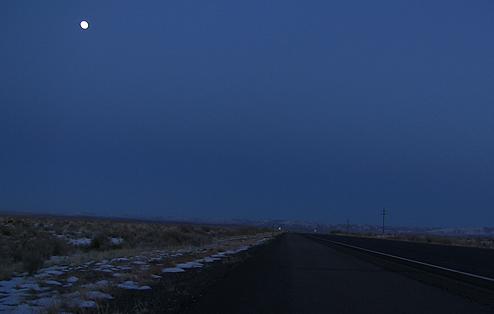
“And when the sun goes down,” said Malcolm Leslie, another Navajo criminal investigator, “in some places on the reservation you can’t see your hand in front of your face.”

From the most basic task of finding a crime scene to more complicated matters regarding language and cultural barriers, FBI agents in Indian Country depend on their local, federal, and tribal law enforcement partners. And our partners rely equally on us—for expertise, training, and other resources.

“I don’t think one can do without the other,” said St. Germaine. “Navajo Nation investigators—we’ve been here a long time. We are familiar with the area, the crimes, and the people. The FBI is well skilled in doing investigations. So we combine our talents, and it works well.”

St. Germaine was one of the original members of the first Safe Trails Task Force, which the FBI created in 1994 on the Navajo Reservation and has since expanded to 15 locations around the country. The idea is to unite the Bureau with other federal, local, and tribal law enforcement agencies to combat Indian Country crime.

Through the task force and other initiatives, the FBI provides invaluable training and equipment to tribal law enforcement. “It has helped us do our job,” St. Germaine said. “We are challenged financially on the Navajo Nation. The FBI supplies us with vehicles and other equipment. Without that contribution,” he added, “I think we would be in real serious trouble.”

“And without our tribal partners,” said Special Agent Lenny Johns, who supervises our Santa Fe Resident Agency, “it would be virtually impossible for the Bureau to accomplish its mission in Indian Country. Many times it’s just one FBI agent on the reservation dealing with a complex crime scene. The tribal criminal investigators and evidence technicians are critical to the process of conducting interviews and collecting evidence. Without them, we’d get very little traction.”

“The FBI brings resources that we’re in dire need of,” added veteran criminal investigator Leslie. “But they also bring knowledge.” Leslie has received a variety of FBI training, both in the classroom and on the job at crime scenes.

Donovan Becenti, a Navajo Nation crime scene technician, has processed many crime scenes with the FBI’s Evidence Response Team (ERT) and has benefited from FBI training as well.

“The partnership is great,” Becenti said. “ERT out of Albuquerque is where I’ve gotten most of my training. Without them, I wouldn’t be where I am today as far as my skill level. And they also provide equipment—evidence collection supplies and whatever else I need to help get the job done.”

Becenti was recently presented with an FBI Director’s Certificate for his many years of helping ERT process crime scenes on the Navajo reservation. “When you work alongside someone for 12 straight hours on a homicide scene in freezing fog and sub-zero temperatures,” he said, “it builds mutual trust and respect.”

Teamwork Through Coordination
The Indian Country Unit at FBI Headquarters in Washington is charged with coordinating the Bureau’s investigative efforts and responsibilities on native lands across the country.

“Our mission is to develop and implement strategies to address the most serious crimes in Indian Country and to support our joint efforts with the Bureau of Indian Affairs and tribal law enforcement,” said Special Agent Michelle Gruzs, chief of the unit. “We also manage the Safe Trails Task Force program, which supports a variety of training opportunities throughout Indian Country.

The unit has the additional responsibility of implementing portions of the federal Tribal Law and Order Act. The 2010 law, designed to give tribal law enforcement greater control to fight crime in their local areas, also requires federal agencies working in Indian Country to report statistical information to Congress on an annual basis.

“We’re making progress on the reservations because we have strong partnerships at the local, tribal, and federal level,” said Gruzs, a former Indian Country investigator. “It’s all about working together.”

Next: A zero tolerance approach.