Showing posts with label major leagure baseball. Show all posts

Monday, July 16, 2012

Former Major League Baseball Player Lenny Dykstra Pleads Guilty in Federal Court to Bankruptcy Fraud and Money Laundering


LOS ANGELES—Lenny Kyle Dykstra, an All-Star outfielder who played for the New York Mets and Philadelphia Phillies, pleaded guilty today to bankruptcy fraud and other federal charges for selling items pilfered from his mansions in Ventura County.

Dykstra, 48, who was known by the nickname “Nails,” pleaded guilty to three felony counts—bankruptcy fraud, concealment of assets, and money laundering. As result of the guilty pleas, Dykstra faces a statutory maximum sentence of 20 years in federal prison.

Dykstra is currently in state custody after having been convicted in Los Angeles Superior Court on unrelated charges.

In court today, Dykstra admitted that he filed a bankruptcy case on July 7, 2009, and later lied about taking and selling items that were part of the bankruptcy estate. Dykstra specifically admitted he committed bankruptcy fraud by lying about whether he had taken and sold items from his $18 million mansion in Sherwood Estates that he had purchased from Wayne and Janet Gretsky. Dykstra also admitted that he concealed property from the bankruptcy estate, including baseball memorabilia stored in his other Sherwood Estates mansion. And Dykstra admitted that he sold some of the memorabilia and laundered the proceeds by taking $15,000 earned from the sale and purchasing a cashier’s check in another person’s name.

Dykstra also admitted that there were at least 10 creditors who were victims of his crimes, and those victims lost between $200,000 and $400,000.

“Mr. Dykstra’s days of playing games with the public and the legal system are over. With these federal convictions, Mr. Dykstra’s fraud and deceit have been exposed for all to see,” says AndrĂ© Birotte, Jr., whose office prosecuted the case. “These convictions should serve as a cautionary tale of a high-flying sports celebrity who tried to manipulate and exploit both his creditors and the bankruptcy laws of the United States.”

The bankruptcy fraud and concealment charges carry a statutory maximum penalty of five years in federal prison. The money laundering charge carries a potential sentence of up to 10 years in prison, in addition to fines and mandatory restitution.

Dykstra pleaded guilty before United States District Judge Dean D. Pregerson, who scheduled a sentencing hearing for December 3, 2012 at 1:30 p.m.

Dykstra’s bankruptcy case is still pending in United States Bankruptcy Court in Woodland Hills.

“The FBI is committed to investigating financial crime, including the bankruptcy fraud to which Mr. Dykstra pleaded guilty,” said Timothy Delaney, Acting FBI Assistant Director in Charge in Los Angeles. “At one time, Mr. Dykstra inspired Americans, but later, sadly, he chose to defraud his fellow Americans and the United States government. His acknowledgement of these crimes may prevent others from engaging in similar activity.”

“Lenny Dykstra improperly concealed and sold assets—including baseball equipment and memorabilia—failing to disclose the proceeds from the sale to the bankruptcy court. Mr. Dykstra didn’t just commit an error—he committed a felony,” said Leslie P. DeMarco, Special Agent in Charge of IRS-Criminal Investigation’s Los Angeles Field Office. “IRS-Criminal Investigation is proud to work with our law enforcement partners by lending its financial expertise in these complex investigations.”

Peter C. Anderson, the United States Trustee for Region 16, stated, “The U.S. Trustee program is the component of the Justice Department that protects the integrity of the bankruptcy system by overseeing case administration and litigating to enforce the bankruptcy laws. The bankruptcy-related conduct to which Mr. Dykstra pleaded guilty constitutes an egregious abuse of the bankruptcy system and will not be tolerated.”

The investigation in the bankruptcy fraud case was conducted by the Federal Bureau of Investigation and IRS-Criminal Investigation. The United States Trustee for the Central District of California (Region 16) provided substantial assistance during the investigation.

Tuesday, November 15, 2011

Former San Francisco Giants Employee Convicted of Fraud

Former Giants Payroll Manager Admits Embezzling $2.2 Million

This isn’t the first time criminals have infiltrated professional sports! Get the latest and best police news hot off the presses!

SAN FRANCISCO—Robin M. O’Connor pleaded guilty in federal court in San Francisco today to wire fraud, United States Attorney Melinda Haag announced.

In pleading guilty, O’Connor, a former payroll manager for San Francisco Baseball Associates LP, owner of the San Francisco Giants Baseball Club (the Giants), admitted to embezzling approximately $2.2 million from June 2010 through June 2011. According to the plea agreement, O’Connor diverted money from the Giants and Giants employees by, among other methods, transferring into her personal bank accounts: funds derived from improperly reducing employee tax withholdings, funds intended to pay employee salary and expenses, and funds from fictitious paychecks that she created. O’Connor has returned some of the funds and will forfeit certain assets and pay restitution.

O’Connor, 42, of American Canyon, Calif., was charged by complaint on July 7, 2011, and by information on Nov. 3, 2011. The information charged her with one count of wire fraud in violation of Title 18, United States Code, Section 1343, to which she pleaded guilty pursuant to the plea agreement.

O’Connor was arrested on July 8, 2011, and was released on that date on a $500,000 secured bond. The sentencing of O’Connor is scheduled for March 5, 2012, before U.S. District Court Judge James Ware in San Francisco. The maximum statutory penalty for a violation of 18 U.S.C. § 1343 is 20 years in prison, and a fine of $250,000, or twice the gross gain or loss, whichever is greater, plus restitution. However, any sentence following conviction would be imposed by the court after consideration of the U.S. Sentencing Guidelines and the federal statute governing the imposition of a sentence, 18 U.S.C. § 3553.

Thomas E. Stevens is the Assistant U.S. Attorney who is prosecuting the case with the assistance of Rawaty Yim. The prosecution is the result of an investigation by the Federal Bureau of Investigation. The U.S. Attorney’s Office acknowledges the valuable cooperation of the Giants in this investigation.

Monday, October 31, 2011

ICE announces results of 'Operation Strike Out'

Massive sports memorabilia bootlegging: just another day on the job for American police officers! Get the latest and best police news as it happens!

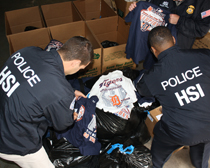
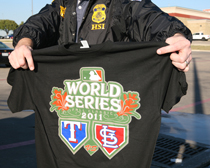
WASHINGTON - With the conclusion of Major League Baseball's 2011 World Series, U.S. Immigration and Customs Enforcement's (ICE) Homeland Security Investigations (HSI) and the National Intellectual Property Rights Coordination Center (IPR Center) have announced the results of "Operation Strike Out." This one-month operation, which commenced at the beginning of the American League and National League Championship Series, has resulted in the seizure of 58 commercial websites that sold and distributed counterfeit sports paraphernalia. HSI special agents have also seized 5,347 items with a manufacturer's suggested retail price (MSRP) of $134,862.

"HSI and the IPR Center have made a major dent in these criminals' plans to profit from fan enthusiasm surrounding a very exciting seven-game World Series - both in U.S. cities and in cyberspace," said ICE Director John Morton. "Counterfeits products represent a triple threat by delivering shoddy and sometimes dangerous goods into commerce, by funding organized criminal activities, and by denying Americans good-paying jobs. Homeland Security Investigations and our partners at the IPR Center will continue to work together to keep all types of counterfeit products off our streets."

Website seizures
The seizure of the 58 domain names is the seventh phase of "Operation In Our Sites," a sustained law enforcement initiative to protect consumers by targeting counterfeiting and piracy over the Internet. In June 2010, the IPR Center began "Operation In Our Sites." Since the launch of this operation in June 2010, the IPR Center has seized a total of 200 domain names and redirected those domain names to a seizure banner.

Previous website seizures include:

•First phase: 10 domain names
•Second phase: 82 domain names
•Third phase: 10 domain names
•Fourth phase: 18 domain names
•Fifth phase: 5 domain names
•Sixth phase: 17 domain names

The 58 domain names seized in this phase of "Operation In Our Sites," were all commercial websites engaged in illegally selling and distributing counterfeit sports paraphernalia. During the course of the operation, federal law enforcement agents made undercover purchases of sport jerseys from online retailers suspected of selling counterfeit goods.

Once the materials were confirmed to be counterfeit or otherwise illegal, ICE HSI special agents obtained seizure orders from federal magistrate judges for the domain names of the websites that sold or distributed the items. In most instances, the counterfeit goods were shipped directly into the United States from suppliers in other countries using international express mail. The 58 websites have all been shut down and now show a banner stating that the domain name of that website has been seized by federal authorities. The seizure banner on the seized sites has received nearly 75 million individual views.

The seized counterfeit items infringed on the copyrights or trademarks owned by: Major League Baseball, the National Basketball Association, the National Football League and the National Hockey League.

Eighty-six of the 200 domain names seized have now been forfeited to the United States government. Through the forfeiture process, individuals who have an interest in the seized domain names are provided a period of time after the "Notice of Seizure" to file a petition with a federal court and additional time after the "Notice of Forfeiture" to contest the forfeiture. If no petitions or claims are filed, the domain names become property of the U.S. government.

In April 2011, the IPR Center launched a public service announcement (PSA) that appears on each of the 86 forfeited domain names. This video has received nearly 200,000 individual views on ICE's YouTube page, educating the public about the economic impact of trademark counterfeiting and copyright infringement. The PSA helps deter future crimes and raises awareness.

The "Operation In Our Sites" portion of "Operation Strike Out" was spearheaded by the National Intellectual Property Rights Coordination Center (IPR Center); as well as HSI offices in Baltimore; Denver; Detroit; El Paso, Texas; Houston; Seattle; St. Paul, Minn.; and in coordination with the following U.S. Attorneys' Offices: Southern District of Texas, District of Colorado, Eastern District of Michigan, Western District of Washington, Western District of Texas, District of Minnesota and District of Maryland.

Last week, "Operation In Our Sites" received recognition by the International Association of Chiefs of Police (IACP). The IPR Center received an IACP Award for Excellence in Criminal Investigation for its work in targeting counterfeiting and piracy on the Internet. The award recognizes quality achievement and innovation in managing and conducting criminal investigations with the goal of sharing information to advance the art and science of criminal investigations.

'Hard goods' seizures
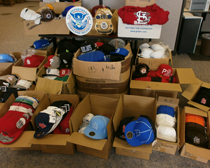
ICE HSI special agents operated in multiple teams to identify stores and vendors selling counterfeit trademarked items. These teams - operating in Dallas; Detroit; Milwaukee, Wis.; and St. Louis - have seized 5,347 items of phony World Series-related memorabilia along with other counterfeit Major League Baseball and sports related items to date totaling $134,862. Ball caps, t-shirts, jackets, tickets and other souvenirs are among the counterfeit merchandise and clothing confiscated. Three individuals were also arrested on federal and state counterfeiting violations.

The breakdown of seized items include:

•Dallas: 270 items with an MSRP of $6,934
•Detroit: 913 items with an MSRP of $16,120
•Milwaukee: 106 items with an MSRP of $3,180
•St. Louis: 4,058 items with an MSRP of $108,628

IPR Center
The IPR Center is one of the U.S. government's key weapons in the fight against criminal counterfeiting and piracy. The IPR Center uses the expertise of its 19 member agencies to share information, develop initiatives, coordinate enforcement actions, and conduct investigations related to IP theft. Through this strategic interagency partnership, the IPR Center protects the public's health and safety, the U.S. economy and the war fighters.

Tuesday, June 14, 2011

CBP Seizes More Than 100,000 Baseball Caps and Toys for IPR Violations

Otay Mesa, Calif. — U.S. Customs and Border Protection officers and import specialists at the Otay Mesa port of entry seized more than 100,000 baseball caps and remote-controlled toy cars for intellectual property rights violations.

In mid-April, CBP officers processing trucks exporting goods out of the U.S. pulled aside a shipment of baseball caps, offloaded the cargo and presented a sample to a CBP import specialist for examination.

The import specialist determined that the many of the baseball caps violated several different trademarks for luxury clothing labels, cartoon characters, and sports teams, including the San Diego Padres. Some of the counterfeit caps sported U.S. military or law enforcement insignias. The baseball caps were of generally poor quality and lacked any licensing information, despite using the same logos as legitimate baseball caps.

The baseball caps had an estimated domestic value of more than $200,000, the value of the baseball caps to the company, and an estimated manufacturer’s suggested retail price of more than $1 million, the approximate price of what the baseball caps would sell for to consumers in the U.S. if they were the real thing.

In late April, CBP officers processing trucks exporting goods out of the U.S. pulled aside a shipment of toys. Officers offloaded the cargo, and found more than 100 boxes of toys that appeared to possibly violate the “Jeep” trademark. CBP officers presented a sample of the remote-controlled toy cars to a CBP import specialist for examination.

The import specialist determined that the remote-controlled cars violated the Jeep trademark. The toys were of generally poor quality and lacked any licensing information, despite using the Jeep logo.

The toys had an estimated domestic value of about $11,000, the value of the toys to the company, and an estimated manufacturer’s suggested retail price of more than $100,000, the approximate price of what the toys would sell for to consumers in the U.S. if they were legal products.

U.S. Customs and Border Protection is the unified border agency within the Department of Homeland Security charged with the management, control and protection of our nation's borders at and between the official ports of entry. CBP is charged with keeping terrorists and terrorist weapons out of the country while enforcing hundreds of U.S. laws.

Thursday, November 11, 2010

Former Chicago White Sox Executive and Two Former Scouts for Sox in Latin America Indicted for Allegedly Obtaining Illegal Kickbacks from Players’ Signing Bonuses

CHICAGO—A former professional baseball player scouting executive for the Chicago White Sox and two former scouts for the team in Latin America were indicted today on federal fraud charges for allegedly accepting kickbacks totaling approximately $400,000 from signing bonuses and contract buyouts paid to secure 23 prospective players between December 2004 and February 2008. A seven-count indictment returned by a federal grand jury alleges that the White Sox baseball team was defrauded of money, as well as the honest services of the defendants, who allegedly concealed the kickbacks from the team and its more senior officials.

Charged with seven counts of mail fraud were David S. Wilder, the White Sox farm system director from late 2003 to 2006, when he became the team’s senior director of player personnel until May 2008, and Jorge L. Oquendo Rivera, the White Sox Latin American scout between November 2004 and October 2007. Victor Mateo, a White Sox scout in the Dominican Republic between November 2006 and May 2008, was charged with three counts of mail fraud. The indictment also seeks forfeiture of unspecified illegal proceeds from the alleged fraud scheme.

Wilder, 50, of San Francisco, and Oquendo, 49, of Aguadilla, Puerto Rico, are expected to voluntarily appear for arraignment at a later date to be determined in U.S. District Court in Chicago. A domestic arrest warrant was issued for Mateo, 39, of Arroyo Hondo, Dominican Republic.

“The defendants were supposed to recruit players by paying amounts of money that matched their skills and were no greater than the amount needed to sign the players. Instead, the indictment alleges that the defendants secretly inflated those signing amounts to fund kickbacks for themselves,” said Patrick J. Fitzgerald, United States Attorney for the Northern District of Illinois.

“These defendants allegedly defrauded their employer and enriched themselves by taking advantage of vulnerable ballplayers, who were anxious to pursue their dreams of stardom in the major leagues” said Robert D. Grant, Special Agent in Charge of the Chicago Office of the Federal Bureau of Investigation.

The investigation began after the Chicago White Sox reported internal findings to Major League Baseball and baseball officials referred the matter to federal authorities. Both the White Sox and Major League Baseball cooperated with the investigation.

To provide for kickbacks, Wilder, Oquendo and Mateo allegedly misrepresented to the White Sox the amount of money necessary to sign certain players and omitted information about the payments, causing the Sox to pay artificially and fraudulently inflated signing bonuses to players and causing the Sox to purchase the contracts of and rights to players from other teams at artificially and fraudulently inflated prices. The indictment does not specify the amounts of kickbacks allegedly obtained from signing certain players, nor does it name specific players.

According to the indictment, the White Sox maintained a Latin American scouting program to identify and recruit prospective players in such countries as Brazil, Colombia, the Dominican Republic, Mexico, Panama, and Venezuela, and to sign them to written contracts. The Sox either paid a signing bonus, a one-time, up-front payment made to new players to induce them to sign a contract, or they purchased the contract rights to a player who was already affiliated with a Mexican baseball team by paying that team or its representative an amount necessary to induce the team to release the player to the White Sox.

Wilder was responsible for supervising the team’s scouts in Latin America, and he either authorized payments himself, or obtained authorization from additional Sox personnel, to sign new players based on recommendations made by the scouts. Wilder was authorized to approve recommended signing amounts less than $100,000, but he was required to obtain approval from the team’s general manager to pay signing amounts of $100,000 or more. After Wilder or the team approved a player’s signing amount and a written contract was secured, and Major League Baseball conducted a background check and approved the signing, the White Sox issued a check drawn on a bank account in Chicago, which was made payable either to the player or the Mexican team with which a player was affiliated or the Mexican team’s representative.

If the player was located in the Dominican Republic, the Sox sent the signing bonus check to the Major League Baseball office in Santo Domingo directly, or through its offices in New York, and baseball personnel would then provide the check to the player. If the player was located in another Latin American country, the Sox sent the signing bonus check to the scout who recruited the player and the scout was responsible for providing the check to the player.

As part of the scheme, Oquendo and Mateo allegedly scouted for and identified prospective Sox players in Latin America from whom they could obtain a portion of the players’ signing bonuses. They also allegedly engaged in discussions with these players or their representatives about the amount of signing bonuses, as well as the amount the players were willing or expected to pay in kickbacks to them and Wilder. Oquendo allegedly engaged in these same practices in his negotiations with Mexican teams and their representatives.

After this initial phase, Oquendo and Mateo, directly and indirectly, allegedly informed Wilder of the prospective players’ skill levels, the preliminarily negotiated signing bonus and contract purchase amounts, and whether kickbacks could be obtained from the players’ signings. Wilder then allegedly approved signings under $100,000, knowing that the amounts were inflated to include undisclosed kickbacks for himself and his co schemers, and misrepresented to other team officials the amount that was necessary to sign the players. Similarly, in instances when Wilder obtained authorization from the team’s general manager to sign players for more than $100,000, he allegedly deceived the general manager, knowing that the amounts were fraudulently inflated to obtain undisclosed kickbacks for himself and his co-schemers and were greater than necessary.

The seven mail fraud counts allege the mailing of various checks from the White Sox, in amounts ranging from $30,000 to $525,000, to unnamed players, or teams for the contract rights to players, in various Latin American countries.

The government is being represented by Assistant U.S. Attorneys Christopher K. Veatch and Michelle Nasser.

Each count of mail fraud carries a maximum penalty of 20 years in prison and a $250,000 fine, and restitution is mandatory. The court may also impose a fine totaling twice the loss to any victim or twice the gain to the defendant, whichever is greater. If convicted, the court must impose a reasonable sentence under the advisory United States Sentencing Guidelines.

An indictment contains only charges and is not evidence of guilt. The defendants are presumed innocent and are entitled to a fair trial at which the government has the burden of proving guilt beyond a reasonable doubt.